South Korea's Trains Going Solar with Qcells Partnership
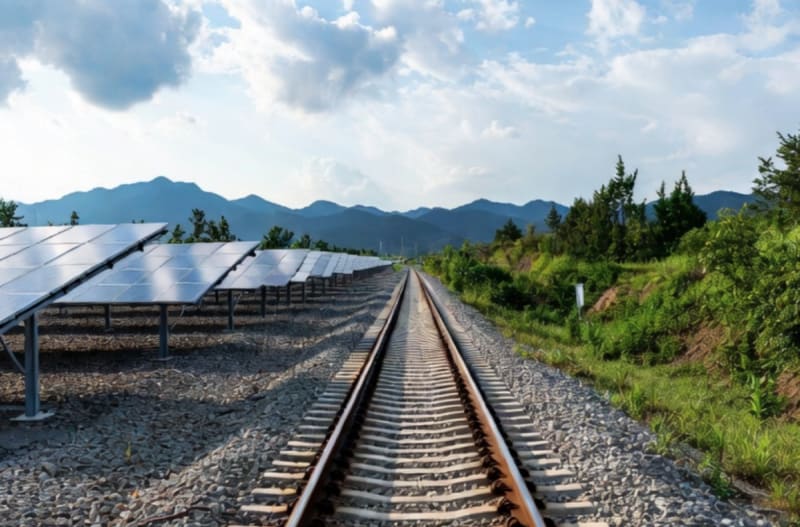
Korea's national railway just signed a deal to transform train stations, tracks, and unused land into solar power hubs. It's part of a worldwide movement putting clean energy on the rails.
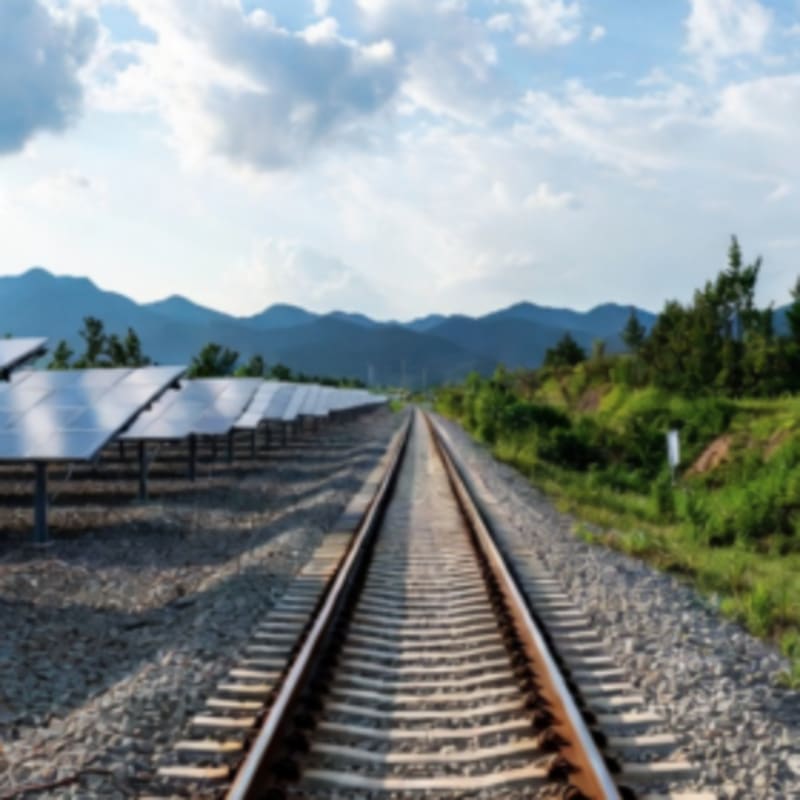
Korea National Railway is turning its vast network of stations, tracks, and idle land into a solar powerhouse. The state railway operator signed an agreement this week with solar manufacturer Qcells to blanket railway infrastructure with clean energy panels.
The partnership kicks off with executives touring Qcells' factory in Jincheon to assess which solar modules work best for railway environments. They're looking at everything from rooftop installations on stations to trackside solar farms on unused land.
This isn't just about slapping panels on buildings. The two companies will collaborate on developing solar technology specifically for railway conditions, testing modules in real-world train environments, and sharing research to speed up deployment across the entire rail network.
Korea National Railway President Lee Sung-hae says the deal creates a clear path for bringing advanced clean energy tech into every corner of railway operations. The agreement emerged from the company's Business R&D Forum, a CEO-led initiative launched in July 2024 to commercialize cutting-edge technologies in rail transport.
The Ripple Effect
Korea's railway solar push reflects a global trend gaining serious momentum. In Japan, East Japan Railway is testing next-generation perovskite solar panels on noise barriers along tracks. China Railway Construction Corp. recently launched a massive 3 gigawatt solar module procurement program for rail infrastructure.
Europe is racing ahead too. Germany's national rail operator calculated that its railway network could support an impressive 37.6 gigawatts of solar potential. France started trackside solar trials just this month, joining the growing list of countries rethinking railways as renewable energy real estate.
The timing makes perfect sense. Railways already own massive amounts of land along tracks, on station rooftops, and in maintenance depots that sit mostly unused. Converting that space into solar farms means clean energy without competing for agricultural land or natural habitats.
Korea National Railway says it plans to keep identifying promising technologies through its R&D forum and partnering with companies, universities, and research centers to bring them to life. The railway's transformation into a renewable energy platform shows how existing infrastructure can become part of the climate solution without building anything new.
More Images

Based on reporting by PV Magazine
This story was written by BrightWire based on verified news reports.
Spread the positivity!
Share this good news with someone who needs it