Space Telescope Captures 60 Million Stars in One Photo
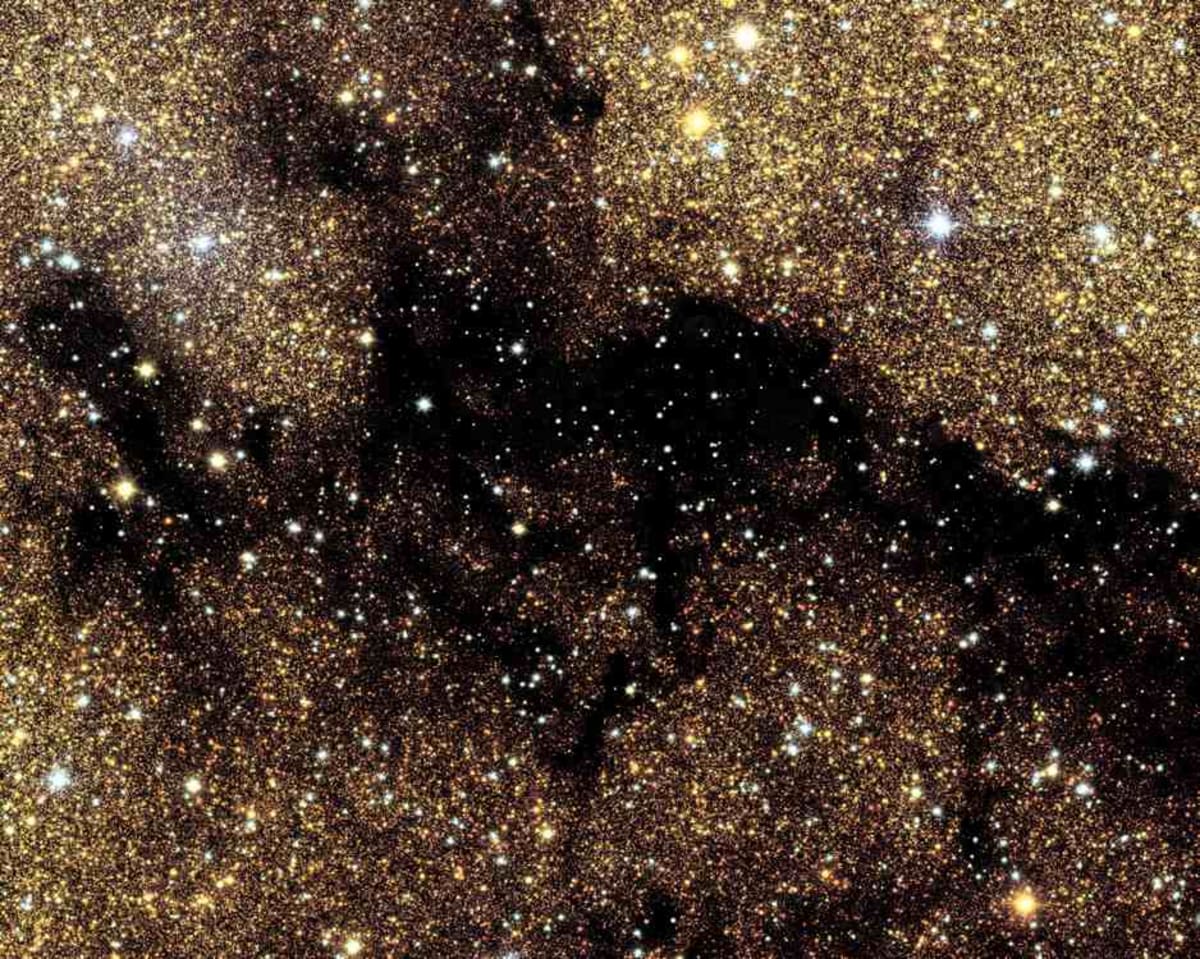
A new European telescope just snapped the most detailed picture ever taken of our galaxy's center, revealing 60 million stars in a single image. The discovery could help scientists find over 100,000 new planets orbiting those distant suns.
Scientists just captured a photograph so detailed it shows 60 million individual stars shining at the heart of the Milky Way galaxy.
The European Space Agency's Euclid Telescope took nine photos over 26 hours, creating an image covering a patch of sky about the size of a full moon. The telescope orbits one million miles from Earth alongside NASA's James Webb Space Telescope at a special point where the sun and Earth's gravity keep it steady.
While the dazzling star count alone breaks records, the real treasure lies in what orbits those stars. Dr. Eamonn Kerins, an astrophysicist at the University of Manchester, says this data could launch astronomers from knowing about 6,000 planets beyond our solar system to discovering more than 100,000 across the galaxy.
The telescope wasn't even designed for planet hunting. Euclid's main job is studying dark matter and dark energy, the invisible forces that make up 95% of our universe. But its ability to watch large areas of sky for hours at a time makes it perfect for spotting planets using a technique called microlensing.
Here's how it works: when a planet passes in front of its star from our viewpoint, the planet's gravity bends and brightens the light from more distant stars behind it. By tracking these tiny brightness changes, scientists can pinpoint planets light years away.
Each planet Euclid finds becomes a target for more powerful telescopes like James Webb or Hubble to study in detail. Past discoveries have revealed bizarre worlds beyond imagination: planets shaped like lemons where it rains diamonds, gaseous giants with clouds that turn to stone, and worlds with the density of marshmallows.
The Ripple Effect
This breakthrough transforms how quickly humanity can map planets across the galaxy. Instead of finding planets one by one, Euclid can coordinate the locations of tens of thousands at once, giving astronomers a cosmic treasure map of worlds to explore. Each discovery helps scientists understand how solar systems form and what conditions might exist on distant worlds, expanding our knowledge of what's possible in the universe.
The telescope launched in 2024 and has already proven more versatile than anyone expected, showing that sometimes the best discoveries come from tools used in ways their creators never imagined.
More Images



Based on reporting by Good News Network
This story was written by BrightWire based on verified news reports.
Spread the positivity!
Share this good news with someone who needs it