Spider Webs Help Scientists Find New Fungus Species
Scientists in Thailand discovered that spider webs naturally trap living fungi, including species never before catalogued. This simple method could revolutionize how researchers track fungal diversity in farmland and beyond.
Spider webs might be nature's perfect laboratory tool, and scientists in Thailand just proved it by discovering unknown species of fungi hiding in sticky silk.
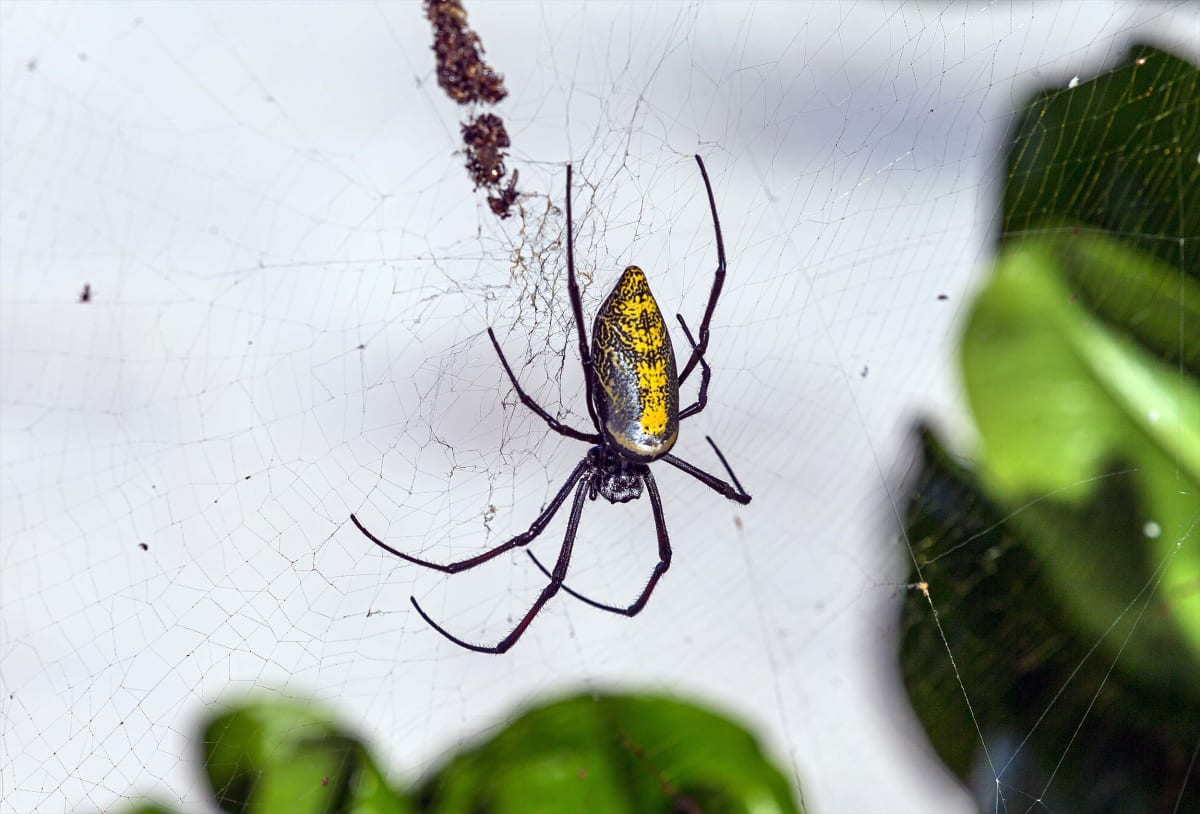
Thanakron Into, a biotechnology student at Thammasat University, wondered what living organisms might be clinging to spider webs in rice fields. Instead of using expensive equipment or invasive sampling methods, his team simply collected webs from tiny orb-weaving spiders across three Thai provinces.
The results surprised everyone. When researchers carefully scraped what the webs had trapped and placed it on nutrient plates, 112 living fungal colonies began to grow within days.
Those colonies represented 23 distinct types of fungi, and several didn't match anything in global databases. They were entirely new to science, waiting to be formally named and studied.
The real breakthrough wasn't just finding fungi. Previous studies had detected fungal DNA on webs, but this team actually grew living cultures that scientists can now test, preserve, and analyze for years to come.
Spider webs work like ready-made air samplers, their glue-coated fibers catching everything that drifts past. The orb-weaving spiders they studied even build "trashlines" on their webs, stacking plant material and debris that gives spores extra surfaces to stick to.
Why This Inspires
This discovery shows how the simplest tools can unlock big answers. Spider webs are free, harmless to collect, and available everywhere spiders spin.
Scientists now have an inexpensive way to track fungal diversity across farmland without disturbing soil or plants. Since spiders rebuild their webs regularly, researchers can sample the same locations over and over to watch how fungal populations change with seasons.
Some of the most diverse unknowns came from Cladosporium, a mold so common it floats through outdoor air almost everywhere. Yet even within this well-studied group, hidden diversity sat unnoticed until a spider caught it.
Science has named over 120,000 fungi, but estimates suggest millions more exist. Many affect crops and human health, making it crucial to find and understand them.
The team kept their initial study small on purpose, treating three webs as proof the method works. Now the approach can expand to different spiders, landscapes, and seasons, answering questions researchers couldn't easily pursue before.
A humble spider web just became a window into an invisible world, and it's showing us species we never knew existed.
Based on reporting by Google News - Scientists Discover
This story was written by BrightWire based on verified news reports.
Spread the positivity!
Share this good news with someone who needs it