Star Vanishes in Real Time, Likely Birth of Black Hole
For the first time, astronomers may have watched a massive star collapse into a black hole without exploding. The star, once visible from backyard telescopes in the Andromeda galaxy, simply faded into darkness over several years.
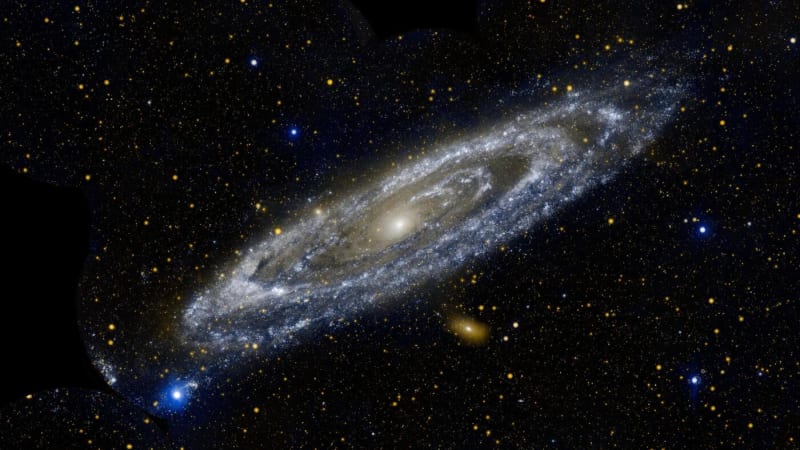
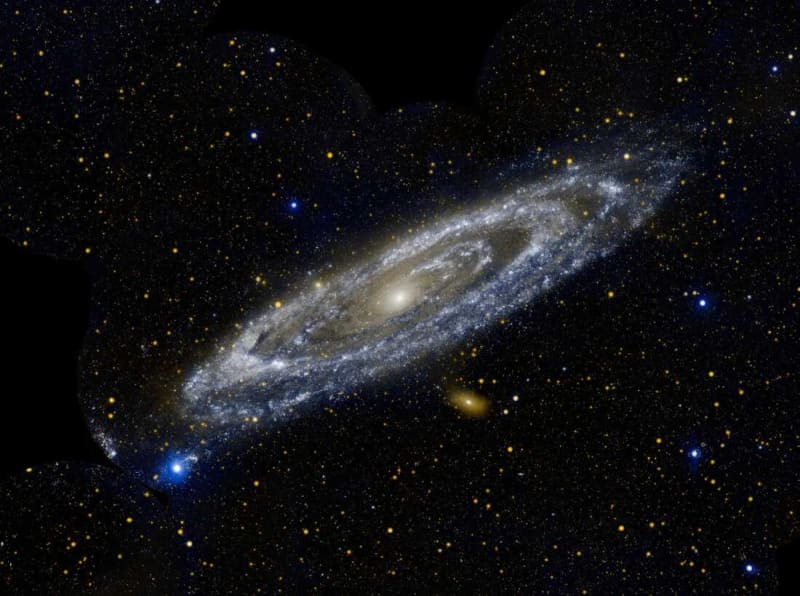
A bright star in the Andromeda galaxy has quietly disappeared, and astronomers believe they've witnessed something incredibly rare: the birth of a black hole.
The star was once so luminous that amateur stargazers could spot it with small backyard telescopes. Today, even the mighty Hubble Space Telescope can't see it.
Kishalay De, an astronomer with Columbia University and the Flatiron Institute, made the discovery while analyzing 15 years of archival data from NASA's NEOWISE spacecraft. His team was tracking how millions of stars change in brightness when one star stood out as a dramatic outlier.
Around 2015, this particular star suddenly brightened for about a year. Then it abruptly began fading in both infrared and visible light, vanishing completely from optical view just a few years later.
The disappearance matches what happens when a massive star's nuclear fuel runs out and it collapses inward, forming a black hole. A faint infrared glow that's barely detectable with the James Webb Space Telescope likely comes from the star's remains still falling into the newly formed black hole.
Why This Inspires
This discovery opens a new window into how the universe works. When massive stars die, they typically explode in brilliant supernovas that briefly outshine entire galaxies, making them easy to spot. But scientists have long theorized that some stars could die quietly, collapsing into themselves without fanfare.
Finding these silent deaths has been nearly impossible because there's no bright explosion to announce them. De's approach of tracking long-term infrared observations revealed this hidden process that dust normally obscures.
Suvi Gezari, an astronomer with the University of Maryland not involved in the study, praised the team's method for revealing "this process that is otherwise obscured by dust and very faint and difficult to observe."
Astronomers know of one other similar case, though that star was farther away and harder to study. Christopher Kochanek from Ohio State University, who researched that earlier event, calls this new approach "the only game in town for seeing the formation of a black hole."
Not everyone is convinced yet. Some scientists suggest the star might have merged with another star, with their combined light hidden by a dust disc. But as one researcher noted, death is forever, and if this truly is a black hole, the faint glow will continue fading to complete darkness over the coming decades.
Future telescope observations will settle the debate, giving humanity unprecedented insight into one of the cosmos's most mysterious transformations.
More Images



Based on reporting by NPR Science
This story was written by BrightWire based on verified news reports.
Spread the positivity!
Share this good news with someone who needs it