Student Finds Earth-Like Planet NASA Algorithms Missed
A citizen scientist discovered a potentially habitable planet by manually combing through old NASA data that automated searches overlooked. The find has astronomers eager to point their most powerful telescopes at this rare Earth-sized world.
Sometimes the biggest discoveries come from simply taking a closer look at what everyone else rushed past.
Alexander Venner, a PhD student at the Max Planck Institute for Astronomy, made a find that professional astronomers had missed for eight years. Working through data from NASA's retired Kepler telescope, he spotted an Earth-sized planet orbiting a star just 146 light years away.
The discovery happened because Venner did something old-fashioned. While powerful algorithms scanned through data from 500,000 stars, he examined the information by hand through the Planet Hunters project, which recruits citizen scientists to help analyze telescope data.
"It was completely missed," Venner told Science Magazine. "The best way to detect it was to actually just look."
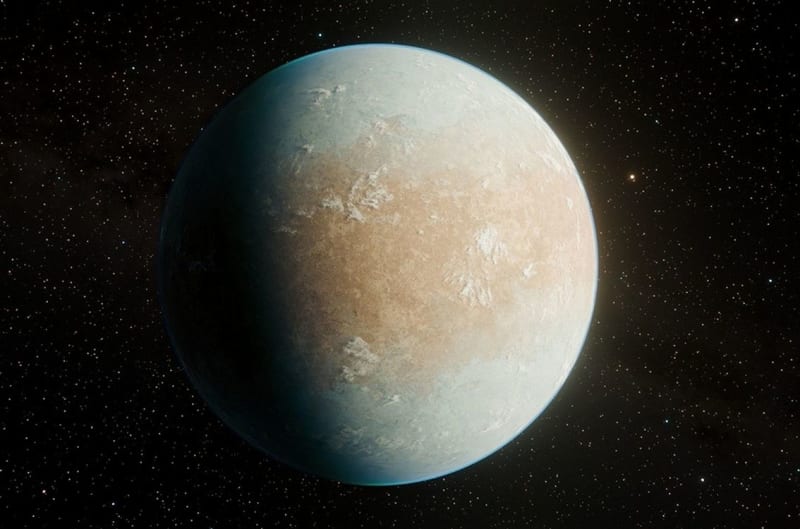
The planet, called HD 137010b, is exactly the kind scientists dream about finding. It's roughly Earth-sized and orbits within the potentially habitable zone of its star, where temperatures could theoretically support liquid water. Out of more than 6,000 known planets beyond our solar system, only a few dozen fit this description.
Automated searches passed right over it because the signal was so faint. The planet is small and cool, making the tiny dips in starlight it creates easy to overlook. Venner caught what the computers couldn't.
Why This Inspires
This discovery proves that curiosity and patience can still trump even the most sophisticated technology. Venner wasn't a famous astronomer with decades of experience. He was a student volunteer who believed human eyes might catch something machines missed.
His hunch paid off in a way that benefits everyone. HD 137010b sits at the cold edge of its star's habitable zone, orbiting a K-dwarf star that's about 1,800 degrees cooler than our Sun. Unlike many similar planets that orbit volatile M-type stars prone to destroying atmospheres with radiation, this world offers a cleaner target for study.
Two upcoming telescope missions are already planning to focus on Venner's find. The European Space Agency's PLATO telescope launches next year, and Spain's Isaac Newton Telescope begins its planet-hunting experiment in February. Both will examine HD 137010b in detail.
"The advantage of this star is that we already know there's a planet with Earth-like properties," Venner explained. Instead of spending years hoping to randomly spot a habitable world, scientists now have a confirmed target worth their time.
The discovery appeared in the Astrophysical Journal Letters, transforming data that sat unused for nearly a decade into one of astronomy's most exciting prospects.
One student's careful attention just opened a window to a world we never knew existed.
More Images



Based on reporting by Good News Network
This story was written by BrightWire based on verified news reports.
Spread the positivity!
Share this good news with someone who needs it