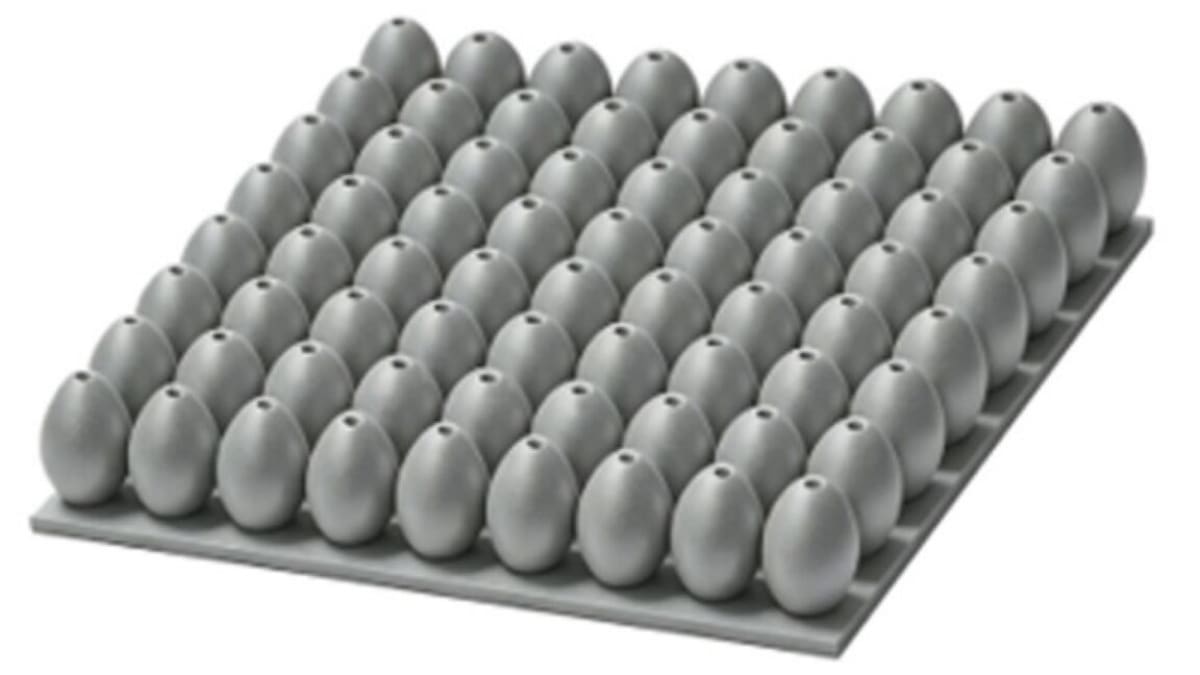
Swedish Jellyfish-Inspired Solar Cells Glow Like Life
Scientists in Sweden created solar cells inspired by glowing jellyfish that behave more like living organisms than traditional panels. These flexible, bio-compatible cells could power medical devices and sensors where rigid silicon panels can't reach.
Imagine a solar panel that glows, responds to light like a living creature, and could one day be integrated into your own body to power a medical device.
Researchers at Chalmers University of Technology in Gothenburg, Sweden, have made that vision real by creating "living" solar cells inspired by the glowing jellyfish Aequorea victoria. Unlike the heavy, rigid silicon panels on rooftops today, these bio-inspired cells are lightweight, flexible, and could work at scales small enough to power sensors inside living organisms.
The secret ingredient is Green Fluorescent Protein, or GFP, the same substance that makes certain jellyfish glow bright green under ultraviolet light. Scientists first discovered GFP accidentally in 1962 while studying a different glowing protein in jellyfish. Now, 64 years later, Swedish researcher Zackary Chiragwandi and his team have put it to work capturing solar energy.
Traditional silicon solar panels have served us well, but they come with hidden costs. Manufacturing them requires massive amounts of energy and resources, making them less environmentally friendly than many people realize. They're also rigid, heavy, and limited to flat surfaces like roofs and solar farms. When you need something flexible, tiny, or compatible with biological systems, silicon simply can't do the job.
That's where these jellyfish-inspired cells shine. They're cheaper and simpler to produce than silicon panels. They can bend and flex to fit unusual spaces. Most importantly, they can work at nano scales and integrate with living tissue, opening doors silicon could never unlock.
The real promise isn't replacing solar farms. These cells could power wearable electronics that wrap around your wrist, medical implants that monitor your heart, or tiny sensors embedded in plants or even human tissue. Think of a pacemaker that never needs battery replacement because it harvests energy from your own body's ambient light.
The technology still faces hurdles. The cells need to become more stable over time and improve their efficiency before widespread use becomes practical. But the researchers have proven the concept works.
The Bright Side
For millions of years, jellyfish have been masters of light, using bioluminescence to survive in the ocean's darkest depths. Now their ancient wisdom is helping us solve very modern problems. By learning from nature instead of fighting against it, we're discovering that the future of energy might not be about bigger and more powerful, but smaller, smarter, and more alive.
This research represents a shift in how we think about renewable energy. Solar power doesn't have to mean vast fields of identical black panels. It can be colorful, responsive, and woven into the fabric of daily life in ways we're only beginning to imagine.
The jellyfish that inspired this breakthrough have been glowing in the ocean for millions of years, and now they're helping light the path toward a cleaner, more integrated energy future.
More Images


Based on reporting by Regional: sweden renewable energy (SE)
This story was written by BrightWire based on verified news reports.
Spread the positivity!
Share this good news with someone who needs it