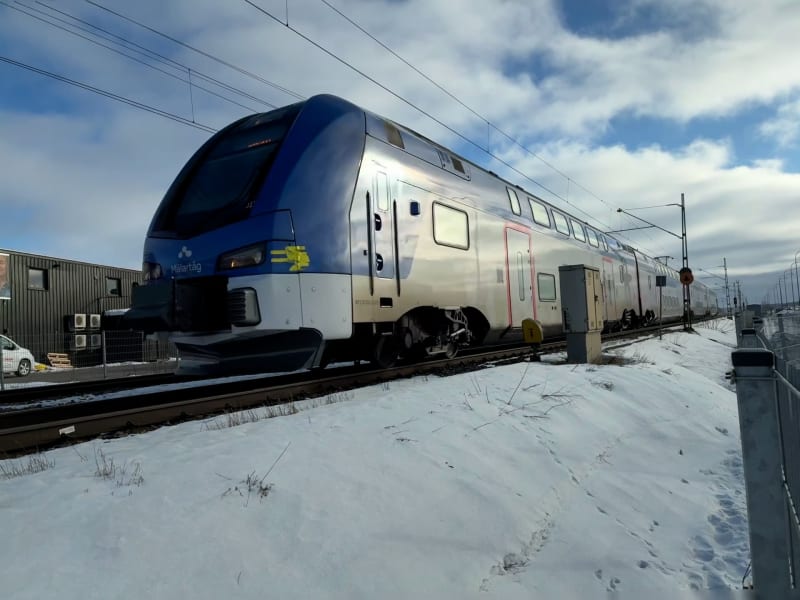
Swedish Rail Switch Data Could Cut Winter Train Delays
Swedish researchers found a way to cut railway switch heating costs by two-thirds while reducing the 1,000+ annual winter disruptions that strand hundreds of thousands of commuters. The solution combines smarter heating controls and sustainable energy sources.
Winter train commuters in Sweden know the frustration of frozen rail switches causing delays and cancellations. Now researchers at KTH Royal Institute of Technology have discovered a solution that's both cheaper and more reliable.
The problem affects hundreds of thousands of passengers each year. Even though Sweden heats its railway switches to prevent freezing, more than 1,000 disruptions still happen annually in the Stockholm region alone.
Researcher William Liu and his team spent a year collecting data from an actual rail switch outside Stockholm. What they found could transform how cold-climate railways operate worldwide.
The current system keeps switches heated to a constant 8°C, which costs about 12,000 Swedish kronor (roughly €1,136) per switch annually. But Liu's team discovered the heating doesn't need to run at full power all the time.
Their computer model revealed that switches warm up in less than 10 minutes when power increases. This means heaters could run at lower power most of the time, with short boost periods only when needed.
The real breakthrough came from understanding what actually causes switches to fail. It's not just cold temperatures but a combination of wind speed, moisture, and snow accumulation that the current system completely ignores.
"Wind is a big problem," Liu says. Wind dramatically changes heat transfer rates, yet existing systems don't measure it, leading to unpredictable failures during gusts.
The Ripple Effect
The research opens doors to sustainable solutions that could revolutionize rail infrastructure. Ground heat from Sweden's common granite rock could power many switches instead of relying on the electrical grid, cutting electricity costs by two-thirds.
Heat pumps could push energy efficiency even higher. Solar panels and wind turbines offer additional green alternatives, and in an ironic twist, the same wind that freezes switches could generate power to heat them.
The Malmbanan line, which crosses the Arctic Circle, spent 90,000 kronor on switch heating over 12 months. With 12,000 switches across Sweden, the savings potential reaches millions of kronor annually while making train travel more reliable.
The technology isn't just for Sweden. Any region facing winter rail disruptions, from Canada to Russia to northern Japan, could benefit from this smarter approach to keeping trains moving.
Liu acknowledges more testing is needed, but the foundational research proves that combining real-world data with weather-responsive controls makes winter railways work better for everyone.
More Images


Based on reporting by Phys.org - Technology
This story was written by BrightWire based on verified news reports.
Spread the positivity!
Share this good news with someone who needs it