Switzerland Puts Solar Panels Between Train Tracks
Trains in Switzerland are now rolling over solar panels installed between railway tracks, turning miles of unused space into clean energy. If the pilot works, it could unlock thousands of miles of railways worldwide without touching a single farm or forest.
A train line in western Switzerland is doing double duty: moving passengers above while capturing sunlight below.
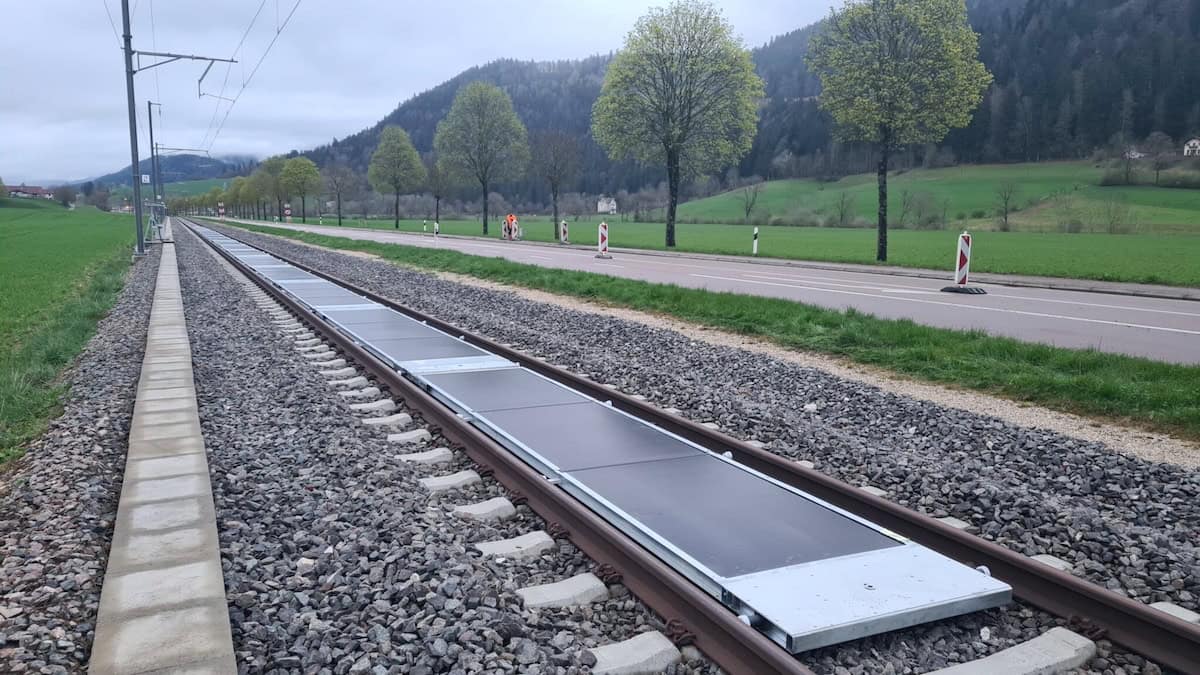
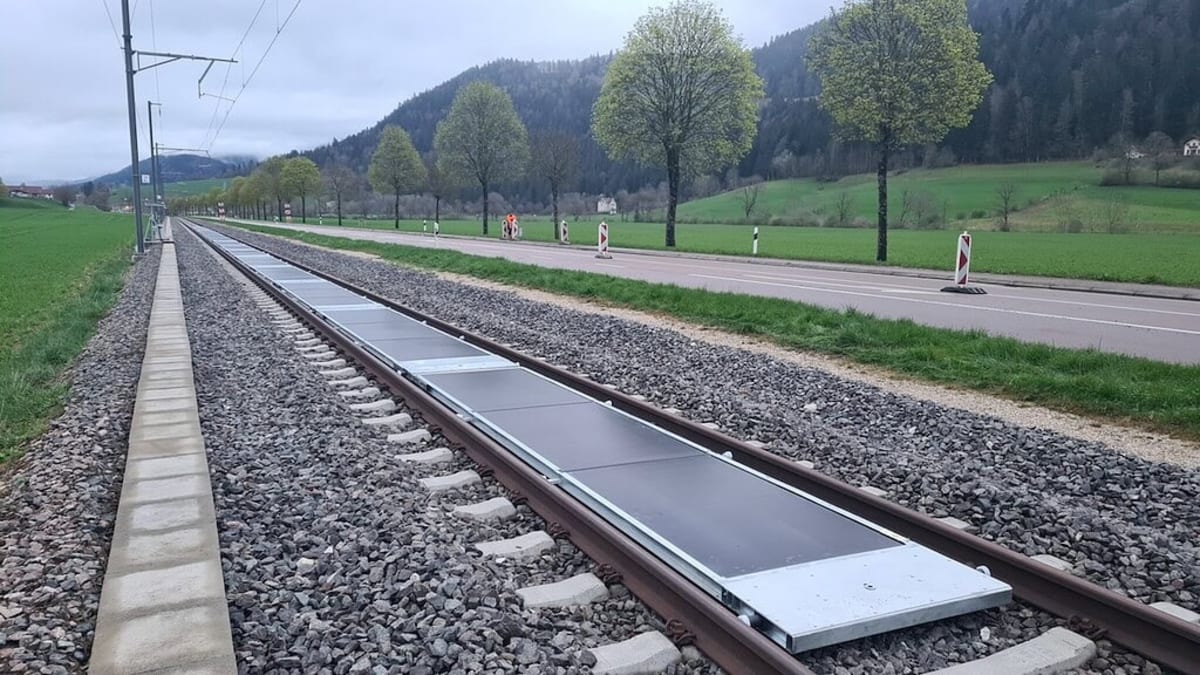
Near the village of Buttes, 48 solar panels now sit between the rails on a 100-meter stretch of active track. Trains pass over them safely, and maintenance crews can remove them when the track needs work.
The installation is small, generating enough electricity for just a few households each year. But this pilot project from Swiss startup Sun-Ways could solve a big problem: how to expand solar power without covering farmland, forests, or cherished landscapes with panels.
Switzerland needs more renewable energy, but new solar projects often face pushback when they threaten scenic views. Railways offer a hidden solution: long corridors of exposed space that already exist.
Sun-Ways designed a special machine that lays the one-meter-wide panels like carpet between the rails. The system can eventually install up to 1,000 square meters per day, and crews can quickly detach panels for inspections or repairs.
The project launched on April 24, 2025, and will run through April 2028. During those three years, researchers will study everything from dirt accumulation to glare to compatibility with railway equipment.
France is already watching closely. SNCF, the French rail operator, signed an agreement to access all the technical data and results from the pilot.
The Ripple Effect
The real potential is staggering. Switzerland has over 5,000 kilometers of railway tracks. If even a fraction could host solar panels, the country could add significant clean energy capacity without using any new land.
France has even more opportunity, with one of Europe's largest rail networks. Other countries with extensive railways could follow.
The panels face tough conditions: vibration, dust, metal particles, snow, and pressure waves from passing trains. They must work while lying flat, which is less efficient than angled rooftop panels. And they can't interfere with signals, inspections, or emergency work.
Swiss regulators initially rejected the project in 2023 over safety concerns. But Sun-Ways worked through the challenges, and officials eventually approved the pilot.
Railways are critical infrastructure that must stay accessible for maintenance. The removable design makes that possible while turning unused space into an energy resource.
This pilot proves that clean energy infrastructure doesn't always need new land—sometimes it just needs creative thinking about the space we already have.
More Images
Based on reporting by Google News - Clean Energy
This story was written by BrightWire based on verified news reports.
Spread the positivity!
Share this good news with someone who needs it