Sydney Scientists Solve Hydrogen Production Breakthrough
Australian researchers just figured out why green hydrogen production keeps getting stuck, and their fix could make clean fuel much cheaper. Using X-ray vision to peer inside electrolyzers, they discovered the secret to keeping bubbles from clogging up the system.
Scientists at the University of New South Wales have cracked a puzzle that's been holding back one of our most promising clean energy solutions.
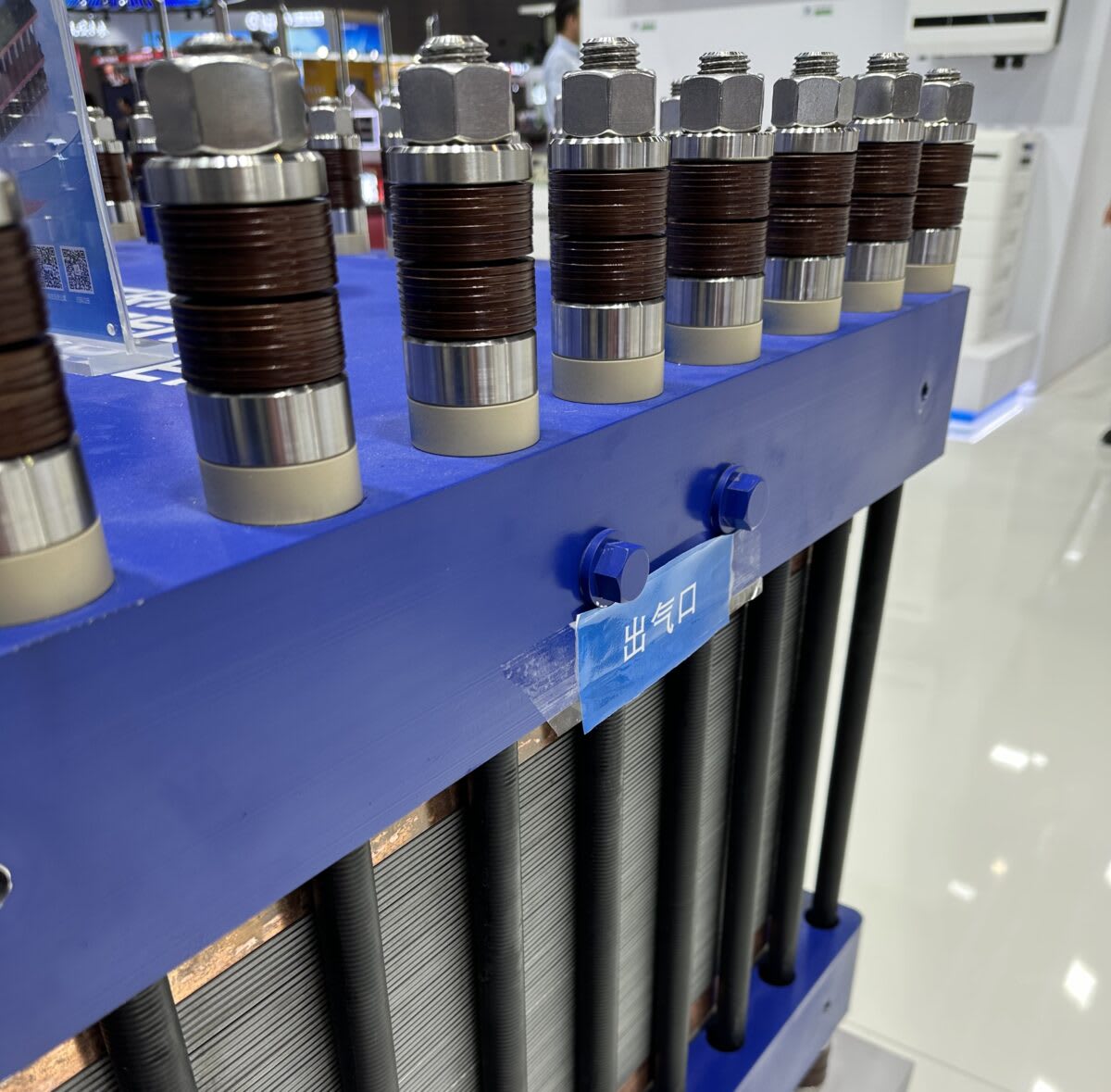
Green hydrogen, made by splitting water with renewable electricity, could power everything from planes to factories without emissions. But there's been a frustrating problem: tiny bubbles get trapped inside the machines that make it, blocking the very spots where hydrogen forms and dramatically slowing production.
Professor Payman Mostaghimi and his team did something nobody had done before. They used powerful X-ray imaging to watch in real time as hydrogen and oxygen bubbles formed, grew, and got stuck inside the porous electrodes during water splitting.
What they saw changed everything. The bubbles weren't just floating away like expected. They were wedging themselves into the electrode's tiny spaces, starving the system of fresh water and grinding production to a crawl at high speeds.
"When water is split, we found tiny hydrogen and oxygen bubbles get trapped inside the electrode, blocking the reaction sites and slowing the movement of water and ions," Mostaghimi explained. It's like trying to drink through a straw filled with foam.
The breakthrough came when they realized the solution wasn't about better chemistry. It was about better architecture. Electrodes with highly ordered, uniform pore structures kept gas from getting trapped, letting production run smoothly.
"If the structure is designed properly, you can stop bubbles from clogging the system and make it much more efficient," Mostaghimi said. This insight gives manufacturers a clear roadmap for building better electrolyzers right now.
The research combined cutting-edge synchrotron imaging with advanced computer simulations, letting scientists see inside operating electrolyzers without taking them apart. The technology revealed that mass transport problems stem from electrode design, not just the catalyst itself.
The Ripple Effect
This discovery arrives at a critical moment for clean energy. Green hydrogen is considered essential for decarbonizing heavy industry and long-distance transport, sectors where batteries fall short. But production costs have remained stubbornly high, partly because of efficiency problems exactly like this bubble-trapping issue.
Now manufacturers have a concrete solution. By redesigning electrode architecture based on these findings, they can boost efficiency and bring costs down faster. The team has already partnered with French energy company TotalEnergies and Swiss technology university EPFL to put these insights into practice.
The researchers aren't stopping here. They're now tackling the next challenge: figuring out how to couple this improved hydrogen production with transport and large-scale underground storage in porous rock formations.
"By looking at production, transport, and underground storage together, we can show policymakers and industry what is actually feasible, and at what cost," Mostaghimi said. That complete picture could accelerate the shift from fossil fuels to clean hydrogen across entire industries.
Sometimes the biggest leaps forward come from finally seeing what's been invisible all along.
More Images

Based on reporting by PV Magazine
This story was written by BrightWire based on verified news reports.
Spread the positivity!
Share this good news with someone who needs it