Wind Turbine Study Reveals Secret to Better Power Predictions
A Belgian North Sea wind turbine revealed that air turbulence and density predict power output far better than wind speed alone. This breakthrough could make offshore wind farms more reliable and profitable.
Scientists just figured out why a single wind turbine kept surprising them with how much electricity it actually produced.
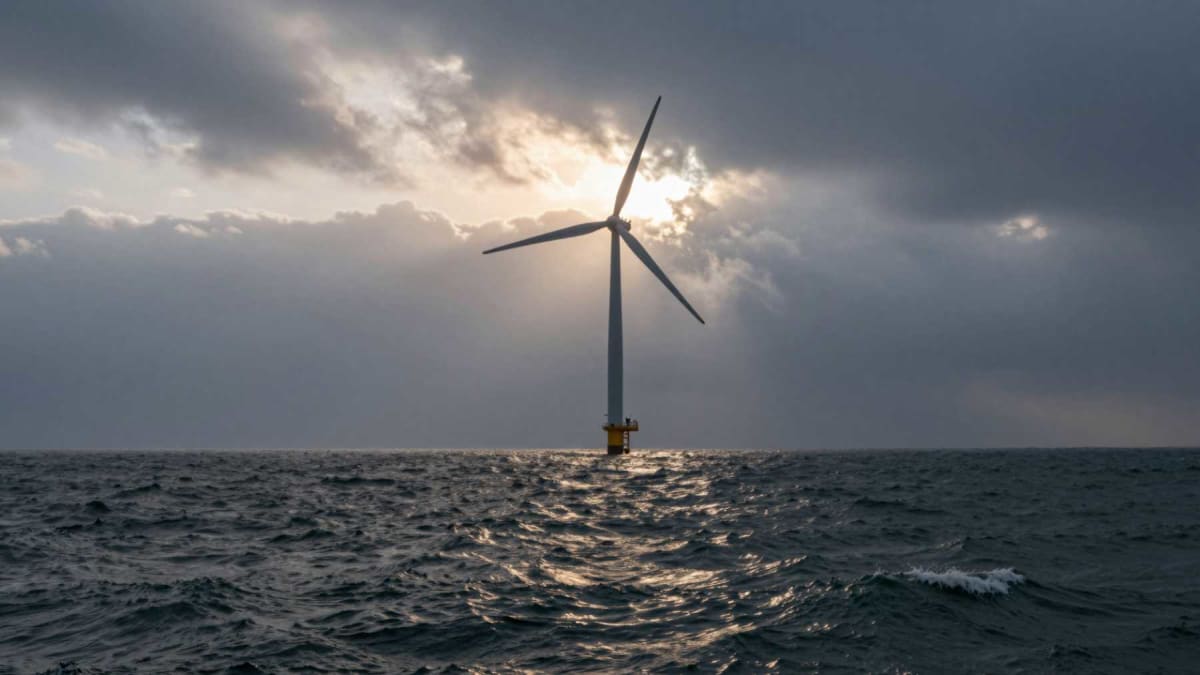
An offshore turbine in the Belgian North Sea was quietly recording something the wind energy industry has overlooked for years. Standard forecasting models rely almost entirely on wind speed to predict power output, but this turbine's data told a different story.
Researchers equipped the commercial turbine with laser sensors and environmental monitors to capture what the atmosphere was really doing around its massive blades. Instead of running simulations in a lab, they watched a working turbine in real ocean conditions for months.
What they discovered changes how we think about wind power. Air turbulence and air density matter just as much as wind speed when predicting how much electricity a turbine will generate.
The team used machine learning to analyze thousands of hours of data. At moderate wind speeds, turbulence intensity accounted for nearly 17% of power variations that standard models couldn't explain. Air density added another 14.5%.
At high wind speeds, air density became even more important, explaining almost 33% of unexpected power changes. That's because denser air creates more force on the blades, even when the turbine tries to compensate by adjusting blade angles.
This matters for more than just accuracy. Offshore wind farms represent billions in infrastructure investment, and even small forecasting errors affect everything from maintenance schedules to revenue projections that banks rely on.
Current industry models do consider air density, but usually as a simple average adjustment. This research shows those factors need equal billing with wind speed, changing based on operating conditions.
The Ripple Effect
Better predictions mean wind farms can integrate more smoothly with electrical grids, which need to know exactly how much power to expect. Grid operators balance supply and demand minute by minute, and surprise shortfalls force them to fire up backup fossil fuel plants.
More accurate forecasting also helps wind farm operators schedule maintenance smarter and negotiate better financing terms. When investors trust your power predictions, projects get funded faster and at lower interest rates.
The findings come from one turbine, but the researchers used real operational data that transfers directly to industry practice. Wind farm operators worldwide can adopt these insights without waiting years for additional studies.
As offshore wind farms multiply across coastlines globally, squeezing more accuracy from existing turbines becomes increasingly valuable. This breakthrough doesn't require new technology, just smarter use of data turbines already collect.
The atmosphere has been telling us the whole story all along; we're finally learning to listen.
Based on reporting by Google News - Wind Energy
This story was written by BrightWire based on verified news reports.
Spread the positivity!
Share this good news with someone who needs it