Three Planets Light Up Night Sky This Week
Mercury joins Venus and Jupiter for a stunning five-night planet parade visible to the naked eye through Monday. No telescope needed for this cosmic show.
Look up this week and you'll catch three planets putting on a free show in the night sky.
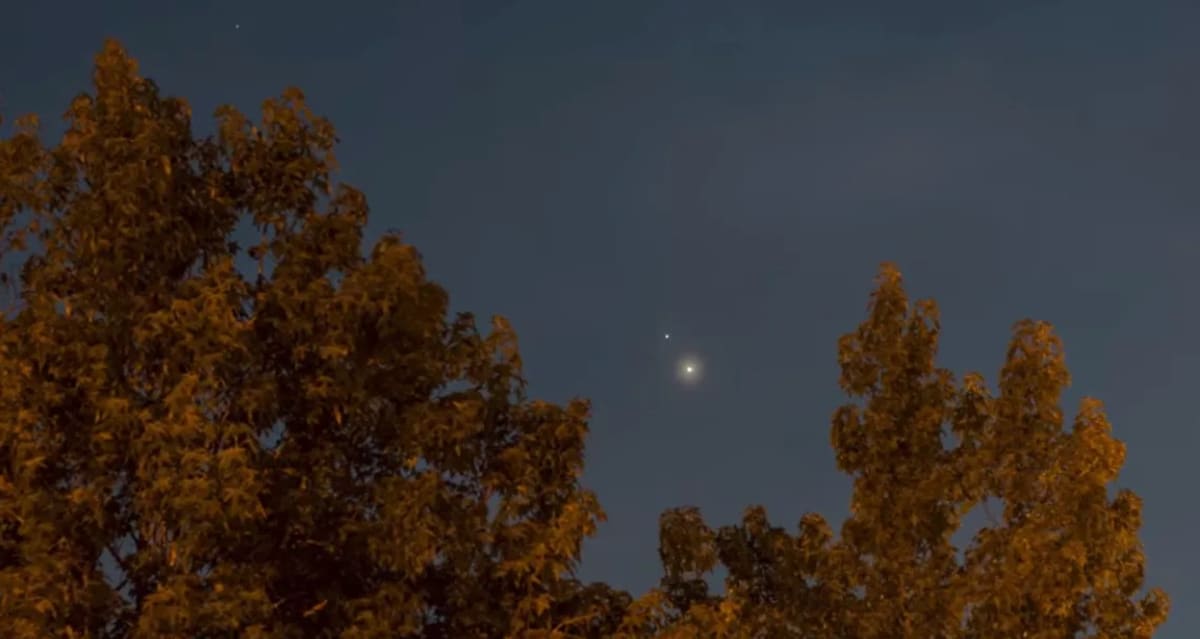
Mercury, Venus, and Jupiter are lining up for a celestial display running through Monday, June 15. NASA calls these meetups "planet parades," and while they're not super rare, they're special enough to get skygazers excited.
You might have already spotted Venus and Jupiter shining bright earlier this week. Now Mercury is joining the party to complete the trio.
The best part? You won't need any fancy equipment. All three planets will be visible to the naked eye, which doesn't happen every day. While at least one planet typically shows up in our sky, seeing multiple worlds from our solar system together is something worth pausing for.
Venus is your easiest target. It's one of the brightest objects in the entire sky, second only to the sun. Jupiter, our solar system's largest planet, also shines brilliantly enough to catch your eye.
Mercury will be the trickiest to spot since it's the smallest of the three. But knowing where to look makes all the difference.
Why This Inspires
These cosmic alignments remind us that wonder lives right above our heads. In a world where we're constantly looking down at screens, the universe occasionally nudges us to look up and remember how small and connected we all are.
You don't need a PhD in astronomy or expensive gear. You just need a clear evening and a willingness to step outside. That's the beauty of moments like these. They're democratic, free, and available to anyone with curiosity.
The parade also connects us to thousands of years of human history. Our ancestors tracked these same planets, told stories about them, and used them to navigate both land and time.
Whether you're watching solo from your backyard or gathering friends for a viewing party, you're participating in something bigger than yourself. You're witnessing the clockwork of our solar system in real time.
The show runs through Monday night, so you've got several chances to catch it. Clear skies and a little patience are your only requirements.
More Images


Based on reporting by Google News - Science
This story was written by BrightWire based on verified news reports.
Spread the positivity!
Share this good news with someone who needs it