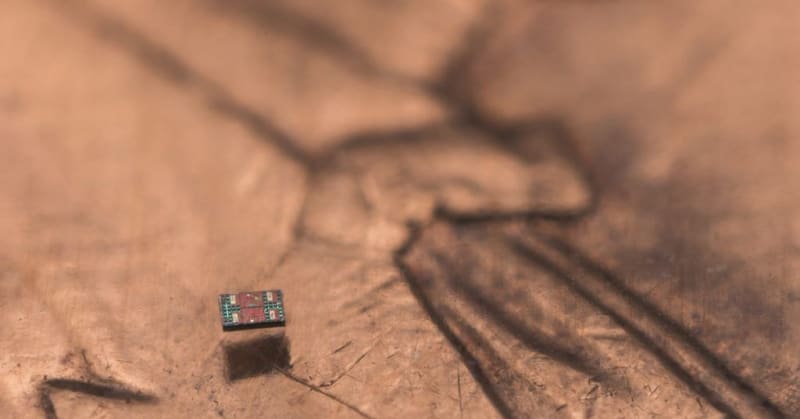
Tiny Robot Smaller Than Salt Grain Swims Solo in Water
Scientists just cracked a 40-year robotics challenge by building a fully autonomous robot smaller than a grain of salt. It swims, senses its environment, and makes decisions on its own without any external controls.
After four decades of trying, researchers have finally built a truly autonomous robot that's smaller than a grain of salt.
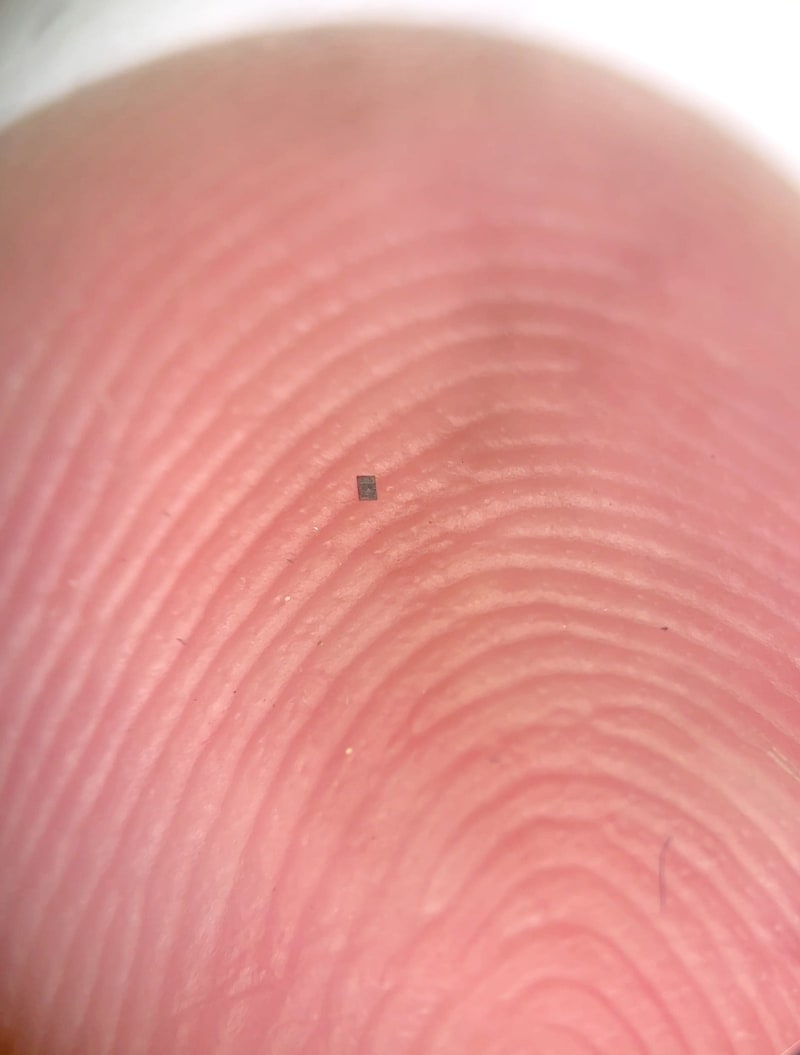
The breakthrough comes from teams at the University of Pennsylvania and the University of Michigan, who created a robot measuring just 0.3 millimeters at its longest point. That's ten times smaller than what scientists thought possible for a robot that can think and move on its own.
The real magic is in how it moves. Traditional swimming doesn't work at microscopic scales because water feels like thick tar to tiny objects. So the team invented something completely new: the robot creates an electric field around itself that pushes charged particles in the water, which then drag water molecules along and create a current.
It's like the robot stands still while the ocean moves around it. The method is so efficient that the robot can swim continuously for months without breaking down because there are no moving parts to wear out.
The computational power packed inside is equally impressive. The robot's solar panels generate just 75 nanowatts of power, which is 100,000 times less than what a smartwatch uses. To work within that constraint, the University of Michigan team built special circuits that run on extremely low voltage and condensed complex programming into a single instruction.
The robot even has a temperature sensor, but here's where it gets charming. Since it's too small to carry communication equipment, it reports what it detects by dancing. Researchers watch through a microscope and decode the movements, similar to how honeybees share information with their hive.
Why This Inspires
This tiny dancer represents more than just impressive engineering. At just one cent per unit and manufacturable by the hundreds, these robots could transform medicine by swimming through our bodies to deliver drugs or detect diseases early. They could clean polluted water, monitor environmental conditions in places too small for regular sensors, or perform tasks we haven't even imagined yet.
The five-year journey from concept to working prototype shows what happens when brilliant minds from different fields decide their technologies belong together.
We've just unlocked a whole new scale for programmable robots, and the possibilities are swimming into view.
More Images



Based on reporting by Wired
This story was written by BrightWire based on verified news reports.
Spread the positivity!
Share this good news with someone who needs it