Two Parakeets Increase Rare Species Population by 10%
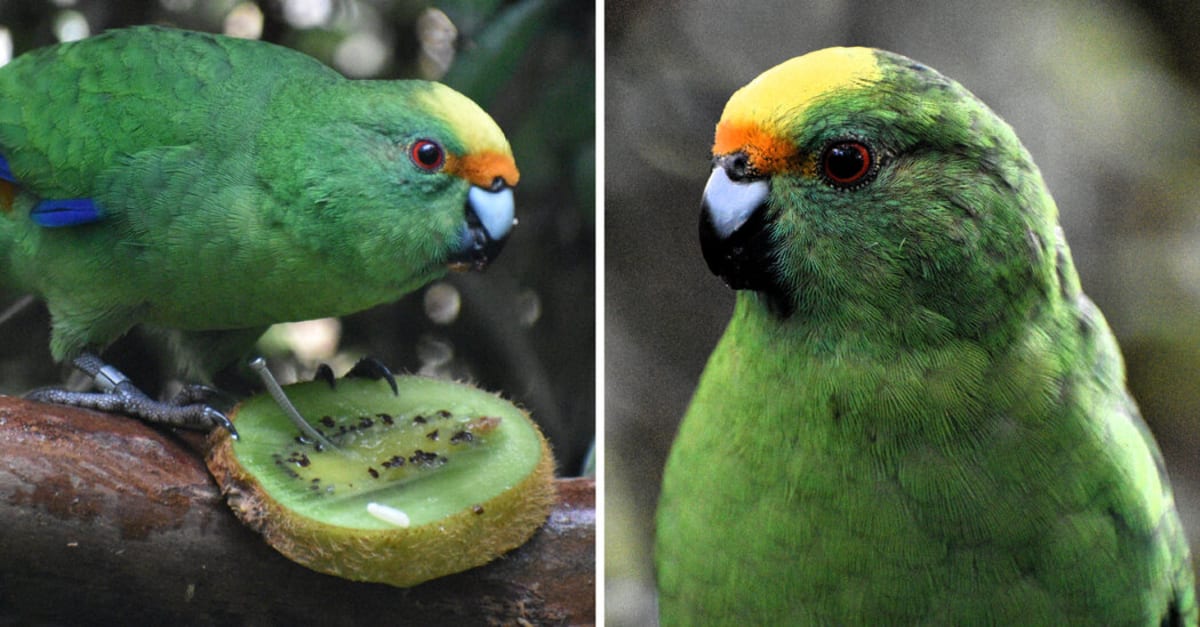
A parakeet pair in New Zealand has hatched 55 chicks in two years, giving critical hope to a species once declared extinct twice. Conservationists call Trixie and Nacho "super breeders" as their offspring help rebuild a population of just 450 birds.
Two parakeets named Trixie and Nacho are single-handedly saving their species from extinction, one chick at a time.
The breeding pair lives at the Isaac Conservation and Wildlife Trust in Christchurch, New Zealand, where they've produced 55 chicks in just two years. This season alone, they hatched 33 babies, while other pairs in the program typically produce between 10 and 15.
Their offspring have boosted the entire kākāriki karaka population by more than 10 percent. That's remarkable progress for a bird declared extinct in 1919 and again in 1965, only to be rediscovered both times in remote mountain valleys.
Today, only about 450 orange-fronted parakeets exist in the wild and in captivity. They're New Zealand's rarest parakeet, making every new chick a victory against extinction.
What makes this pair so successful? They chose each other.
Staff at the facility placed several compatible birds together and let them pick their own mates. Wildlife manager Leigh Percasky says this approach creates better pairings and happier birds.
"Nacho especially is very inquisitive and is quite interested in what people are doing," Percasky explains. Trixie is slightly larger than other females, and together they produce bigger than normal chicks.
The pair stays "quite relaxed" despite their busy breeding schedule. Percasky's team monitors them closely to ensure the work doesn't take too much of a toll, but the birds seem energized by their purpose.
Many of their offspring have already been released into predator-free wild habitats. The recovery program, led by New Zealand's Department of Conservation and the indigenous Ngāi Tahu tribe, now protects five established populations across the South Island.
The Ripple Effect
Trixie and Nacho's success is inspiring broader conservation efforts across New Zealand. The country is home to 206 breeding bird species, with 94 found nowhere else on Earth.
Conservationists hope to establish 10 wild kākāriki karaka populations within the next two decades. The ultimate goal is for wild populations to thrive independently, making captive breeding programs unnecessary.
Wayne Beggs, the recovery program lead, says working to save a critically endangered species gives him reason to get out of bed each morning. The biggest threats remain predators introduced by humans, habitat loss, disease, and climate change.
The captive breeding program started in 2003 when conservationists took eggs from the wild and gave them to foster birds. Since then, hundreds of kākāriki karaka have been bred and released back into protected habitats.
Until wild populations can sustain themselves, Nacho and Trixie have more work to do, and they seem more than ready for the challenge.
Based on reporting by Google News - Species Saved
This story was written by BrightWire based on verified news reports.
Spread the positivity!
Share this good news with someone who needs it