US Invests $126M in Supercomputers for Science Breakthroughs
The Department of Energy just funded new supercomputing projects that will help scientists solve problems once thought impossible. These powerful computers can do in one second what every person on Earth would take five years to calculate.
Imagine a computer so powerful it could do what every person on Earth working together for five years would accomplish in just one second.
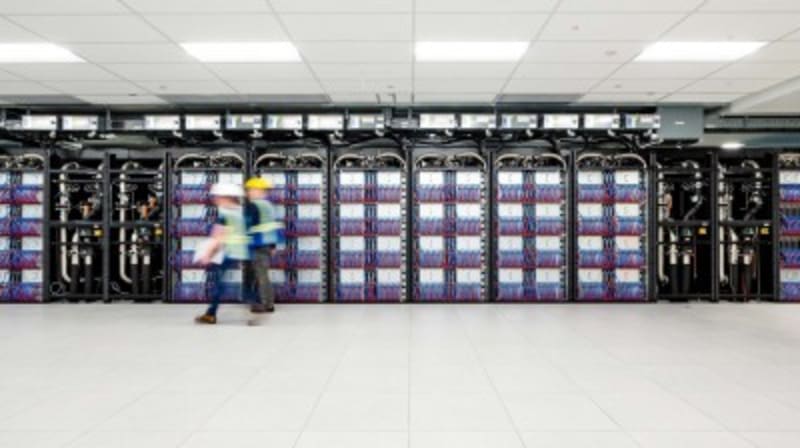
That's the reality at three US Department of Energy facilities, which now house the world's three most powerful supercomputers. These machines are unlocking scientific discoveries that researchers couldn't achieve any other way.
The DOE just announced $126 million in new funding to expand its Scientific Discovery Through Advanced Computing program. This includes $78.8 million for three new research institutes and $47.6 million for five projects focused on energy sciences.
For over two decades, this program has brought together physicists, mathematicians, and computer scientists to tackle challenges too complex for traditional research methods. The collaboration is key because no single team could solve these problems alone.
The supercomputers allow scientists to simulate phenomena that are too big, small, dangerous, or fast to observe in real life. They process massive amounts of data that would overwhelm regular computers and even analyze information from other scientific instruments in real time.
Past projects have already produced remarkable results. Cosmologists ran simulations of the entire universe to study dark matter and dark energy. Physicists studied plasma behavior to help develop better fusion energy devices, bringing us closer to clean, unlimited power.
The three record-breaking machines are El Capitan at Lawrence Livermore, Frontier at Oak Ridge, and Aurora at Argonne. Each can perform a billion billion calculations per second, earning them the title of "exascale computers."
The Ripple Effect
These supercomputers aren't just impressive technology. They're solving real problems that affect our daily lives. Research on these machines is advancing clean energy, improving our understanding of climate systems, and developing new materials that could revolutionize manufacturing.
The new funding will support teams at multiple national laboratories working on everything from chemical sciences to materials research. These discoveries will help address energy challenges and push the boundaries of what we know about the physical world.
Scientists from different fields working together on these projects also advance fundamental knowledge in mathematics and computer science. Those breakthroughs then help other researchers tackle even more complex questions.
The tradition started in the 1950s when the DOE's predecessor agencies helped establish computer networks still used worldwide today. Now these supercomputers continue that legacy of American innovation in scientific computing.
More discoveries are coming as these new institutes and projects get underway.
Based on reporting by Google: scientific discovery
This story was written by BrightWire based on verified news reports.
Spread the positivity!
Share this good news with someone who needs it