Venus and Jupiter to Nearly Touch in June 2026 Night Sky
The two brightest planets will appear just three moon-widths apart in early June 2026, creating a stunning celestial show visible to the naked eye. Skywatchers can catch the rare sight from June 9-11 in the western sky after sunset.
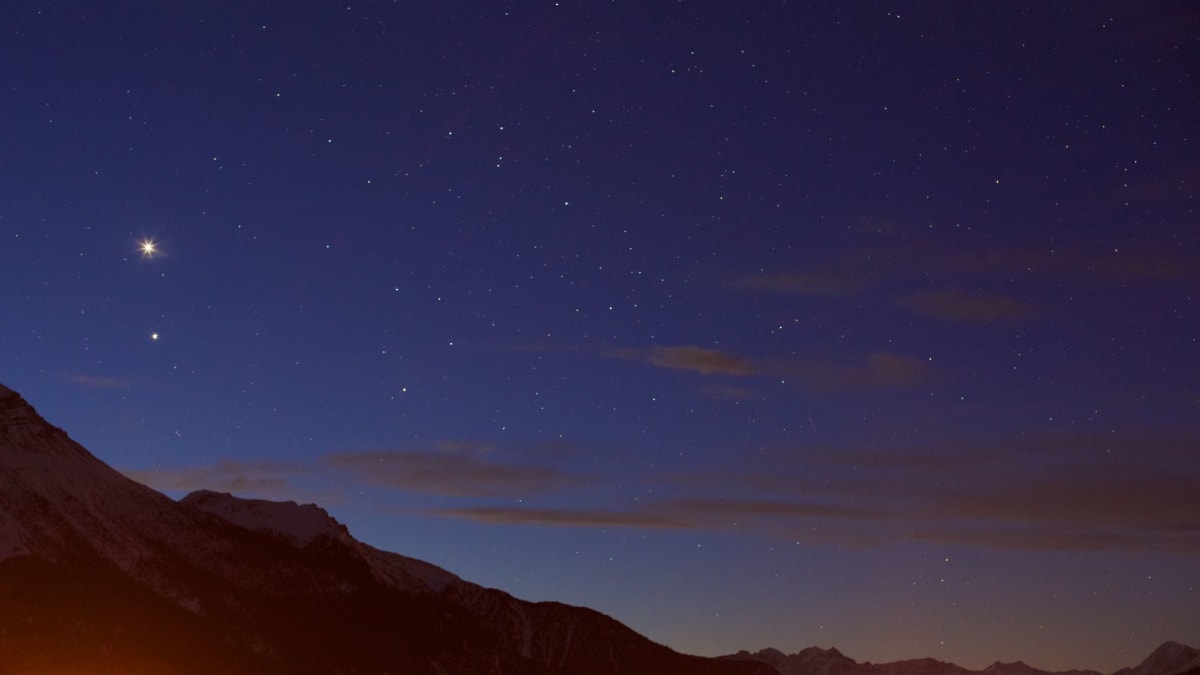
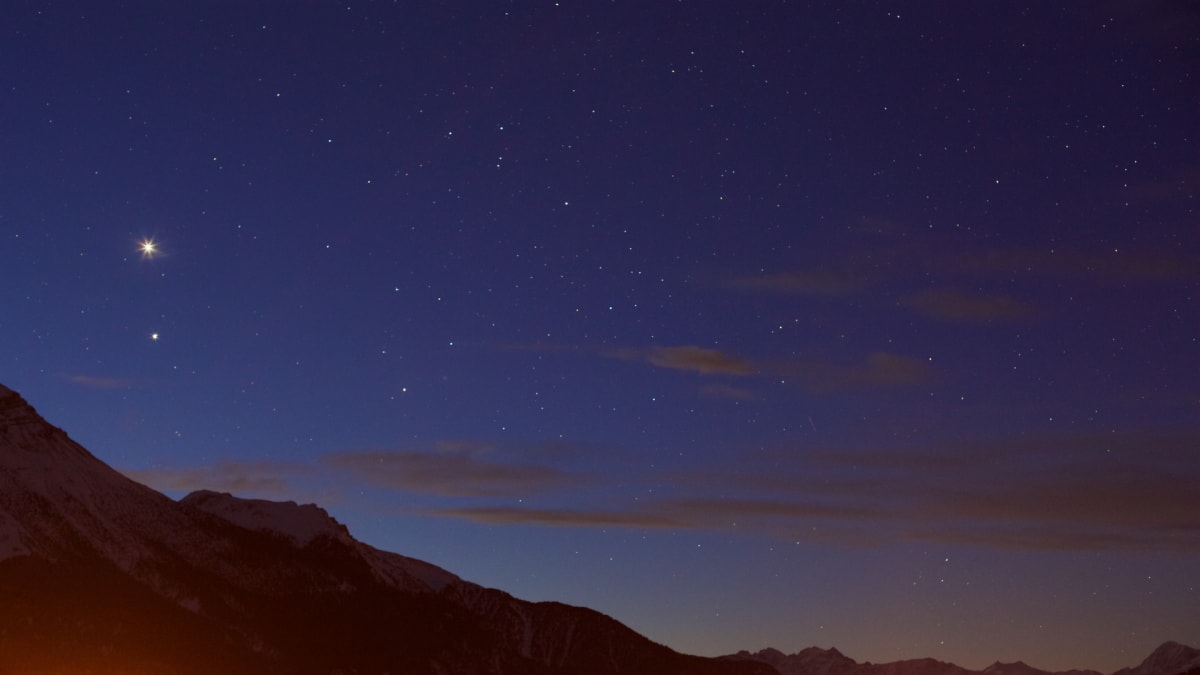
This June, the night sky will put on one of its most beautiful shows when Venus and Jupiter appear to almost touch each other above the western horizon.
From June 9 through 11, 2026, the two brightest planets will shine side by side in the twilight sky, close enough to fit within the view of a pair of standard binoculars. On June 9, they'll be separated by just 1.6 degrees, about three times the width of a full moon.
The best viewing window starts about 45 minutes after sunset and lasts for up to two hours. Find a spot with a clear view of the western horizon, and you won't need any special equipment to enjoy the show.
What makes this event even more remarkable is how different these two worlds actually are. Venus will be just 1.2 astronomical units from Earth, while Jupiter sits five times farther away at 6 astronomical units. Venus will also outshine its neighbor by more than seven times, glowing at magnitude negative 3.9 compared to Jupiter's negative 1.7.
This cosmic meeting happens because Venus and Earth are both catching up to slower Jupiter. Venus races around the sun in just 225 days, while Jupiter takes nearly 12 years to complete one orbit. As Earth speeds away from Jupiter, the gas giant appears to sink lower in our evening sky, while faster Venus climbs higher.
If you have binoculars, you'll see both planets in the same frame, a rare treat for amateur astronomers. With a backyard telescope, you might even spot Jupiter's four large moons (Ganymede, Europa, Callisto, and Io) as tiny dots of light flanking the giant planet.
Why This Inspires
Events like this remind us that wonder doesn't require expensive equipment or exotic travel. The universe delivers front-row seats to spectacular shows right from our backyards, inviting anyone with curiosity to look up and marvel at the mechanics of our solar system.
After June's Venus-Jupiter pairing, another planetary conjunction will grace the pre-dawn sky on November 15, when Jupiter and Mars appear even closer together at just 1.2 degrees apart.
Mark your calendars for early June 2026, and prepare to witness two brilliant worlds share the sky in perfect harmony.
More Images

Based on reporting by Live Science
This story was written by BrightWire based on verified news reports.
Spread the positivity!
Share this good news with someone who needs it

%2Fhttps%3A%2F%2Ftf-cmsv2-smithsonianmag-media.s3.amazonaws.com%2Ffiler_public%2Ff0%2Ffe%2Ff0fe19e4-e68b-474d-b0a4-19c5beb9d19d%2Fspeedy-star.webp)