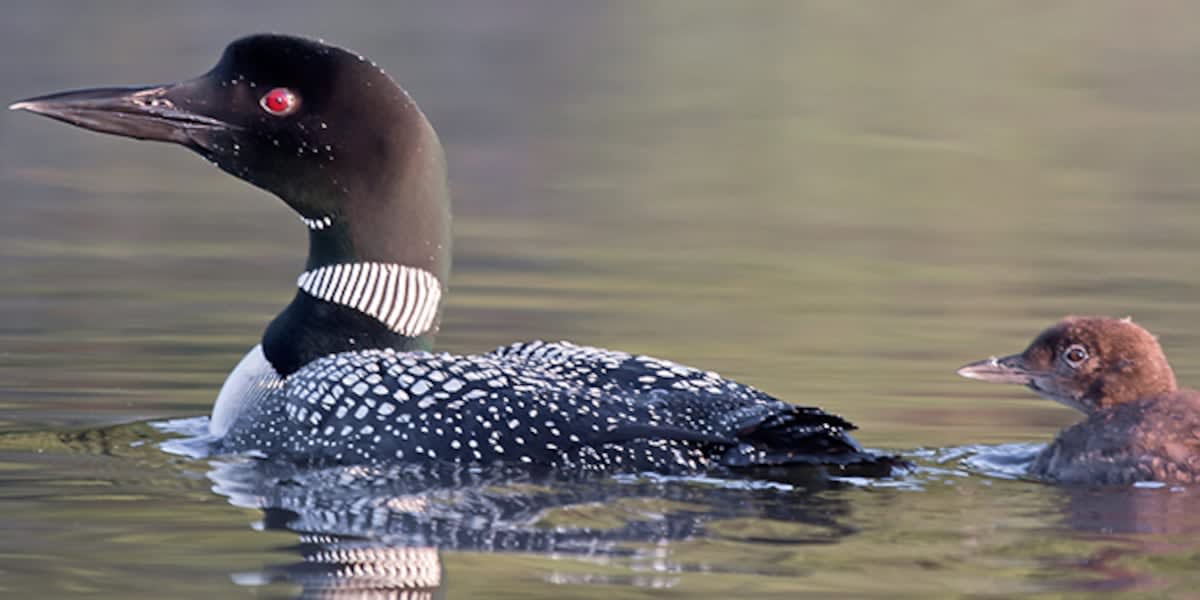
Vermont's Loon Population Soars from 15 to 115 Nesting Pairs
Vermont's iconic loons have made a stunning comeback, growing from just 15 nesting pairs in the 1990s to 115 last year. The success story is so remarkable that conservationists are now backing off intensive management on some lakes.
On misty summer mornings, Lisa Angstman kayaks across Lake Iroquois in Hinesburg, Vermont, checking on a special floating raft that helped two baby loons start their lives. It's a small act that's part of an extraordinary conservation win decades in the making.
Vermont's loon population has surged nearly eight-fold since the 1990s. When Rosalind Renfrew with Vermont Fish and Wildlife started working on loon conservation, only about 15 nesting pairs called the state home. Last year, volunteers counted 115 pairs.
"It's really rare that you can say that about a species, that significant of a comeback," Renfrew said.
The turnaround came from a mix of simple but powerful solutions. Floating nesting rafts deployed since the 1980s protect loon nests from flooding, predators, and disturbances from people. Vermont also banned lead fishing sinkers, which poisoned loons when they accidentally swallowed them while feeding.
Education programs taught residents and visitors how to respect nesting areas. Volunteers like Angstman donated countless hours monitoring the birds and maintaining the rafts.
The Ripple Effect
The success is now creating a new kind of progress. Next season, volunteers will remove rafts from several lakes to see if loons can thrive without them. It's a test that conservation programs dream about: the moment when nature can take over again.
"It's really a good measure of success when you can kind of back off from intensive management, in at least some places, and let the loons take on their natural course," Renfrew explained.
The experiment doesn't mean abandoning the birds completely. Renfrew expects loons will always need some level of monitoring to maintain healthy populations. But the fact that backing off is even possible shows how far Vermont has come.
On Lake Iroquois, Angstman isn't stepping back yet. She's already preparing to place the raft back in the water as soon as the ice melts next spring, ready for the loons who return each year looking for a safe place to raise their chicks.
What started as 15 struggling pairs has become a thriving population that may soon need less human help than ever before.
Based on reporting by Google News - Conservation Success
This story was written by BrightWire based on verified news reports.
Spread the positivity!
Share this good news with someone who needs it

