Wasps and Frogs Evolved Same Pain Defense Independently
Scientists discovered wasps and frogs independently evolved the same pain-causing molecule to defend against predators, challenging what we thought we knew about evolution. The finding shows nature follows more predictable patterns than previously believed.
Nature just revealed one of its most elegant defense strategies, and it could change how we predict everything from crop resistance to alien life.
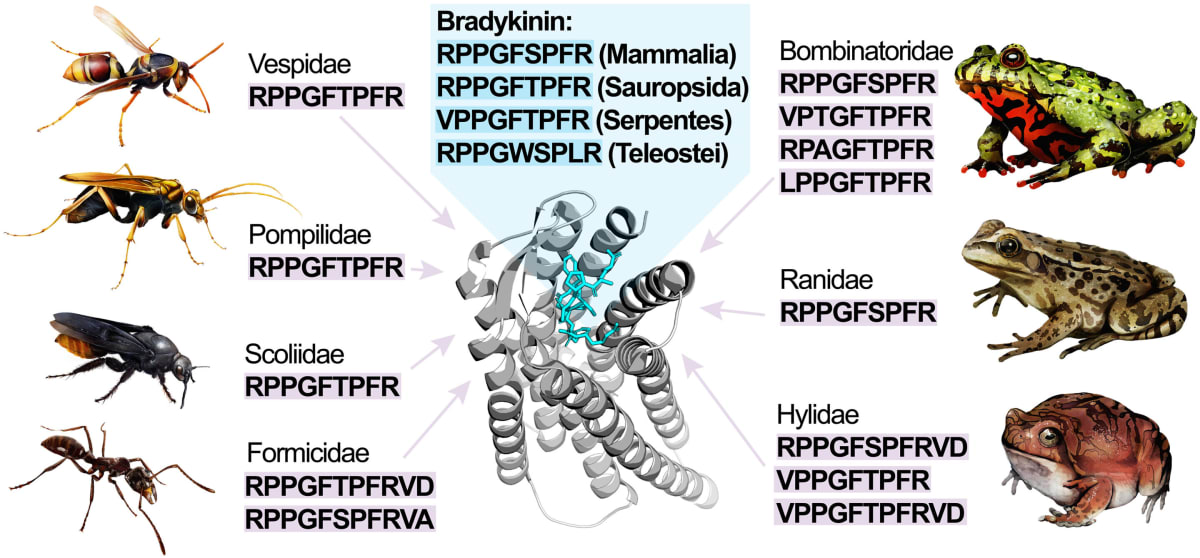
Researchers at the University of Queensland discovered that certain wasps and frogs share an identical pain-triggering molecule, even though they aren't related. The peptide mimics bradykinin, a substance in vertebrates that causes pain and inflammation.
Here's the remarkable part: these creatures didn't inherit this defense mechanism from a common ancestor. They each evolved the exact same solution independently, multiple times across different species.
"Scientists previously believed bradykinin-like peptides in wasp venom and frog skin secretions were simply their versions of the vertebrate peptide," said lead author Dr. Sam Robinson. "Instead, our research shows they are evolutionary doppelgängers—molecules that look the same but evolved independently."
The strategy is brilliantly simple. When a bird or mammal tries to eat a wasp or frog, the creature releases this pain molecule that perfectly activates the predator's own pain receptors. It's like speaking their nervous system's language fluently.
The wasps use it in their venom for defense. The frogs secrete it through their skin, customizing the molecule to match whatever predator threatens them, whether mammal, bird, or fish.
Testing confirmed the frogs' own receptors don't respond to their defensive peptides. They weaponized pain without becoming vulnerable to it themselves.
Why This Inspires
This discovery suggests evolution isn't as random as we once thought. When faced with similar challenges, nature arrives at similar solutions through predictable pathways.
"Convergent evolution demonstrates that life is not a random, unpredictable muddle of improbable outcomes, but is in fact progressing in an ordered, constrained, predictable and perhaps even inevitable way," Robinson explained.
The implications reach far beyond wasps and frogs. Farmers could design pest resistance strategies before problems emerge rather than scrambling afterward. Doctors could anticipate how infections develop resistance and create smarter treatment combinations from the start.
Robinson even suggests this predictability could help us imagine what alien life might look like and design better methods to detect it.
The research, published in the journal Science, shows that when nature finds an effective solution, it returns to it again and again. That's not just fascinating science—it's a roadmap for solving our own challenges by understanding the patterns life follows.
More Images

Based on reporting by Phys.org
This story was written by BrightWire based on verified news reports.
Spread the positivity!
Share this good news with someone who needs it