Webb Telescope Captures Dying Star's Stunning Lion Face
NASA's James Webb Space Telescope captured breathtaking new images of a dying star that looks just like a lion's face in space. The cosmic lion will shine for 10,000 more years before fading forever.
A dying star 5,000 light years away is putting on one of the universe's most beautiful final performances, and NASA's newest telescope just gave us front row seats.
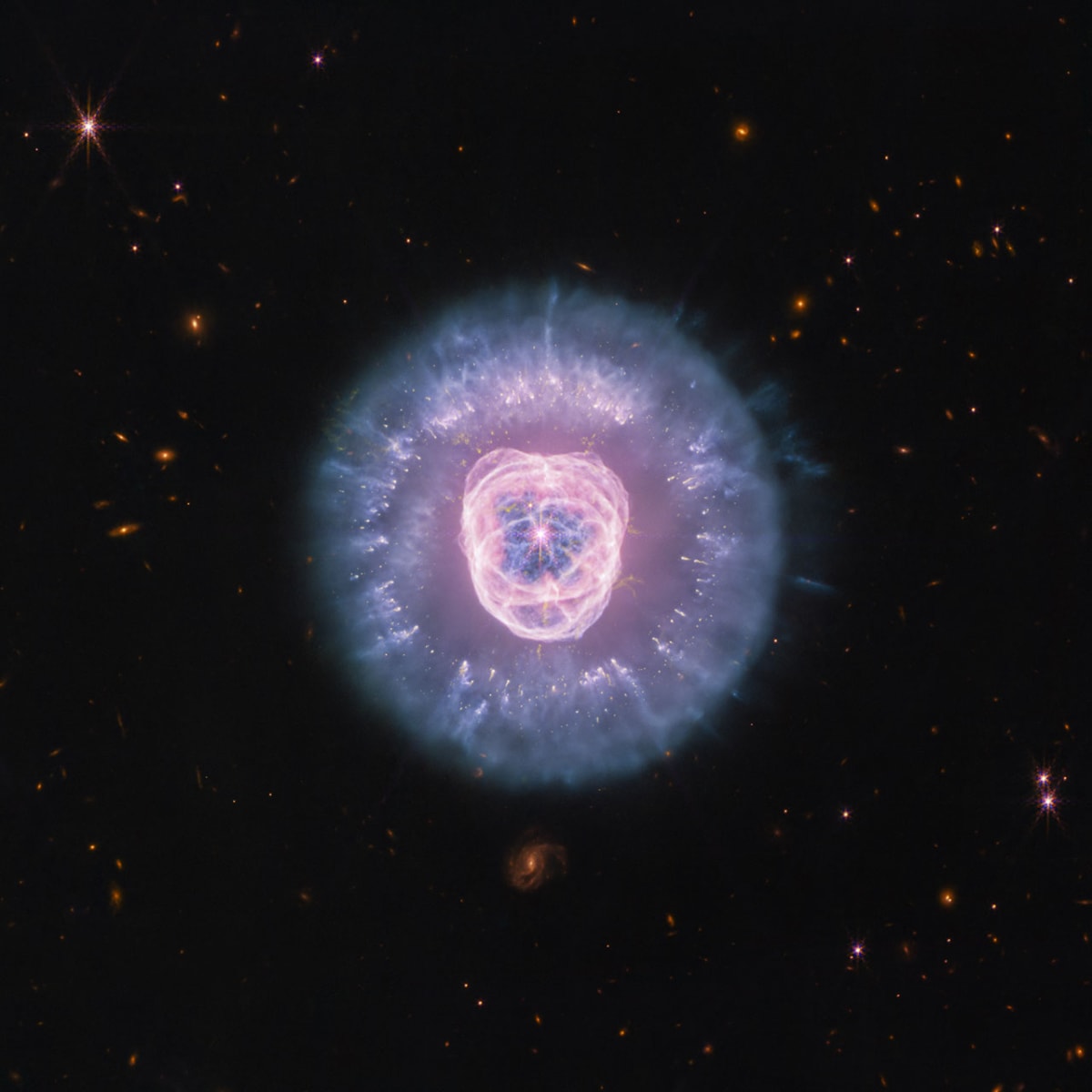
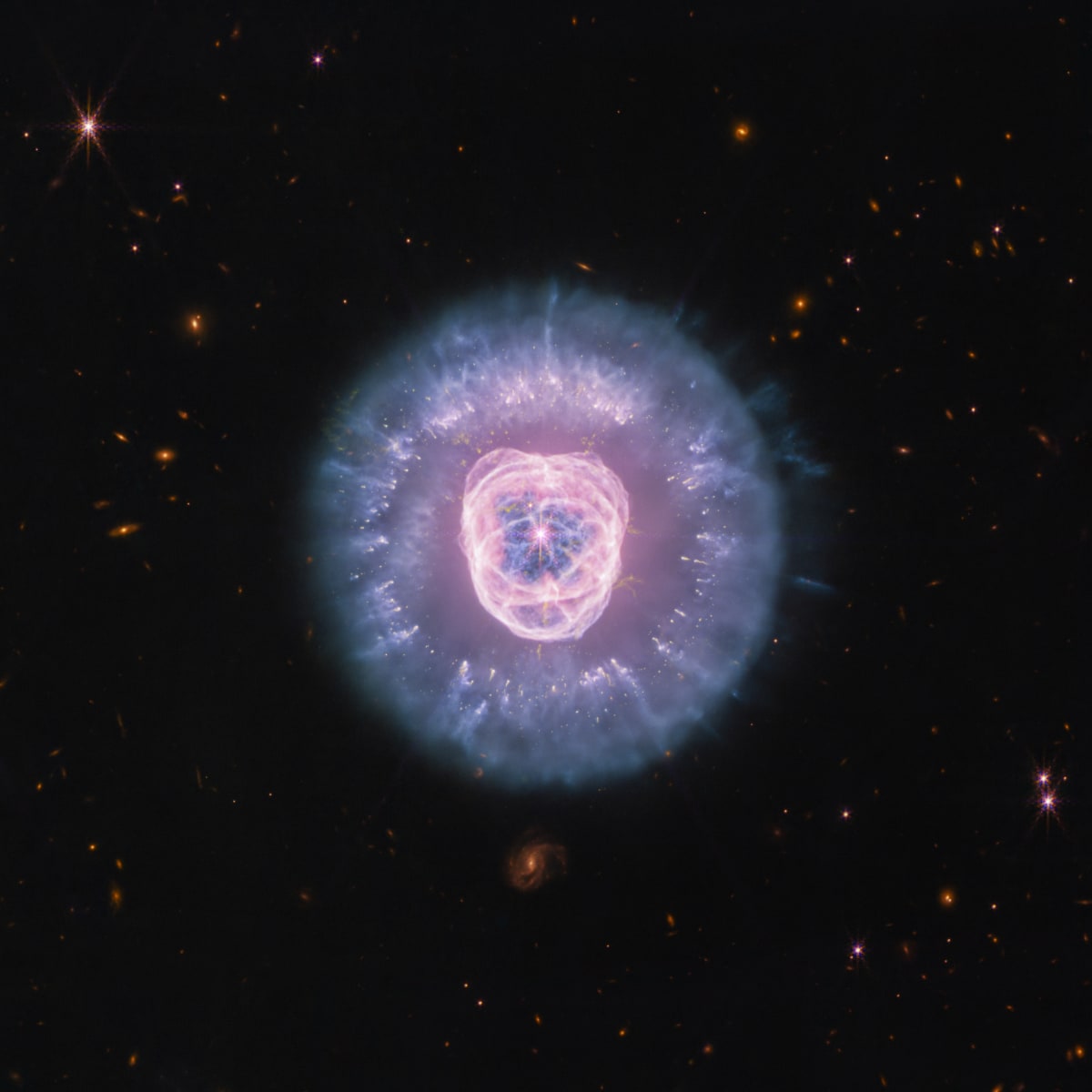
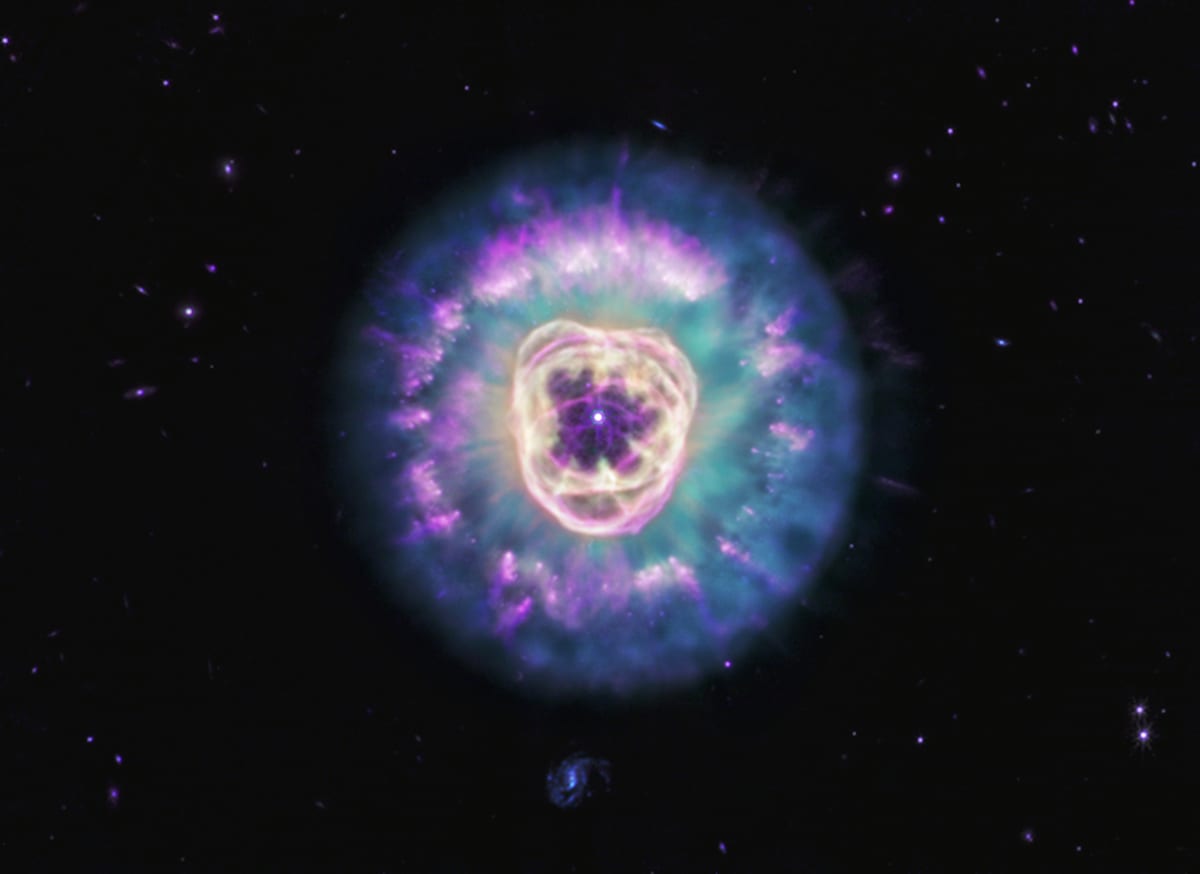
The James Webb Space Telescope captured stunning new images of NGC 2392, nicknamed the Lion Nebula for its uncanny resemblance to a lion's face staring back at us from deep space. The "face" is actually a bubble of glowing gas, while the flowing "mane" consists of dust clouds illuminated by the dying star at its center.
Webb's infrared cameras revealed details never seen before, even surpassing images taken by the Hubble Space Telescope in 2000. The new pictures show compact clumps of dust that have somehow survived the intense radiation blasting from the white dwarf star at the nebula's heart, along with delicate hazes of ionized gas spreading outward like cosmic brushstrokes.
This celestial light show has been building for thousands of years. When lower mass stars like our sun near the end of their lives, they can't sustain nuclear reactions in their cores anymore. Instead of exploding like massive stars do, they pulsate and shed their outer layers, creating shells of gas and dust that drift away into space.
The remaining stellar core, now a white dwarf, acts like a cosmic oven. It "cooks" everything around it with intense heat and radiation, carving out the expanding bubble that forms the lion's face. The tufts of the mane are actually dust clouds tough enough to withstand this stellar blast, casting protective shadows over the material behind them.
Why This Inspires
Webb's crystal clear imagery freezes a moment in cosmic time that reminds us beauty exists even in endings. Stars at this life stage produce much of the universe's observable dust, the raw material that eventually forms new stars, planets, and perhaps even life itself. Death and creation dance together across the cosmos.
This lion's roar will eventually fade. Astronomers estimate NGC 2392 will disperse completely in about 10,000 years, a blink of an eye in astronomical terms but plenty of time for us to marvel at its majesty.
The universe keeps showing us that even in death, stars leave behind something magnificent worth celebrating.
More Images
Based on reporting by Google: James Webb telescope
This story was written by BrightWire based on verified news reports.
Spread the positivity!
Share this good news with someone who needs it