Webb Telescope Captures 'Eye of Sauron' Dying Star at 650LY
NASA's James Webb Space Telescope revealed stunning new details of a dying star creating cosmic dust 650 light-years away, showing how the universe recycles itself into new worlds. The Helix Nebula's spectacular transformation gives scientists fresh insight into how stars seed the cosmos with building blocks for future solar systems.
The most powerful telescope ever built just gave us a front-row seat to one of nature's most beautiful transformations.
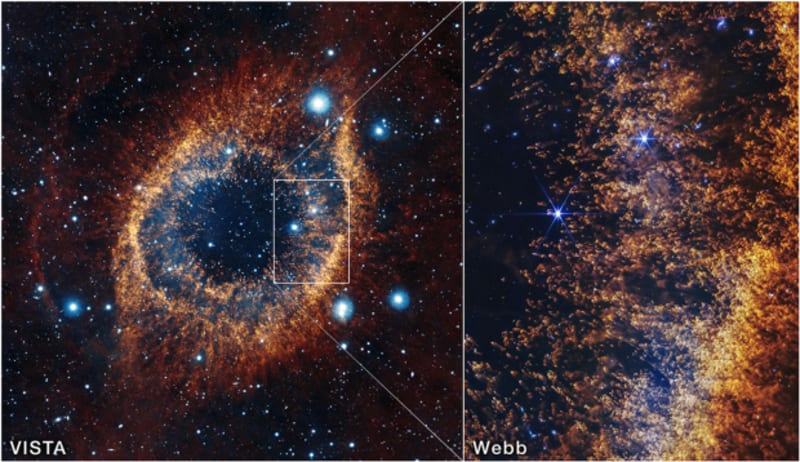
NASA's James Webb Space Telescope captured breathtaking new images of the Helix Nebula, a dying star that's been nicknamed the "Eye of Sauron" by stargazers who love spotting its eerie resemblance to the villain from Lord of the Rings. Located just 650 light-years from Earth, this cosmic spectacle shows how stars don't simply die but transform into the raw materials that build new worlds.
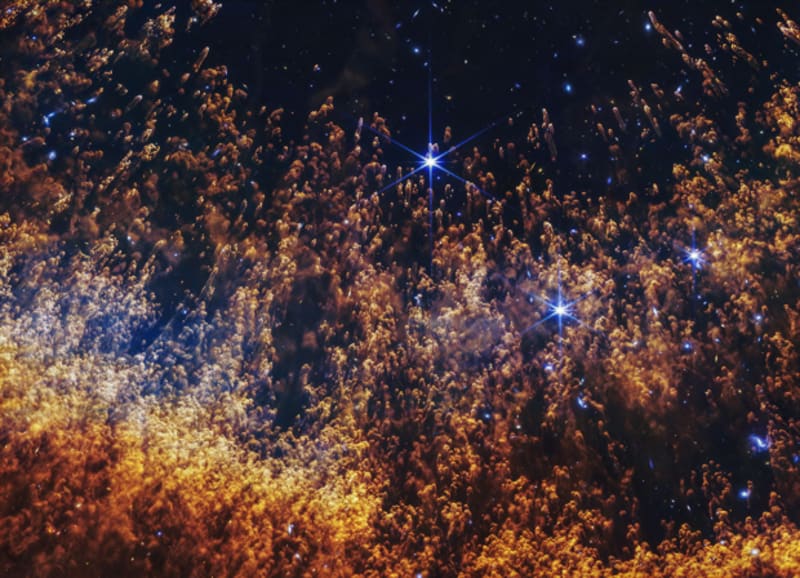
The images reveal something truly remarkable: a white dwarf star at the center, surrounded by layers of gas and dust forming into the very building blocks of future planets. The blue areas closest to the star glow with intense heat from ultraviolet radiation. Moving outward, yellow regions show hydrogen atoms joining together to form molecules. The reddish outer edges represent the coolest zones, where cosmic dust begins taking shape.
Webb's Near-Infrared Camera captured details never seen before in the 20 years scientists have studied this nebula. Even the famous Hubble Space Telescope couldn't reveal this level of complexity. The new observations show exactly how dying stars distribute the elements needed for new solar systems, planets, and potentially even life itself.
Why This Inspires
This discovery reminds us that endings are often just new beginnings in disguise. When massive stars reach the end of their lives, they don't disappear. Instead, they spread enriched material throughout space that becomes part of something new.
The elements in our own bodies, from the calcium in our bones to the iron in our blood, came from ancient stars that went through this same process billions of years ago. Every atom we're made of was once forged inside a star and scattered across space during its final act.
Scientists studying these images are gaining crucial understanding of stellar evolution and how the universe recycles itself. The detailed view of gas cooling, molecules forming, and dust gathering helps explain how planetary systems like our own solar system came to be. Each new observation brings us closer to understanding our cosmic origins.
The Helix Nebula sits close enough for amateur astronomers to spot with decent telescopes, making it a favorite target for backyard stargazers. Now, thanks to Webb's unprecedented sensitivity, professional astronomers can study the intricate dance of destruction and creation happening within it.
This cosmic eye watching us from 650 light-years away tells a story of hope: nothing in the universe is truly lost, only transformed into something new.
More Images

Based on reporting by Google: James Webb telescope
This story was written by BrightWire based on verified news reports.
Spread the positivity!
Share this good news with someone who needs it