Webb Telescope Captures Stunning 'Eye of Sauron' Nebula
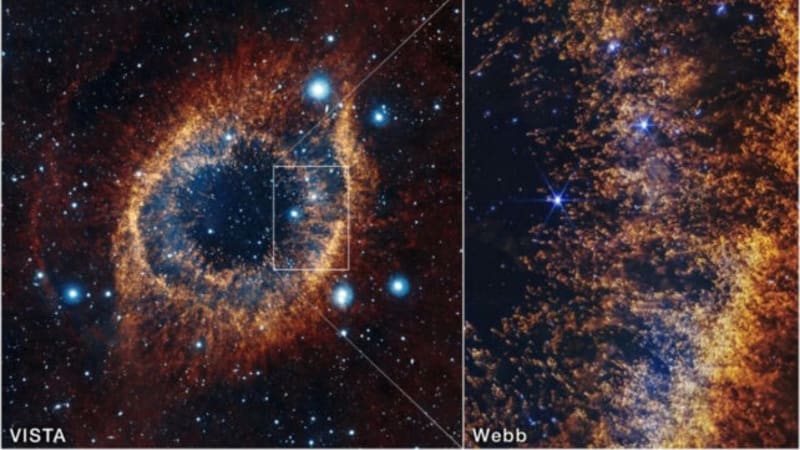
The James Webb Space Telescope has delivered breathtaking new images of the Helix Nebula, showing us a preview of our own Sun's beautiful finale in 5 billion years. The images reveal 40,000 comet-shaped gas clouds, each larger than our entire solar system.
Scientists just unveiled jaw-dropping images that show exactly what will happen to our Sun when it dies, and the view is surprisingly beautiful.
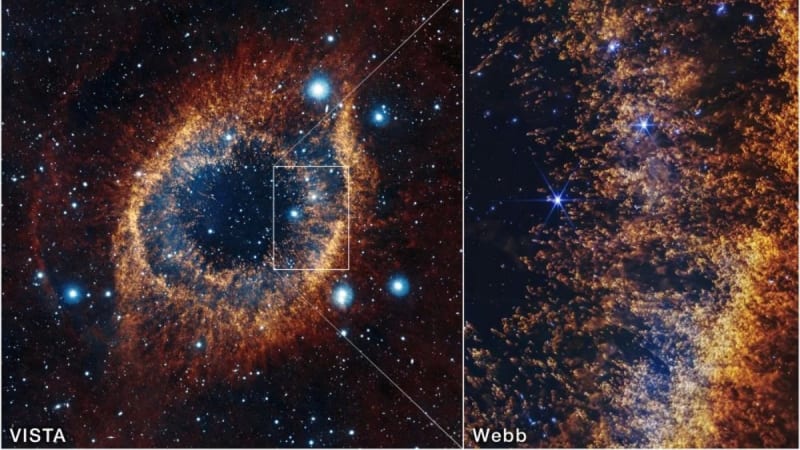
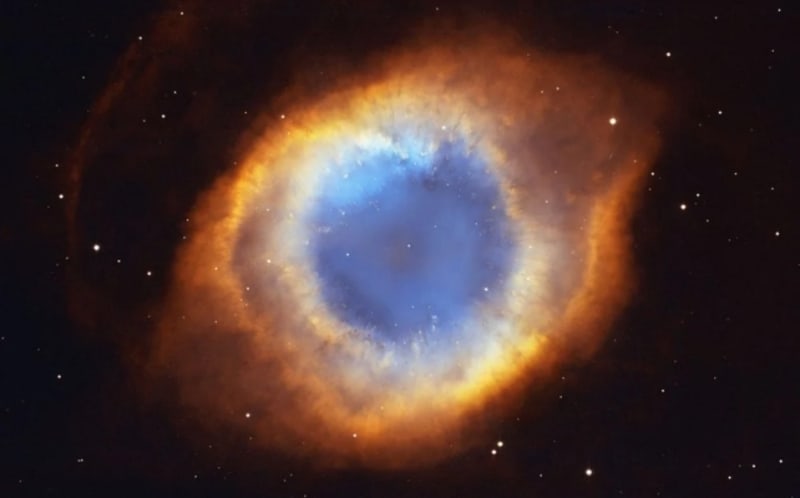
The James Webb Space Telescope captured stunning new photos of the Helix Nebula, nicknamed the "Eye of Sauron" for its striking resemblance to a cosmic eyeball. Located 650 light-years away in the constellation Aquarius, this glowing cloud of gas shows the final chapter of a Sun-like star's life.
When stars like our Sun run out of hydrogen fuel after billions of years, they don't simply wink out. They swell into red giants, then shed their outer layers into space, creating one of nature's most dazzling light shows: a planetary nebula.
The dying star at the center then lights up these expelled gases like a cosmic lantern, ionizing them and painting space in brilliant colors. This is the fate awaiting our own Sun in about 5 billion years.
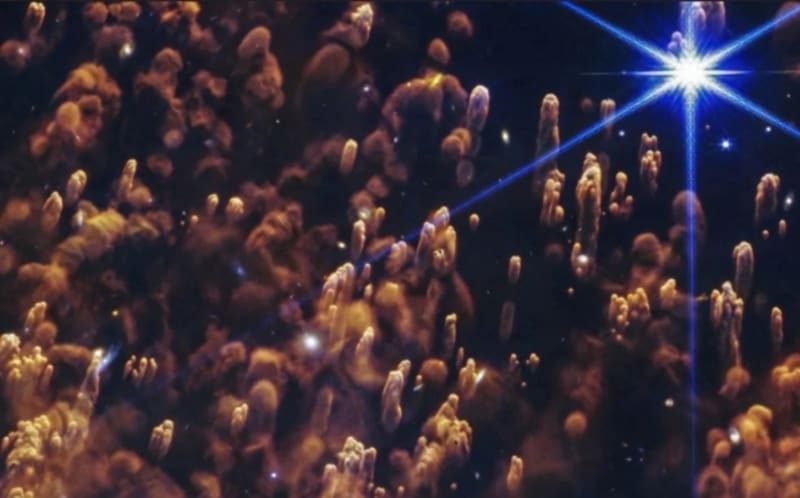
Webb's powerful infrared vision revealed something remarkable hidden within the nebula. The images show roughly 40,000 structures called cometary knots, dense clumps of gas resisting the dying star's powerful winds.
Each of these knots spans a distance larger than our entire solar system measured out to Pluto. They glow brightly at their heads where the star's radiation hits them, then trail off into faint tails like cosmic tadpoles swimming through space.
The Helix Nebula is between 10,000 and 12,000 years old, which makes it fairly mature for a planetary nebula. Within another 10,000 to 20,000 years, it will continue expanding and thinning out until it disperses completely into the surrounding space.
Why This Inspires
This celestial display isn't just a beautiful end. The gases spreading through space carry elements forged inside the dying star, materials that could become part of new star systems.
Some of this stellar material might eventually gather into new planets. On one of those future worlds, perhaps water enriched with elements from this very nebula could pool on the surface, creating conditions for new life to emerge.
The universe wastes nothing. What looks like a star's death is actually a cosmic recycling program, spreading the building blocks of planets and possibly life throughout the galaxy.
Our Sun will one day add its own contribution to this eternal cycle, turning our corner of space into a glowing masterpiece visible across hundreds of light-years. It's a reminder that even endings can be extraordinarily beautiful.
More Images

Based on reporting by Google News - Science
This story was written by BrightWire based on verified news reports.
Spread the positivity!
Share this good news with someone who needs it