Webb Telescope Discovers Daily Weather Cycle on Alien World
Scientists using the James Webb Space Telescope spotted cloudy mornings and clear evenings on a distant planet 689 light-years away. The discovery reveals how clouds form and vanish daily on this scorching world, opening new ways to study alien atmospheres.
For the first time, astronomers have watched a complete weather cycle unfold on a planet beyond our solar system, witnessing clouds that form overnight and burn away each morning like cosmic fog.
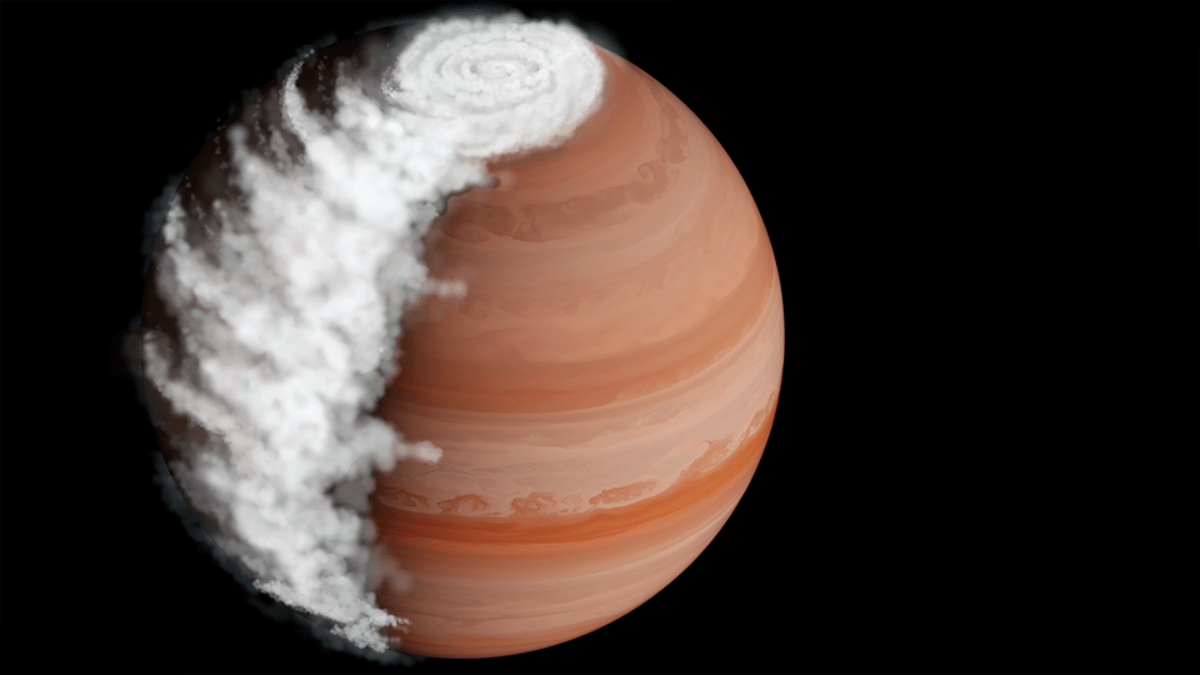
The planet, called WASP-94A b, is a gas giant about half Jupiter's size located 689 light-years from Earth in the constellation Microscopium. It orbits so close to its star that one full year lasts just four days, earning it the nickname "Hot Jupiter."
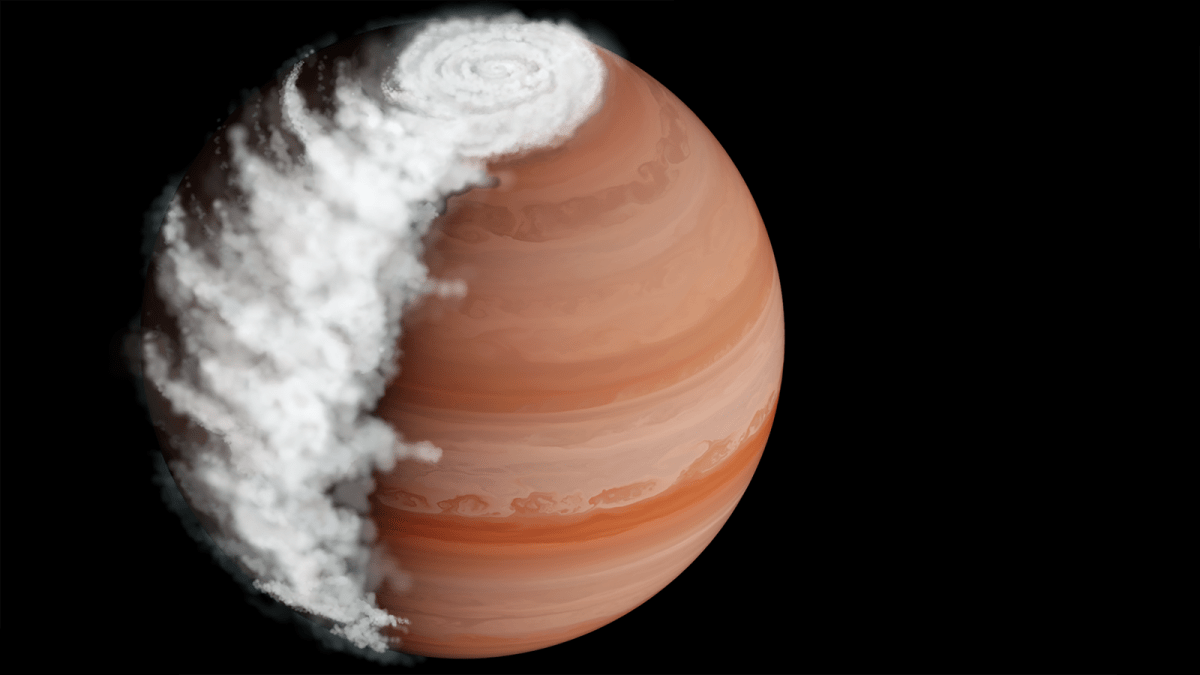
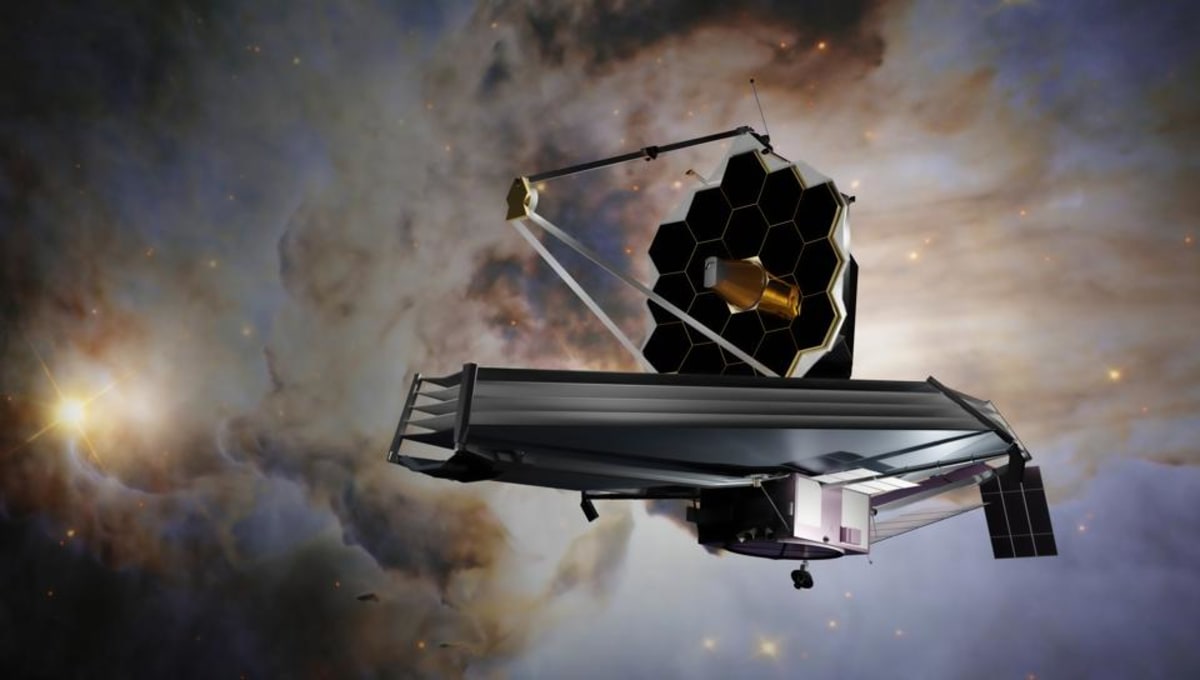
Scientists from Johns Hopkins University used the James Webb Space Telescope to peek at different sides of the planet as it crossed in front of its star. What they found amazed them: the morning side was covered in thick magnesium silicate clouds, while the evening side showed clear skies with strong water vapor signals.
WASP-94A b stays locked in place with one side always facing its star and the other in permanent darkness, creating temperature swings of roughly 350 degrees Fahrenheit between hemispheres. On the cooler night side, mineral clouds build up as air flows through the darkness, reaching their peak size by planetary daybreak.
Then the clouds drift toward the blazing dayside, where temperatures exceed 1,832 degrees Fahrenheit. The intense heat evaporates the cloud-forming minerals completely, leaving clear skies by evening before the cycle starts again.
"We've known for quite a while that clouds are pervasive on Hot Jupiter planets, which is annoying because it's like trying to look at the planet through a foggy window," said David Sing, a professor at Johns Hopkins. "Not only have we been able to clear the view, but we can finally pin down what the clouds are made out of."
The breakthrough came from the telescope's ability to examine different atmospheric regions separately instead of getting one blurry average view. Earlier observations from the Hubble Space Telescope suggested this planet had a wildly unusual composition, but the clearer JWST data revealed it contains only about five times as much oxygen and carbon as Jupiter, matching what scientists expect to find.
Why This Inspires
This discovery shows how far our tools for exploring distant worlds have come in just a few years. What once looked like an impenetrable foggy window now reveals detailed weather patterns on planets hundreds of light-years away.
The research team found similar cloud cycles on two other Hot Jupiters, suggesting this dramatic daily weather might be common throughout the galaxy. Each new detail we learn about these alien worlds brings us closer to understanding how planets form and evolve across the universe.
The James Webb Space Telescope continues proving it can answer questions we couldn't even ask a decade ago, turning distant specks of light into worlds with their own skies, weather, and stories to tell.
More Images

Based on reporting by Google: James Webb telescope
This story was written by BrightWire based on verified news reports.
Spread the positivity!
Share this good news with someone who needs it