Webb Telescope Finds 12-Billion-Year-Old Interstellar Comet
NASA's James Webb Space Telescope just revealed a visitor from another galaxy that might be older than our entire solar system. The discovery gives us our first glimpse into the ancient chemistry that could explain how life begins across the universe.
Scientists just got a rare peek at what the universe looked like billions of years before Earth existed, and it arrived in the form of a speeding comet from another star system.
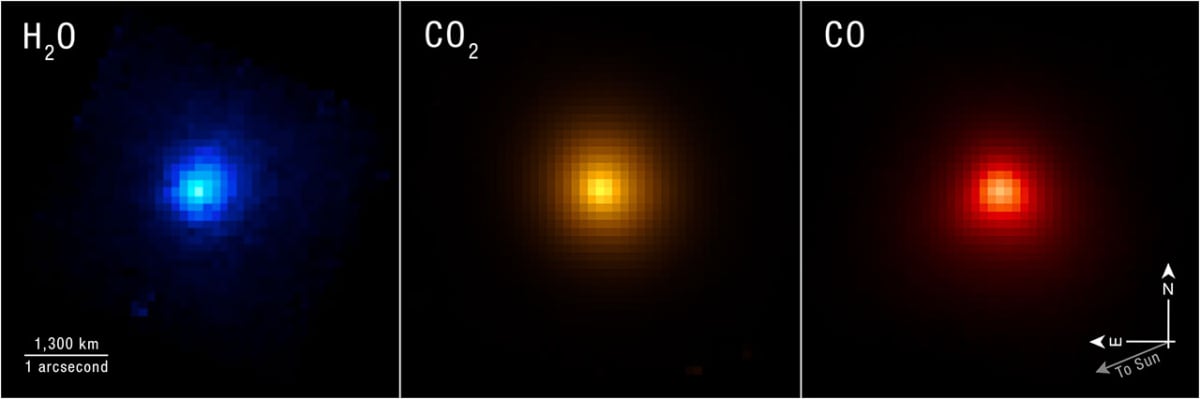
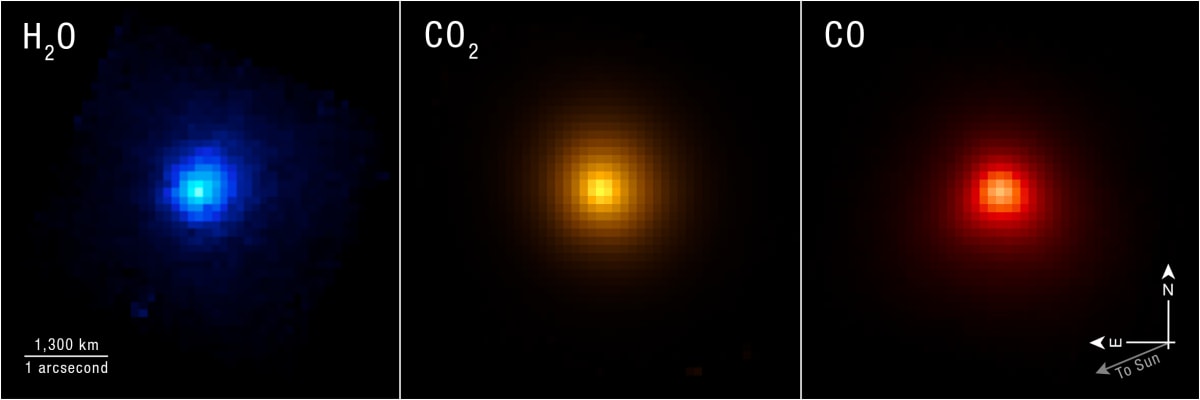
When interstellar comet 3I/ATLAS swung past the Sun in December 2025, NASA pointed the James Webb Space Telescope at it and discovered something remarkable. The comet's chemical makeup is unlike anything we've seen in our solar system, suggesting it formed up to 12 billion years ago during the universe's "cosmic noon" when star formation peaked.
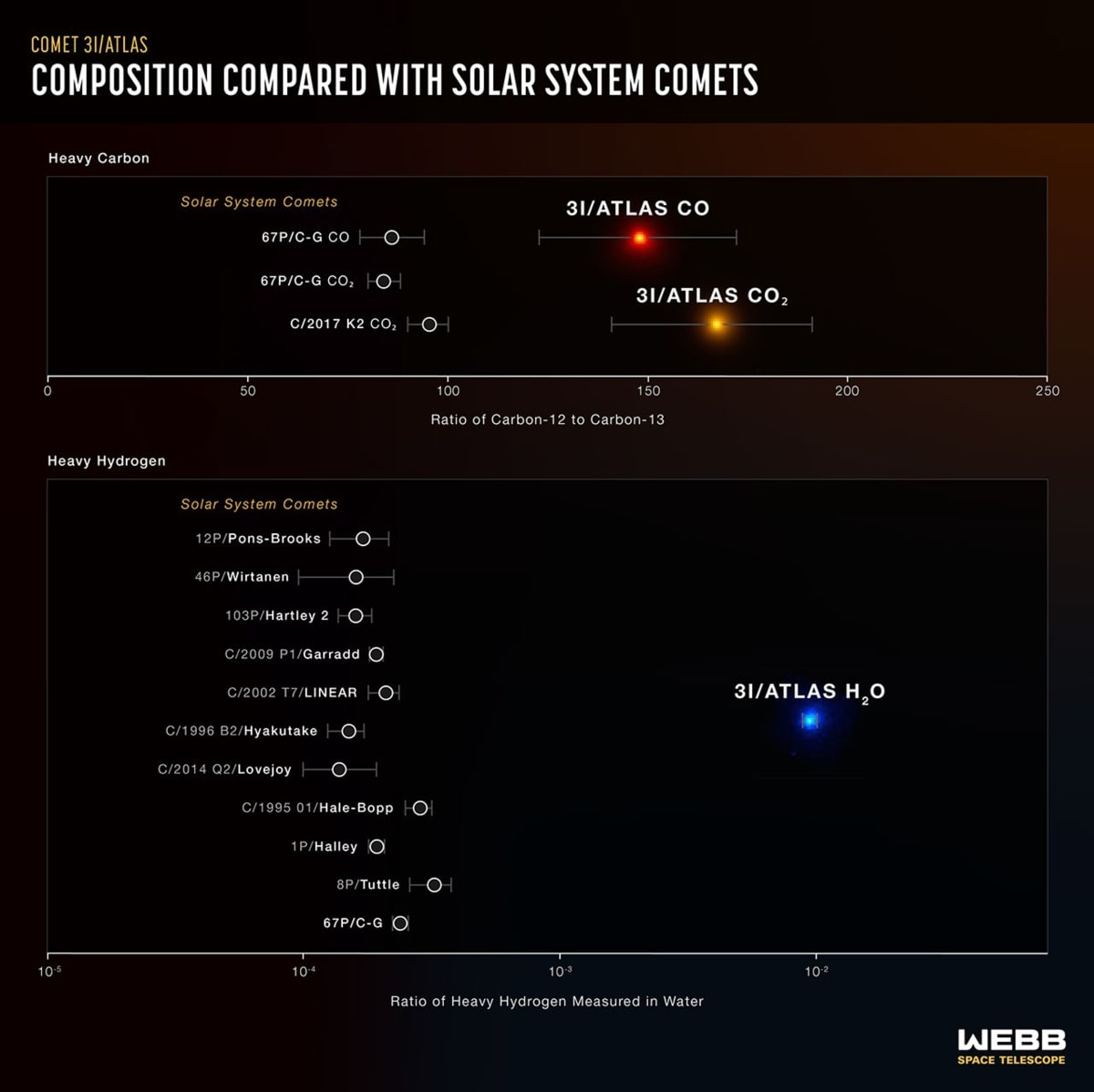
The Webb telescope captured detailed measurements as the Sun warmed the ancient comet's ice into a bright cloud of gas. What it found surprised everyone: the comet contains 30 times more deuterium (heavy hydrogen) than any comet from our solar system.
That unusual chemistry tells a story. The comet likely formed in an extremely cold, dense cloud in a distant galaxy, frozen solid before it ever experienced warmth that would have changed its ice composition.
The telescope also detected unusually low levels of carbon-13 compared to the lighter carbon-12. That's significant because stellar systems accumulate more carbon-13 over time as generations of stars live and die. Our Sun, which formed a relatively recent 4.5 billion years ago, sits in a system rich with carbon-13.
Lead researcher Martin Cordiner from NASA's Goddard Space Flight Center calls it "a unique opportunity to study an ancient object from the distant galaxy." His team interrupted Webb's planned observation schedule to capture data from this cosmic time traveler during its brief visit.
Why This Inspires
This discovery represents more than just a cool space fact. Scientists are using 3I/ATLAS as a window into prebiotic chemistry, the chemical ingredients that eventually led to life on Earth.
"So far, we know of only one place in the vast cosmos where chemical ingredients led to life: our solar system, our Earth," said NASA scientist Stefanie Milam. Analyzing interstellar visitors like 3I/ATLAS helps researchers understand whether the conditions that sparked life here are common or extraordinarily rare across the galaxy.
The comet essentially carried a chemical recipe from a planetary system that existed when the universe was young. By studying its composition, scientists can work backward to understand environments totally different from our own, expanding our knowledge of what's possible in the cosmos.
The findings hint that our solar system might be more unusual than we thought, and that's actually exciting news for understanding our place in the universe.
More Images
Based on reporting by Google News - Science
This story was written by BrightWire based on verified news reports.
Spread the positivity!
Share this good news with someone who needs it