Webb Telescope Finds Evidence of 'Black Hole Stars
NASA's James Webb Space Telescope captured the most detailed look yet at a mysterious cosmic object, revealing strong evidence for "black hole stars." Scientists are solving one of space's newest puzzles, discovered just four years ago.
Scientists just got their clearest view yet of one of the universe's strangest mysteries, and it's bringing us closer to understanding how black holes grew in the early cosmos.
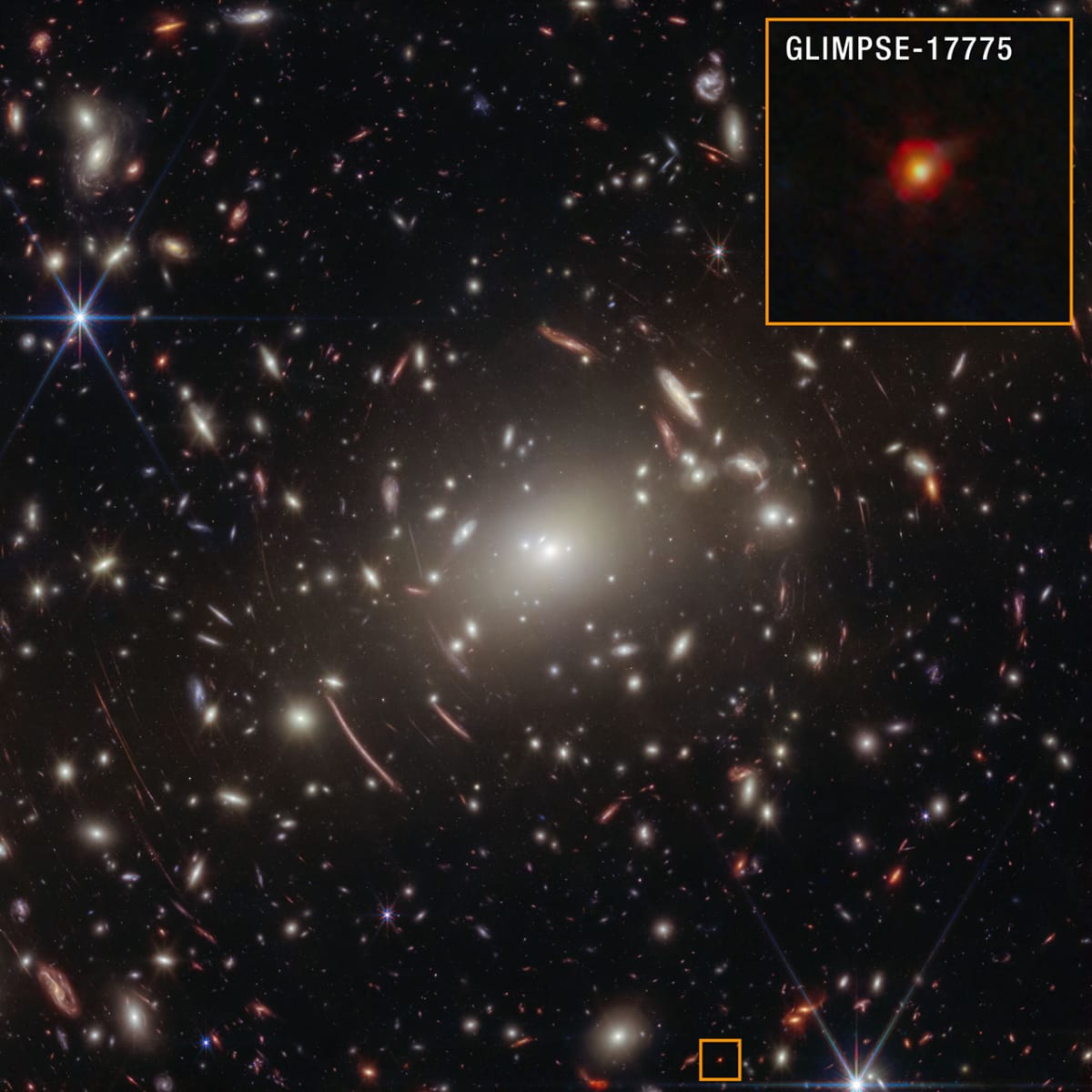
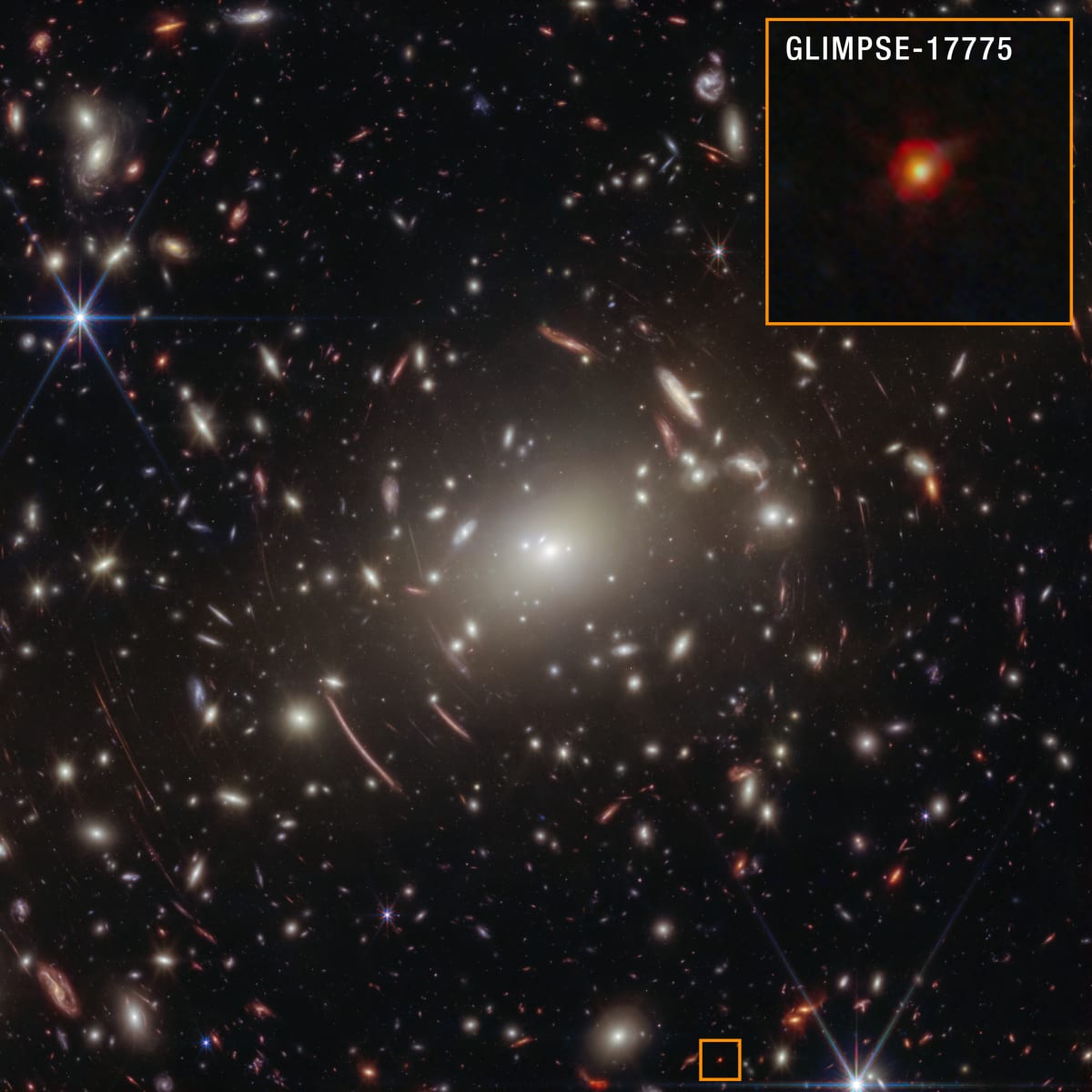
NASA's James Webb Space Telescope captured an incredibly detailed look at a tiny red dot in space called GLIMPSE-17775. This little object has puzzled astronomers since Webb first spotted similar dots in 2022, just after the telescope began its mission.
Vasily Kokorev at the University of Texas at Austin led the team that studied this cosmic puzzle. They analyzed light from the object for 30 hours, which gravitational lensing (nature's own magnifying glass) stretched into the equivalent of 80 hours of observation time.
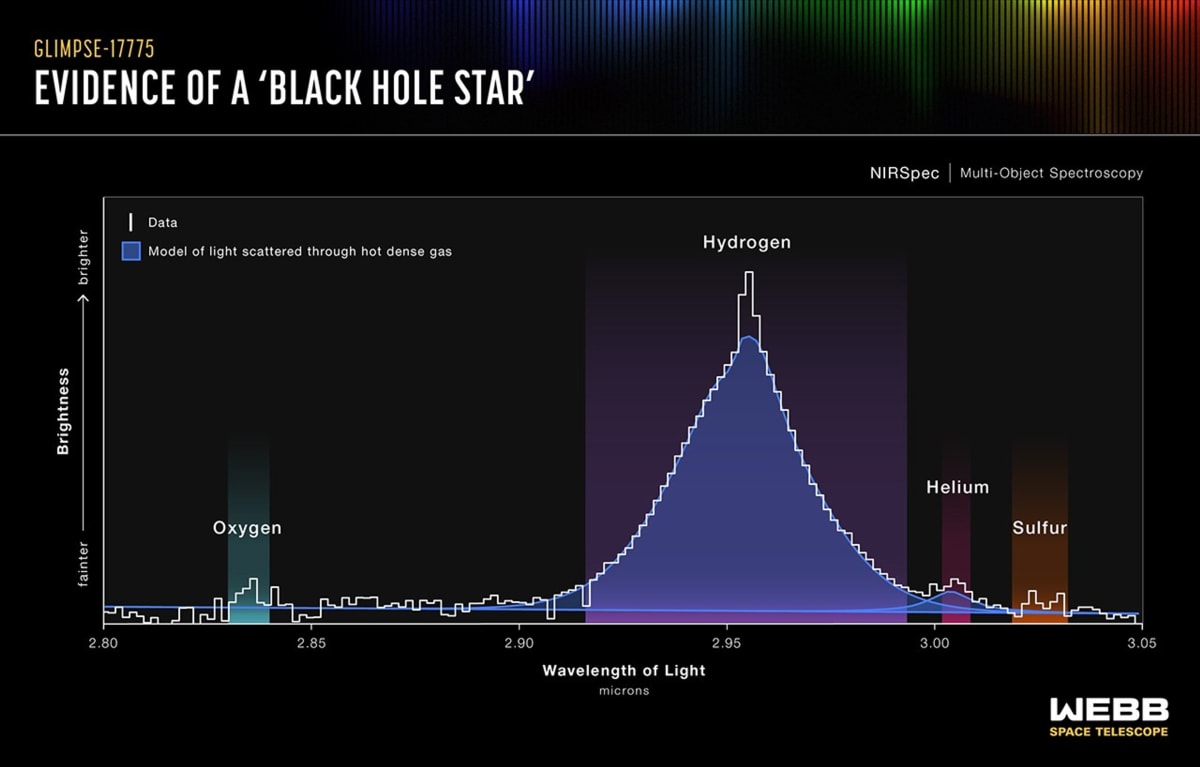
What they found was remarkable. The spectrum revealed more than 40 distinct light signatures, the most detailed view of a little red dot ever captured.
The evidence points to something scientists call a "black hole star." It's not actually a star at all, but rather a supermassive black hole wrapped in a thick, hot blanket of gas.
The team found telltale signs throughout the data. Sixteen iron lines created what researchers nicknamed an "iron forest" in the spectrum. Hydrogen, oxygen, and helium showed patterns that could only come from a dense gas cocoon surrounding a powerful energy source.
The discovery helps explain why these objects appear red and why they're mostly invisible in X-ray observations. The dense gas surrounding the black hole absorbs and transforms the light, creating the unique signature Webb detected.
GLIMPSE-17775 existed about 1.8 billion years after the Big Bang, making it a window into how black holes grew rapidly in the universe's youth.
The Bright Side
This breakthrough shows how new technology opens doors we didn't know existed. Just four years ago, scientists had no idea little red dots existed at all. Now they're piecing together a cosmic mystery that helps explain how the universe evolved.
The discovery also demonstrates the power of lucky timing and preparation. The research team was actually looking for a completely different type of star when they stumbled upon GLIMPSE-17775, proving that sometimes the best discoveries come when we're searching for something else.
Webb's infrared vision continues revealing secrets hidden in plain sight, transforming our understanding of the cosmos one spectrum at a time.
More Images
Based on reporting by Google News - Science
This story was written by BrightWire based on verified news reports.
Spread the positivity!
Share this good news with someone who needs it