Webb Telescope Finds Third Planet in Nearby Star System
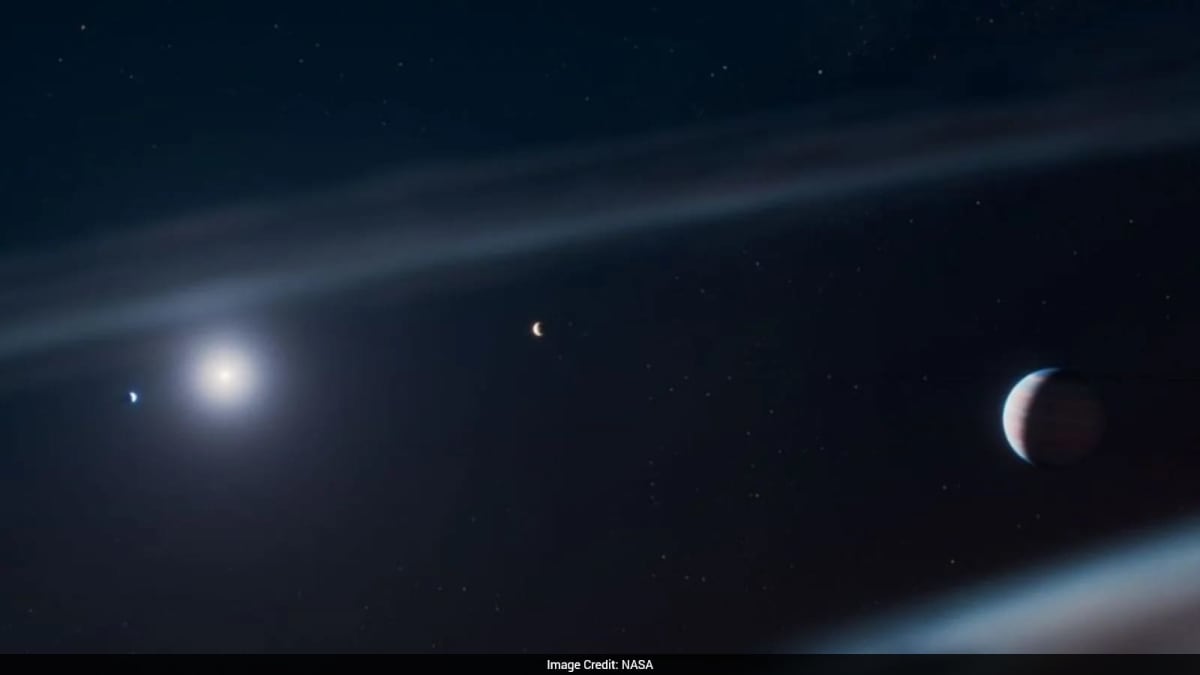
NASA's James Webb Space Telescope discovered a hidden giant planet in a star system just 63 light-years away using a groundbreaking chemical detection method. The find marks only the second known planetary system where scientists have directly observed three planets.
Scientists just spotted a giant planet hiding in plain sight, and the way they found it could change how we discover new worlds.
Astronomers using NASA's James Webb Space Telescope discovered Beta Pictoris d, a massive planet orbiting a young star 63 light-years from Earth. The team wasn't even looking for new planets when they stumbled upon this cosmic surprise while studying another planet in the same system.
What makes this discovery special isn't just the planet itself. It's how scientists found it.
Instead of spotting a bright point of light like previous planet discoveries, the researchers detected unique chemical fingerprints in the planet's atmosphere. Think of it like identifying someone by their breath rather than their face. The team picked up distinctive patterns of carbon monoxide, water vapor, and methane that could only come from a giant planet.
Beta Pictoris d weighs at least twice as much as Jupiter, making it the smallest of three known giant planets circling the young star Beta Pictoris. The planet orbits about 30 astronomical units from its star, roughly where Neptune circles our own sun.
The discovery happened almost by accident. Aidan Gibbs and his team at the University of California, San Diego were using Webb's Near-Infrared Spectrograph to study another planet in the system when strange peaks appeared in their data. Those peaks turned out to be carbon monoxide signatures from an entirely new world.
A separate team using the European Southern Observatory's Very Large Telescope later confirmed the planet's existence. Two independent groups seeing the same thing makes the discovery rock solid.
Why This Inspires
This chemical fingerprint method opens up exciting possibilities for finding planets we might have missed. Countless worlds could be hiding in star systems we thought we already knew inside and out.
The Beta Pictoris system has become a cosmic classroom where scientists learn how planetary families form and grow. At just 23 million years old, it's a baby compared to our 4.5 billion year old solar system. Watching this young system helps us understand our own origins.
Every new discovery reminds us how much wonder still waits in the universe, even in our own celestial neighborhood.
More Images



Based on reporting by Google: James Webb telescope
This story was written by BrightWire based on verified news reports.
Spread the positivity!
Share this good news with someone who needs it