Webb Telescope Maps Dark Matter in Stunning Detail
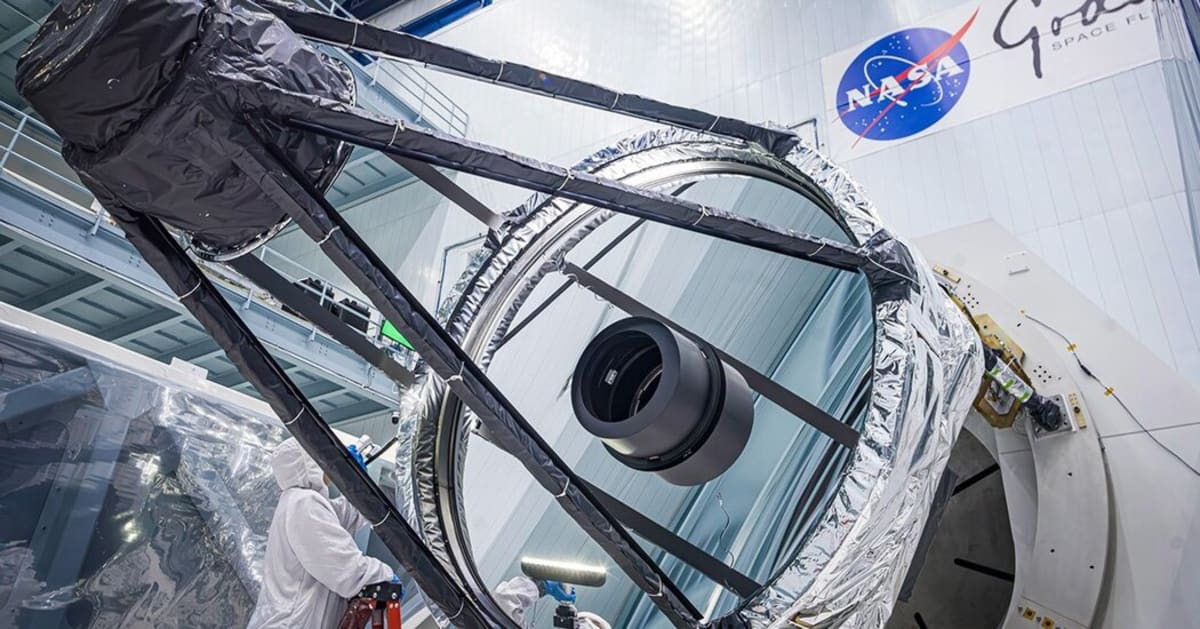
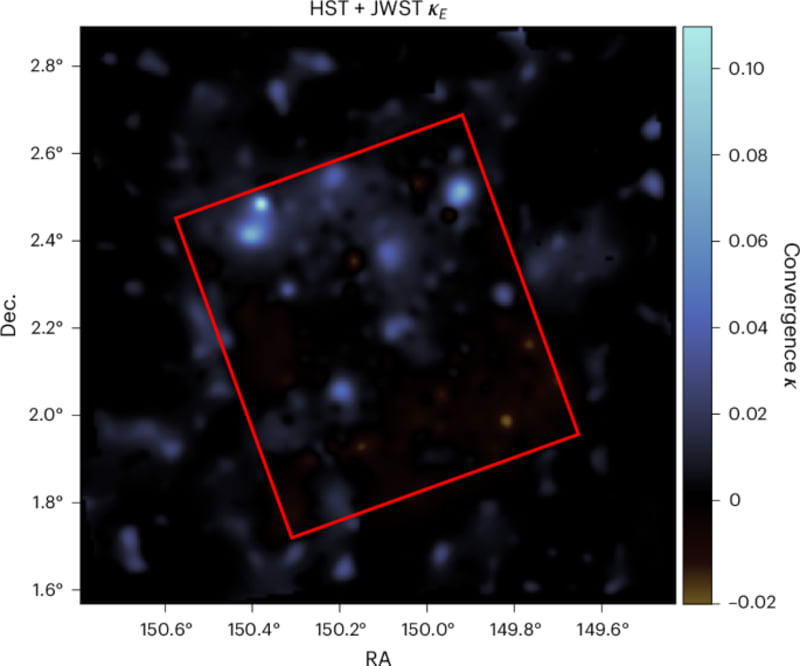
The James Webb Space Telescope just created the most detailed map ever of dark matter, the invisible substance that makes up most of our universe. Scientists can now see how galaxies formed across billions of years with twice the clarity of previous images.
Scientists just unveiled the sharpest picture ever taken of the invisible scaffolding that holds our universe together.
Using the James Webb Space Telescope, researchers mapped dark matter across a massive region of space with unprecedented detail. Dark matter makes up about five-sixths of all matter in the universe, but it doesn't emit or absorb light, making it notoriously difficult to study.
The new map covers an area nearly three-quarters of a degree wide in each direction. By measuring tiny distortions in the shapes of distant galaxies caused by dark matter's gravity, the team achieved resolution more than twice as sharp as previous maps from the Hubble Space Telescope.
The breakthrough came from analyzing 129 galaxies per square arcminute, capturing features across cosmic history. The map reveals structures stretching back to when the universe was only a few billion years old, a period when star formation peaked across the cosmos.
Why This Inspires
This map isn't just a pretty picture. It shows how dark and luminous matter work together to build the cosmic web of filaments, clusters, and voids that give the universe its structure.
For the first time, scientists can trace these patterns back to the era of peak cosmic star formation. This window into the past helps answer fundamental questions about how galaxies like our own Milky Way came to exist.
The research team made all their data publicly available, inviting scientists worldwide to explore the findings. Anyone can download the weak lensing maps and contribute to our understanding of how the universe evolved.
The high-resolution benchmark will help test competing theories about dark matter's true nature. Some scientists believe it's made of undiscovered particles, while others propose modifications to our understanding of gravity itself.
These observations demonstrate the James Webb Space Telescope's power to revolutionize cosmology. Launched in 2021, Webb continues revealing cosmic secrets that were invisible to previous generations of telescopes.
The map traces structures out to redshift z ≈ 2, meaning we're seeing light that traveled for over 10 billion years to reach us. The most distant clear structure appears at z ≈ 1.1, offering a glimpse of the universe roughly 8 billion years ago.
By revealing how matter clustered and flowed across cosmic time, this work illuminates the forces that shaped everything we see today. From the largest galaxy clusters to the stars and planets within them, dark matter's invisible hand guided their formation.
The universe just became a little less mysterious.
More Images
Based on reporting by Google: James Webb telescope
This story was written by BrightWire based on verified news reports.
Spread the positivity!
Share this good news with someone who needs it