Webb Telescope Reveals Monster Star Factories in Early Universe
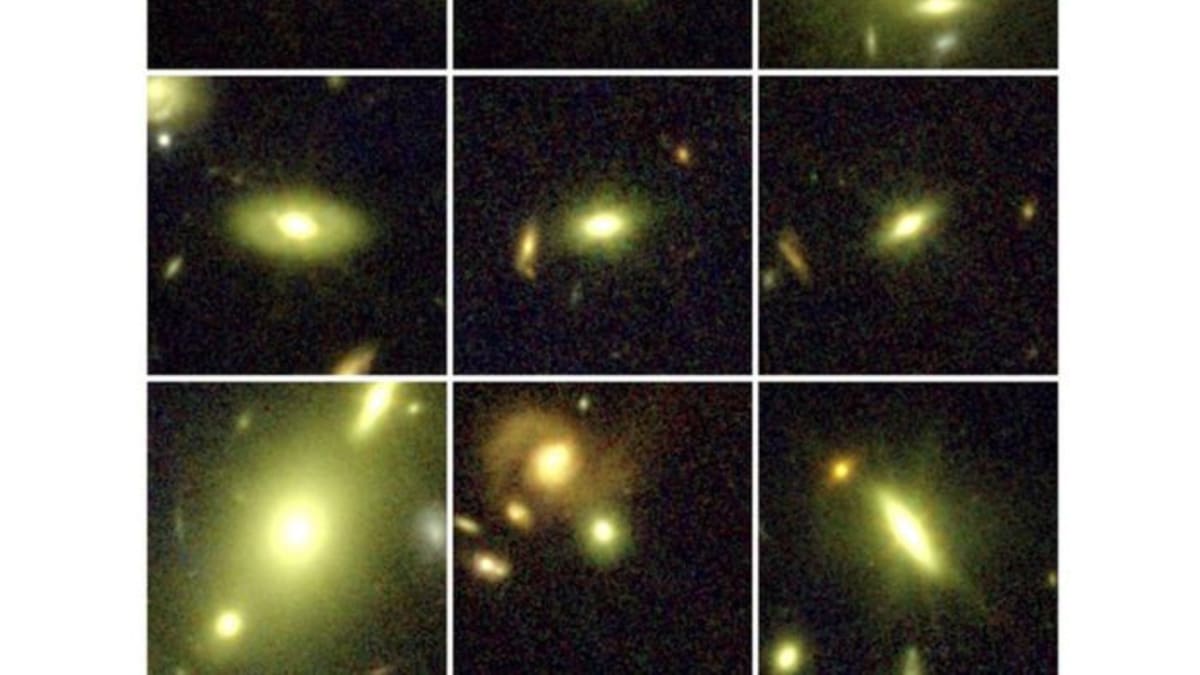
Two objects once thought to be distant quasars turned out to be galaxies packed with the most massive stars ever detected, forming at incredible rates when the universe was less than a billion years old. The discovery reveals a hidden population of extreme star-forming galaxies that scientists had been missing.
Scientists just discovered that two mysterious bright objects from the dawn of the universe aren't what anyone thought they were.
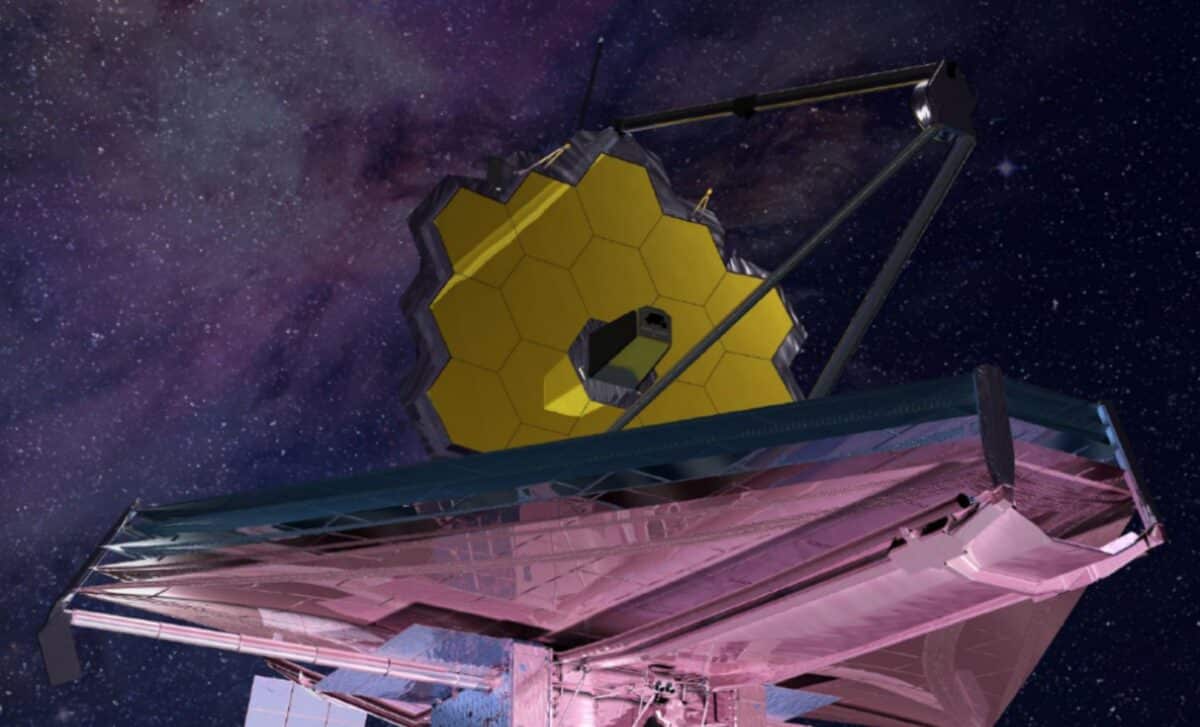
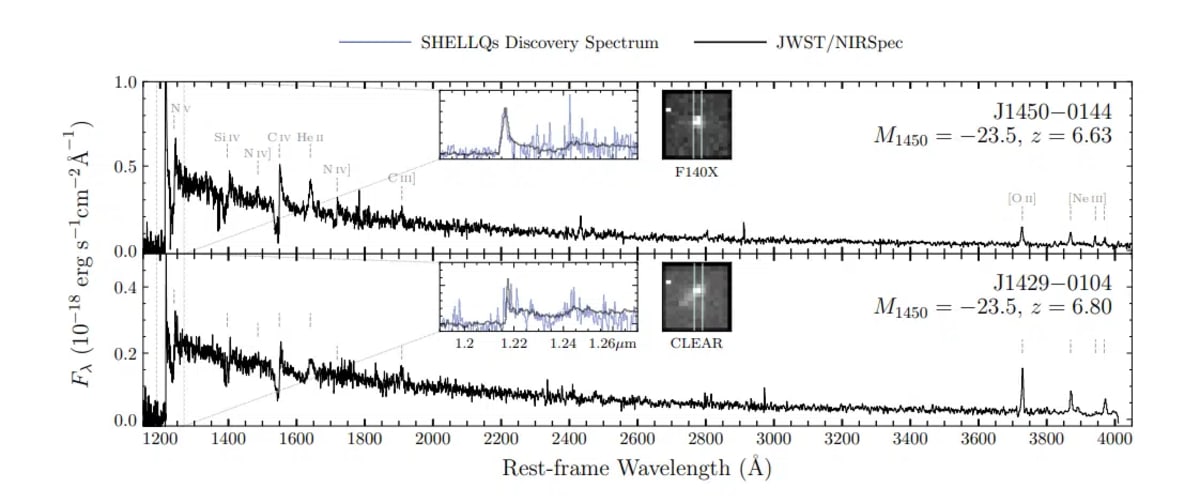
A team led by Sarah E. I. Bosman at Leiden University used the James Webb Space Telescope to take a closer look at two faint dots that astronomers had classified as quasars. Instead, they found something far more exciting: galaxies absolutely packed with monster stars, some weighing over 100 times the mass of our Sun.
These galaxies are churning out stars at extraordinary rates, creating between 300 and 540 solar masses worth of new stars every single year. Each galaxy may contain up to one million very massive stars, making them cosmic laboratories unlike anything we can study in our own neighborhood.
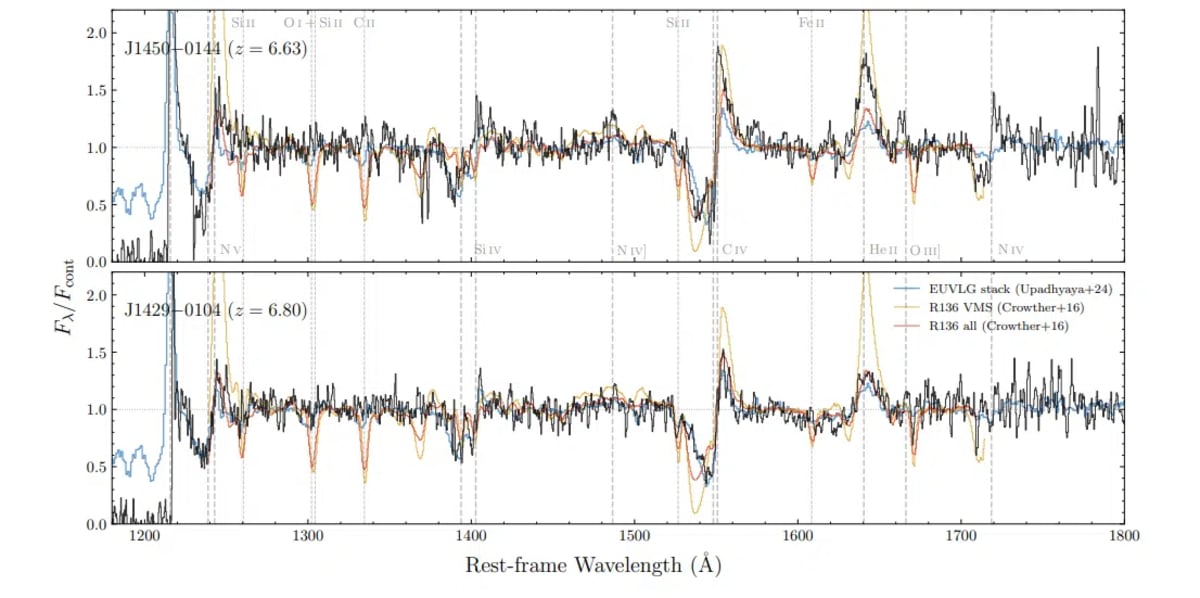
The discovery happened when researchers examined light from these objects using Webb's advanced instruments. They found telltale signatures that didn't match black holes at all. Instead, they detected P Cygni profiles, which are patterns created by powerful winds from massive stars, and unusually strong helium emission that could only come from stars exceeding 100 solar masses.
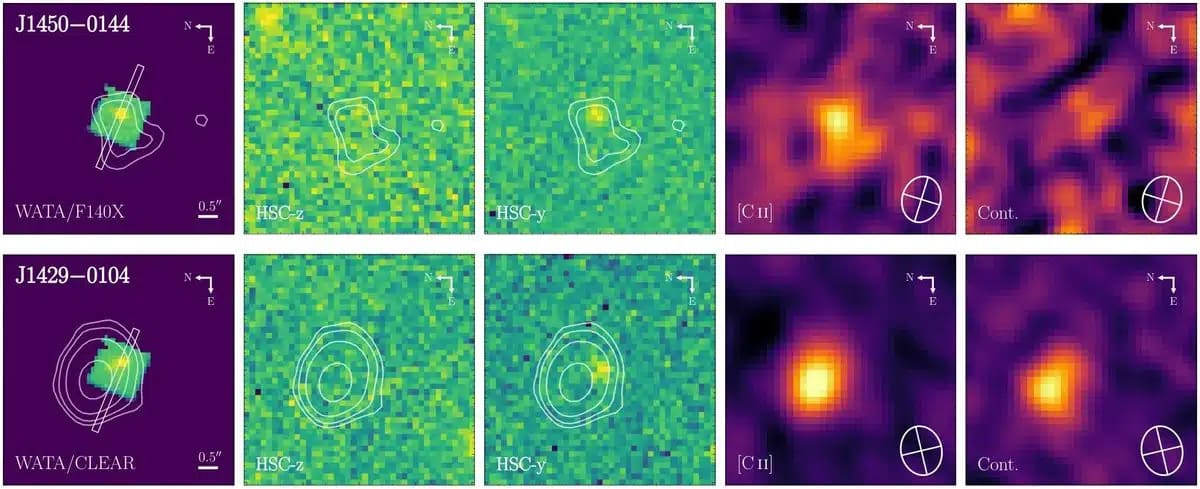
To confirm their finding, the team combined Webb's observations with data from the Atacama Large Millimeter Array in Chile. The combination revealed cold gas and dust being lit up by young stars, not by radiation from growing black holes.
One galaxy, called J1429-0104, showed something particularly strange. Its ultraviolet light comes from a completely different location than its dust and gas, with the two separated by 17,600 light-years. Scientists think this odd structure might result from two galaxies merging or from powerful stellar winds pushing dust away.
The misidentification matters because it affects how we understand the early universe. If some objects labeled as faint quasars are actually extreme star-forming galaxies, our counts of both populations need revision.
Why This Inspires
This discovery shows how much we still have to learn about the universe's first billion years. Every time we point our most powerful telescopes at the cosmos, we find surprises that challenge what we thought we knew.
These galaxies represent a completely new type of cosmic laboratory. They're the brightest star-forming galaxies ever spectroscopically confirmed from such an early period in cosmic history, giving scientists a window into how the universe looked when it was still in its infancy.
The massive stars inside these galaxies burn bright and die young, but their discovery helps us understand how the chemical elements that make up everything around us, including ourselves, first formed and spread through space.
What seemed like simple dots of light turned out to be bustling stellar nurseries producing stars at rates that dwarf anything happening in our Milky Way today.
More Images
Based on reporting by Google: James Webb telescope
This story was written by BrightWire based on verified news reports.
Spread the positivity!
Share this good news with someone who needs it