Webb Telescope Reveals Stunning Details of Lion Nebula
NASA's James Webb Space Telescope has captured breathtaking new images of the Lion Nebula, showing intricate details of gas, dust, and a dying star creating cosmic beauty. The infrared views reveal how a white dwarf is sculpting glowing shells of material thousands of years in the making.
A dying star is creating one of space's most beautiful masterpieces, and we're now seeing it in stunning detail.
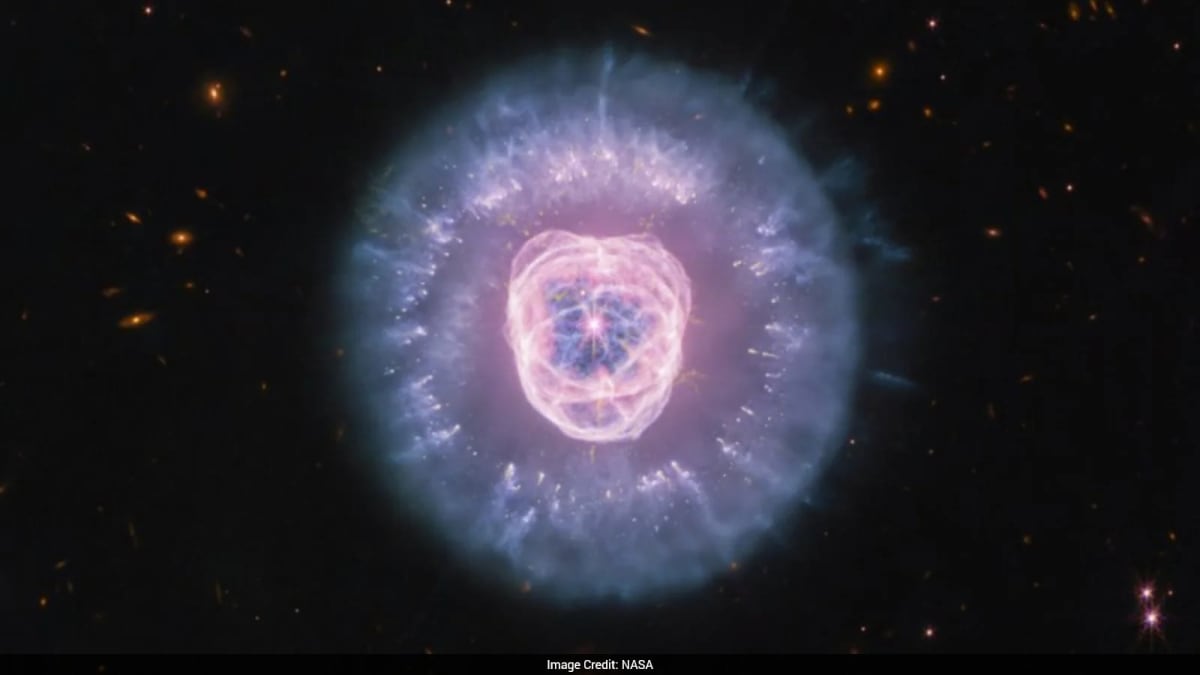
NASA's James Webb Space Telescope has captured new images of NGC 2392, known as the Lion Nebula for its lion face-like appearance. The telescope's infrared cameras have revealed small clumps of dust and glowing hazes of ionized gas that earlier telescopes couldn't see clearly.
The Hubble Space Telescope first photographed this cosmic wonder in 2000, showing its distinctive mane of comet-shaped objects. Webb's more powerful instruments now show us what's really happening inside this celestial sculpture.
At the heart of the nebula sits a white dwarf, the ultra-hot remnant of a star that once resembled our sun. When the original star ran out of fuel, it didn't explode like massive stars do. Instead, it gently shed its outer layers over thousands of years, creating expanding shells of gas and dust.
The white dwarf now acts like a cosmic furnace, heating the surrounding material and creating a bubble of glowing gas that forms the lion's face. This bubble continues expanding outward, destroying dust in its path and reshaping the nebula's appearance.
The nebula has been evolving for thousands of years, and changes are still happening across different regions. Scientists are working to understand how these complex rings and shells form, as planetary nebulae often show intricate structures that remain mysterious.
Why This Inspires
This glimpse into a star's final chapter reminds us that endings can be beautiful. The dying star isn't fading quietly into darkness but instead creating an expanding work of art visible across light-years of space.
Webb's ability to see through cosmic dust reveals details that were hidden from previous telescopes. Each new image teaches astronomers more about how stars like our sun will eventually transform, turning their outer layers into glowing monuments that can last tens of thousands of years.
The Lion Nebula shows us that even in death, stars contribute to the universe's beauty and help create the building blocks for future generations of stars and planets.
Scientists will continue studying Webb's images to unlock mysteries about how these structures form and evolve, bringing us closer to understanding our cosmic neighborhood and our sun's eventual fate billions of years from now.
More Images



Based on reporting by Google News - Science
This story was written by BrightWire based on verified news reports.
Spread the positivity!
Share this good news with someone who needs it