Webb Telescope Saves Moon From 2032 Asteroid Strike
The James Webb Space Telescope just pulled off an incredible feat, tracking down a "lost" asteroid and proving it won't hit the moon in 2032 after all. Scientists thought the space rock had disappeared for three years, but international teams worked together to find it and confirm we're safe. #
The moon just got a reprieve, and we have the world's most powerful telescope to thank for it.
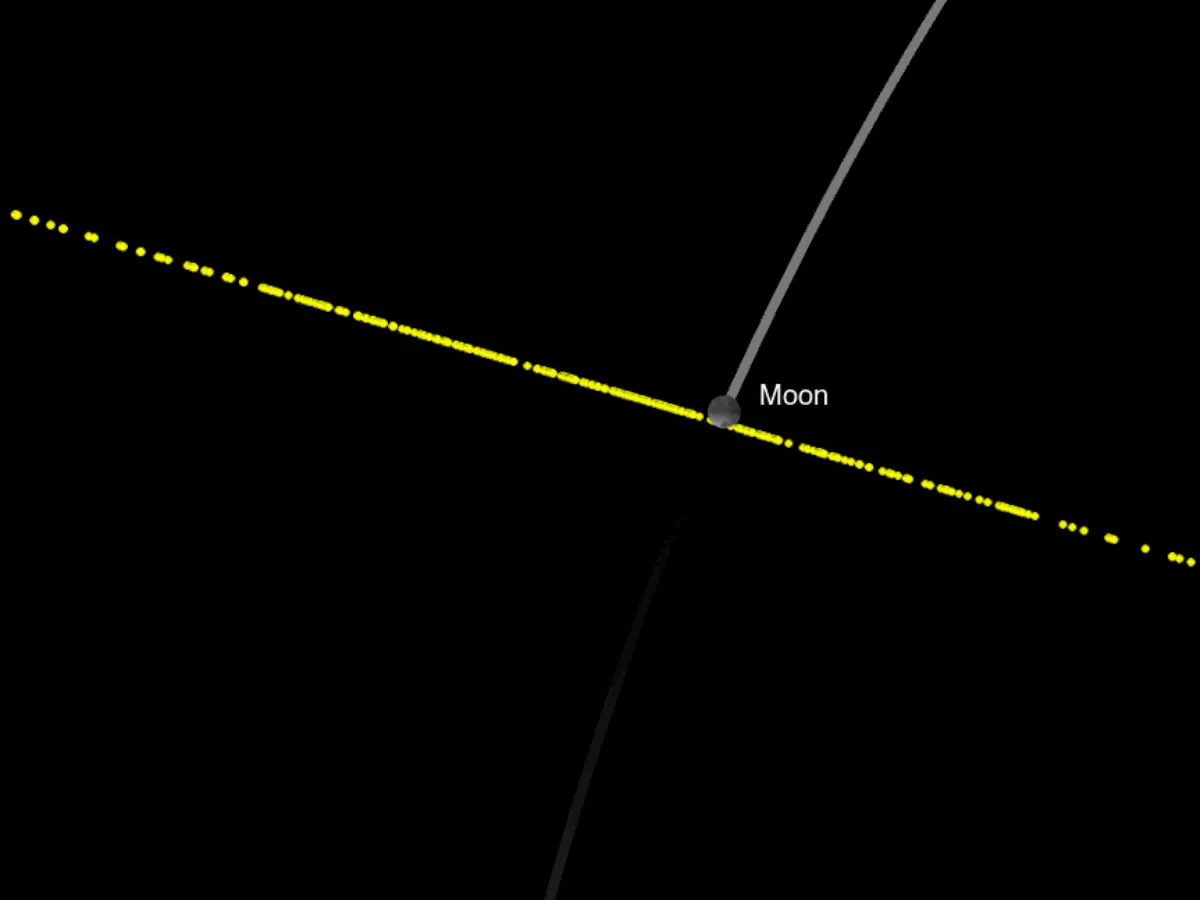
Asteroid 2024 YR4 will safely miss the moon in December 2032, NASA confirmed this week after the James Webb Space Telescope located the space rock that had seemingly vanished. Until January, scientists calculated a four percent chance the 200-foot asteroid would smash into the lunar surface, potentially carving a crater two kilometers wide and sending dangerous debris toward Earth's satellites and astronauts.
The asteroid disappeared from view in spring 2025, leaving astronomers without any way to track it until at least 2028. That three-year gap meant scientists couldn't refine their calculations about whether it posed a real threat.
But teams from NASA's Center for Near-Earth Object Studies, ESA's Near-Earth Object Coordination Centre, and the Webb mission refused to wait. They realized Webb's incredibly sensitive Near-Infrared Camera could spot the asteroid during two narrow windows in February, even though finding a 15-story building sized object millions of kilometers away seemed nearly impossible.
The challenge was enormous. Webb's field of view is designed to observe galaxies billions of light-years away, not relatively tiny asteroids in our cosmic neighborhood. The international team needed pinpoint accuracy to know exactly where the asteroid would be after seven years of travel through space.
They succeeded on February 18 and 26, capturing observations that allowed them to calculate the asteroid's precise orbit. The verdict: 2024 YR4 will pass the moon at a safe distance of more than 20,000 kilometers.
The Bright Side
This rescue mission showcases how global space agencies can work together to protect our corner of the solar system. The successful detection relied on data from ESA's Gaia mission, which mapped star positions so precisely that astronomers could spot the asteroid against a sparse stellar backdrop.
If the asteroid had hit, the collision would have threatened more than just the moon. Scientists warned that tonnes of micrometeoroids could have endangered satellites we depend on for communication and GPS, plus astronauts aboard the International Space Station. The impact might even have created the moon's own meteor shower.
Instead, international cooperation and cutting-edge technology turned uncertainty into confidence. The same telescope that shows us the birth of galaxies also keeps watch over our celestial neighbor, proving that innovation serves both discovery and protection.
Why This Inspires
When 2024 YR4 went dark, scientists could have simply waited three years for better viewing conditions. Instead, they pushed the boundaries of what Webb was designed to do, adapting a telescope built for deep space exploration into a guardian for our moon.
The precision required was staggering. After seven years of the asteroid traveling through space, the teams needed to predict its exact location within Webb's tiny field of view. They nailed it on the first try.
This success opens new possibilities for planetary defense. If Webb can track "lost" asteroids during impossible windows, we're better equipped to monitor potential threats before they become emergencies.
The moon is safe, and so are we.
#
Based on reporting by Google: James Webb telescope
This story was written by BrightWire based on verified news reports.
Spread the positivity!
Share this good news with someone who needs it