Webb Telescope Solves Mystery of 'Little Red Dots
The James Webb Space Telescope discovered mysterious bright red objects from the early Universe that shouldn't exist according to standard physics. Scientists just figured out they're a new type of black hole that formed directly from gas clouds, solving a cosmic puzzle.
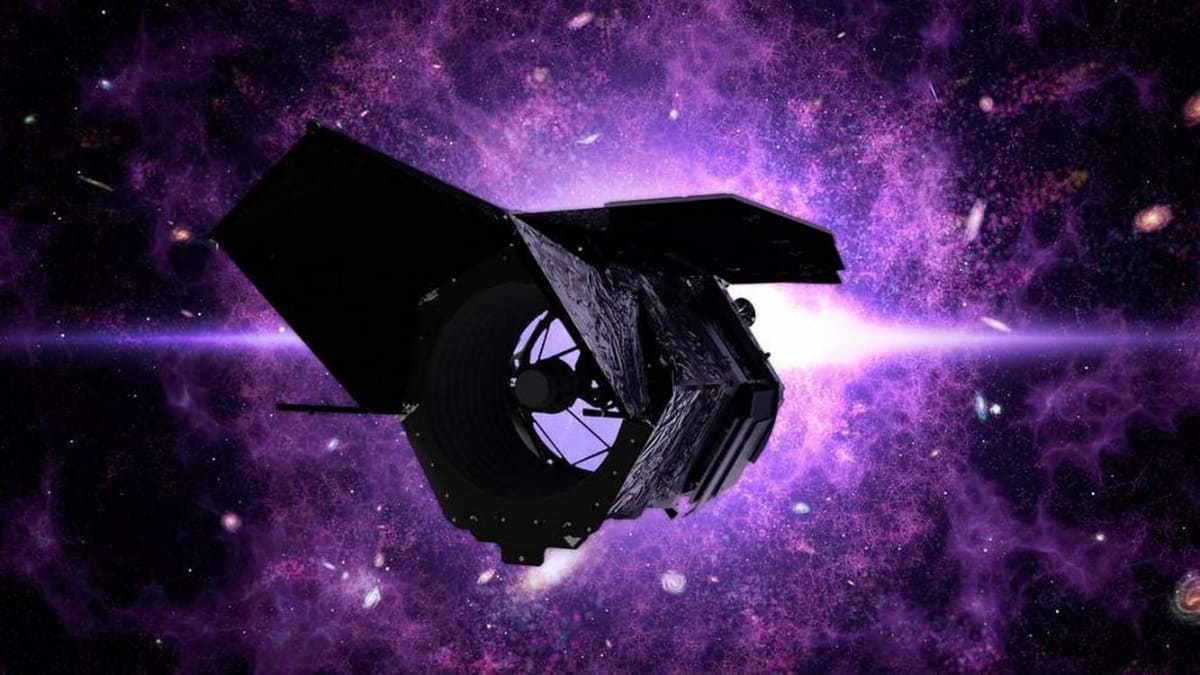
Scientists using the James Webb Space Telescope have cracked the case of strange cosmic objects that appeared impossibly early in our Universe's history.
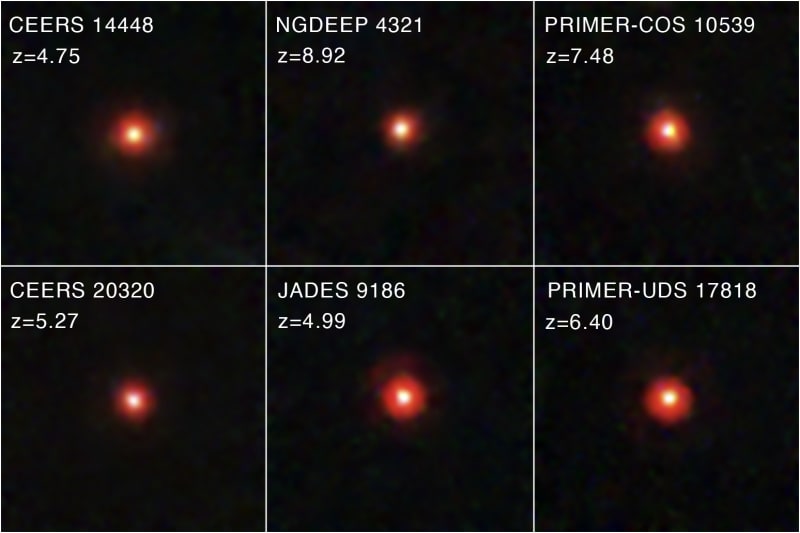
When Webb first peered back to less than a billion years after the Big Bang, astronomers spotted bright red sources they dubbed "Little Red Dots." These objects created a major problem: they were massive galaxies that shouldn't have had time to form yet based on everything we know about how the Universe works.
Initial theories suggested they might be huge star-forming regions, but the math didn't add up. Other scientists proposed they could be quasars powered by supermassive black holes, but that theory hit the same wall. Black holes need billions of years to grow that large, not just a few hundred million.
Now a team led by Fabio Pacucci from Harvard University has solved the mystery. The Little Red Dots are Direct Collapse Black Holes, or DCBHs, a completely different type of cosmic object that forms instantly from collapsing hydrogen clouds instead of growing slowly from dead stars.
Using advanced computer simulations, Pacucci and his colleagues modeled how these black holes would look as they actively consume surrounding material. The results matched Webb's observations perfectly, explaining every puzzling detail about the Little Red Dots in one elegant theory.
"All the puzzling properties are explained within a single, self-consistent framework, without requiring any ad-hoc assumptions," Pacucci explained. The dense gas clouds surrounding these black holes account for their compact nature and unusual appearance.
The breakthrough resolves a long-standing conflict between theoretical predictions and real observations. Standard models say supermassive black holes need time to form from smaller black holes merging together over billions of years, like building a snowball. DCBHs skip that process entirely, being "born already massive" and providing a natural shortcut.
Why This Inspires
This discovery shows how new technology can answer questions that have puzzled scientists for decades. The James Webb Space Telescope was specifically designed to look back at the early Universe, and it's delivering exactly the kind of groundbreaking insights researchers hoped for.
The findings also demonstrate the beauty of scientific problem-solving: when observations don't match predictions, it often means we're about to learn something profound about how our Universe actually works. What seemed impossible turned out to be evidence of a fascinating cosmic phenomenon we hadn't fully understood.
The research is currently under review for publication in the journal Nature and builds on decades of theoretical work about how the early Universe evolved.
Webb continues observing these ancient objects, and each discovery brings us closer to understanding the first chapters of cosmic history.
Based on reporting by Google: James Webb telescope
This story was written by BrightWire based on verified news reports.
Spread the positivity!
Share this good news with someone who needs it