Webb Telescope Solves Mystery of Little Red Dots
Scientists just figured out where mysterious "little red dots" spotted by the James Webb Space Telescope actually go as the universe ages. A spiral galaxy nicknamed "Saguaro" revealed these cosmic puzzle pieces might be temporary phases of hyperactive black holes that transform over billions of years.
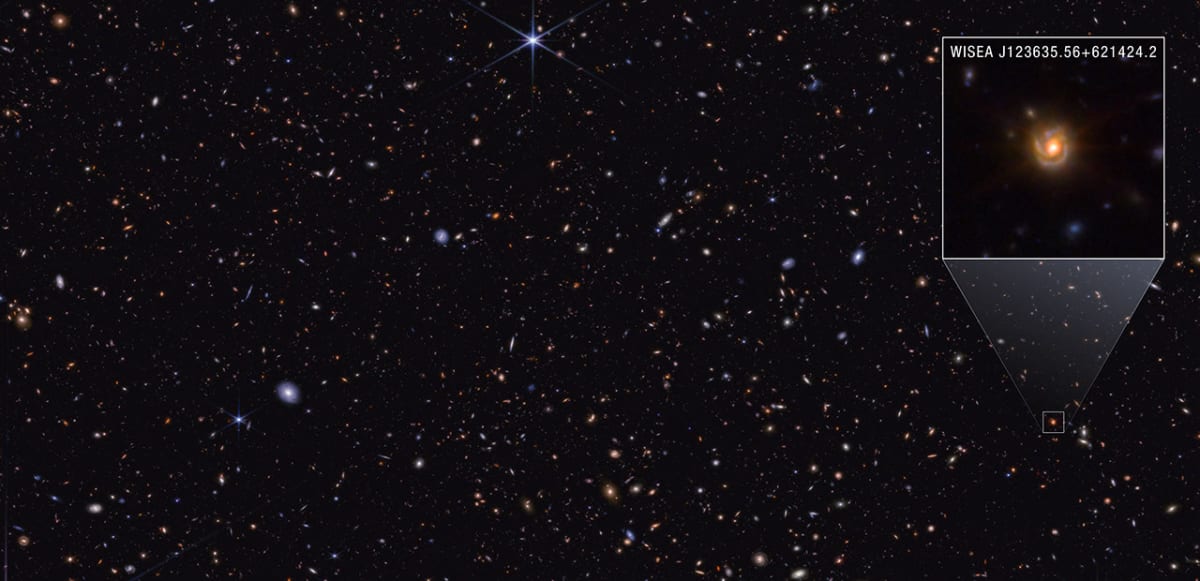
Astronomers just solved a cosmic mystery that's been puzzling them since 2022: what happens to the strange "little red dots" discovered by the James Webb Space Telescope?
These tiny, bright objects appeared everywhere in the early universe but seemed to vanish as time went on. Scientists couldn't figure out where they went until now.
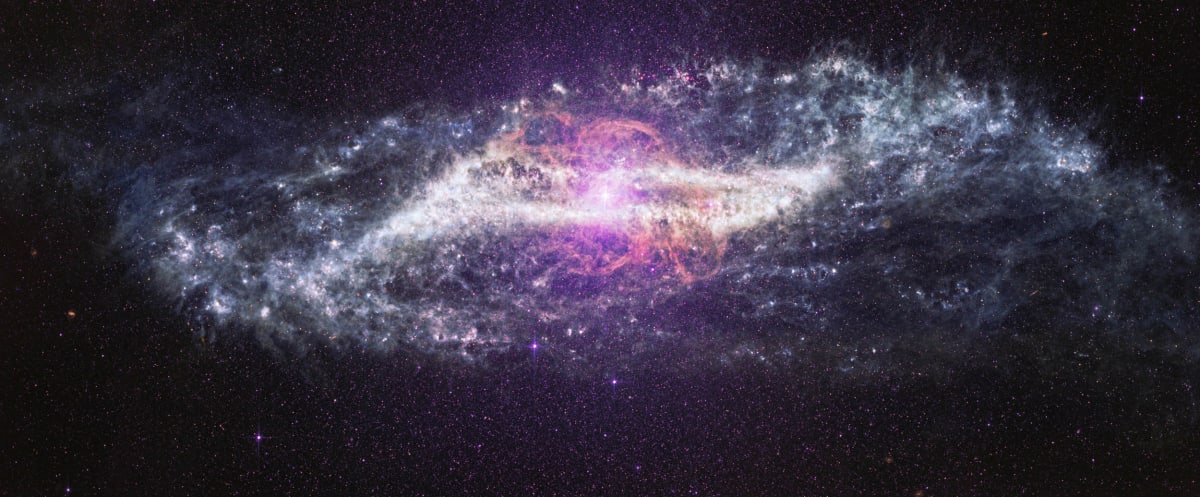
A team led by Pierluigi Rinaldi from the University of Arizona found the answer by studying a spiral galaxy with a quirky name. They call it "Saguaro" because its sweeping arms look like the iconic desert cactus, and its bright red center resembles the plant's ruby fruit.
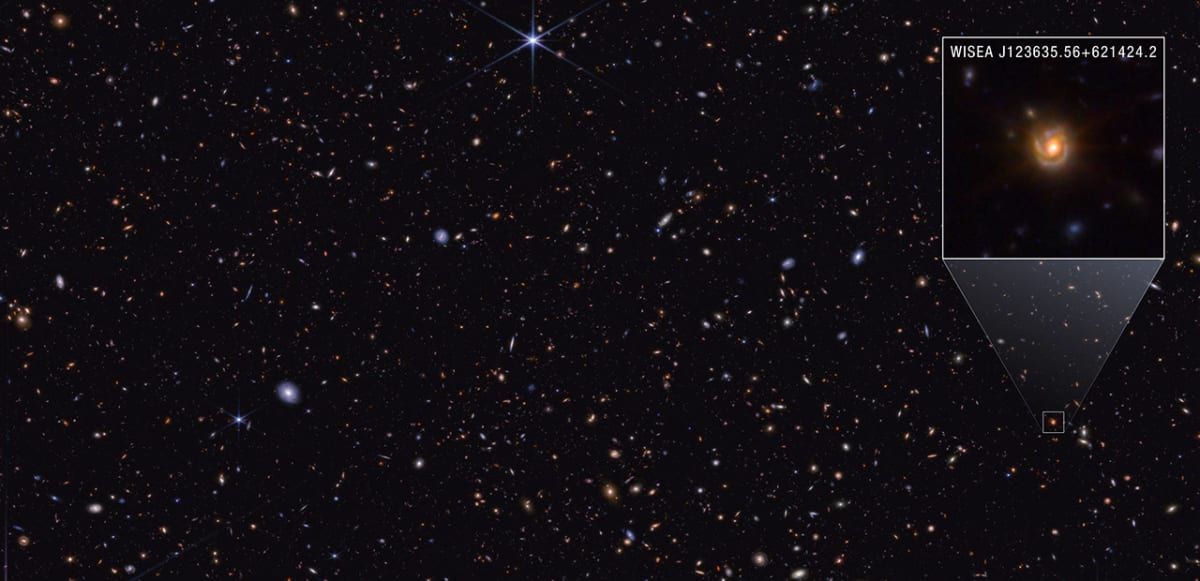
The Saguaro galaxy sits about 3.3 billion years after the Big Bang. Its center looks exactly like those mysterious little red dots from the early universe, giving scientists their first clear view of what these objects become over time.
"Everything created in the early universe must evolve into something around us," said co-author George Rieke. "We have had little idea of what LRDs become, but these results finally show us how to find their progeny."
The team combined data from both Hubble and Webb telescopes to get the full picture. They confirmed the Saguaro's nucleus shines brighter in ultraviolet and infrared light than visible light, matching the signature of distant little red dots perfectly.
NASA's Chandra X-ray Observatory added the final puzzle piece. It detected weak X-ray emissions showing the galaxy has an extremely obscured supermassive black hole at its center.
"It's not only obscured but also X-ray weak," said co-author Carys Gilbert. "That kind of combination could explain the lack of X-ray emission that we see from all other little red dots."
Why This Inspires
This discovery shows how persistence pays off in science. After four years of wondering where billions of cosmic objects disappeared to, researchers found their answer by studying just one galaxy in detail. The Saguaro proves that sometimes looking closer at what's nearby teaches us more about the distant past than studying a thousand far-away objects.
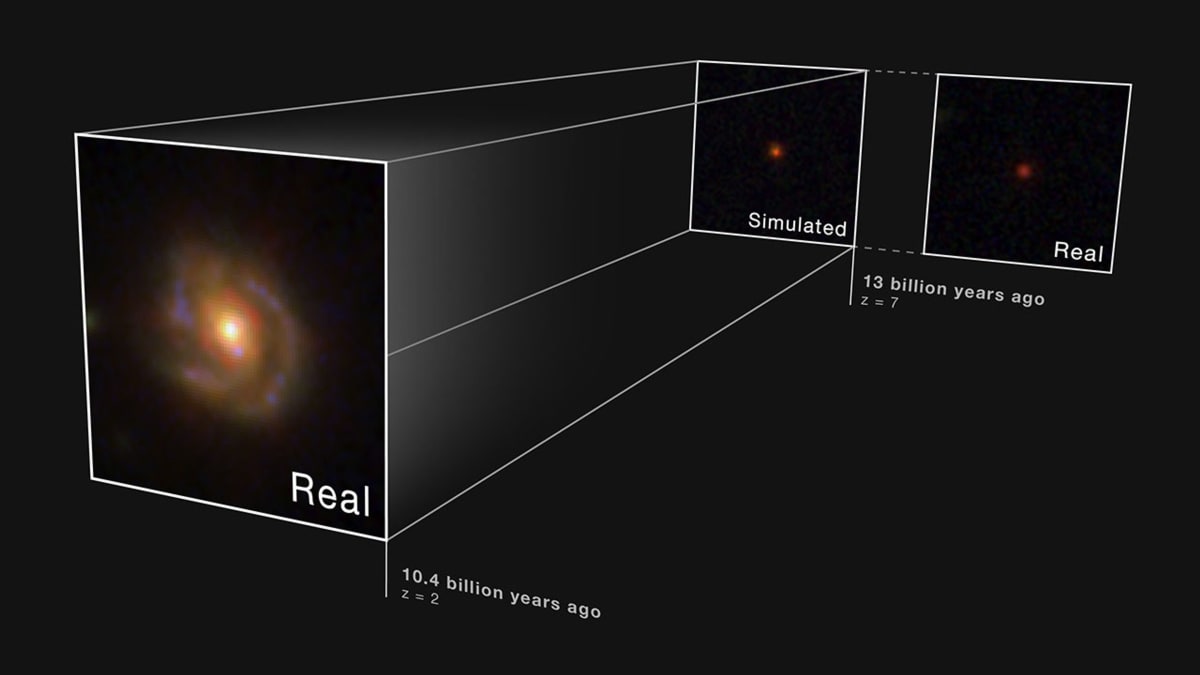
The team even simulated what the Saguaro would look like if pushed back to the early universe. Sure enough, its beautiful spiral arms faded away, leaving only that telltale red dot visible.
Scientists now believe little red dots represent a temporary but intense phase when supermassive black holes feed voraciously on surrounding matter. As the universe matures, these black holes calm down and their host galaxies become visible, transforming into spirals like the Saguaro.
The mystery isn't completely solved, but the Webb telescope just gave astronomers their cosmic family tree.
More Images

Based on reporting by Google: James Webb telescope
This story was written by BrightWire based on verified news reports.
Spread the positivity!
Share this good news with someone who needs it