Wind Farms Cut Bat Deaths by 93% With Simple Fix
Scientists discovered that air pressure changes around wind turbines were killing thousands of bats. A simple adjustment to when turbines start spinning has now saved millions of these vital creatures.
Wind turbines were killing bats in ways nobody expected, but scientists just figured out how to stop it.
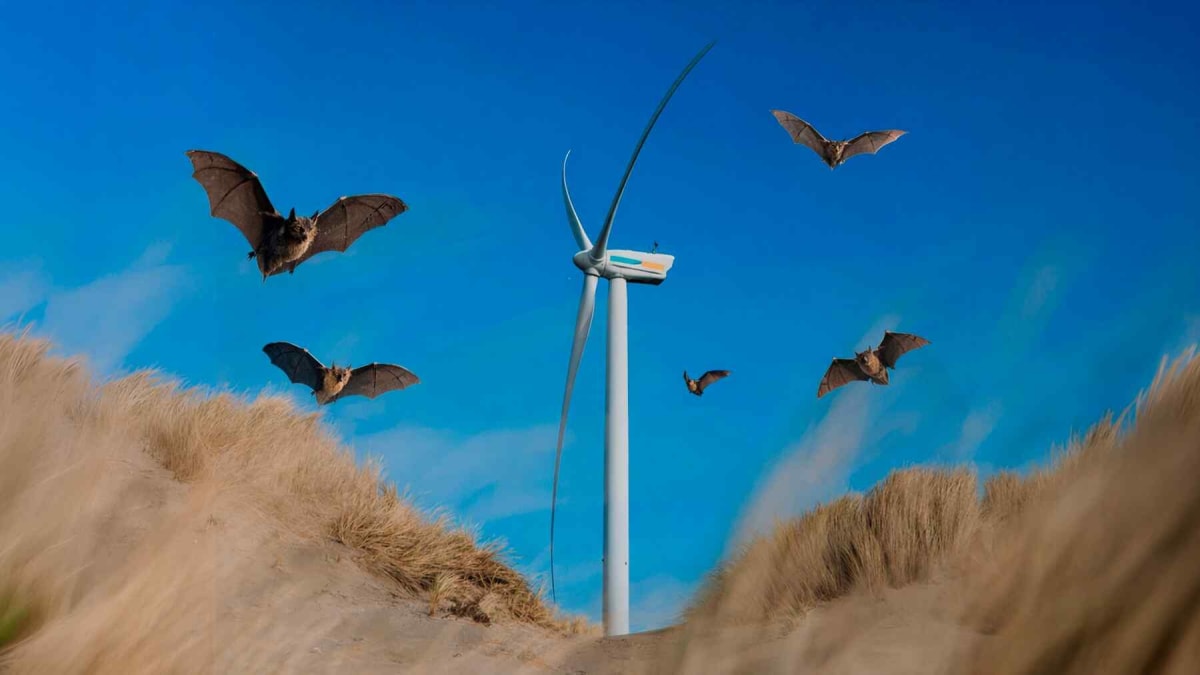
Researchers studying bat deaths near wind farms made a surprising discovery. Most bats weren't dying from hitting the spinning blades at all. Instead, rapid air pressure changes around the turbines were causing internal bleeding in over 90% of the animals they examined.
The condition, called barotrauma, happens when pressure shifts too quickly around a bat's body as it flies near the massive blades. Think of it like a diver surfacing too fast, except these tiny mammals had no way to avoid the invisible threat. Thousands of bats were dying from this hidden danger at wind farms around the world.
But here's where the story gets hopeful. Once scientists identified the problem, they tested a remarkably simple solution. Wind farm operators started raising their "cut-in speed," which is just the wind speed at which turbines begin generating power.
By waiting for slightly faster winds before turning on the turbines, they created safe zones for bats during lower wind conditions when the animals are most active. The results exceeded everyone's expectations.
The adjustment reduced bat fatalities by up to 93% at participating wind farms. That translates to millions of bats saved from an invisible killer, all without significantly impacting energy production.
The Ripple Effect
This breakthrough shows how renewable energy can get even better when we pay attention to its effects on wildlife. Bats play crucial roles in our ecosystem, eating insects that damage crops and spread disease. Protecting them protects us too.
Conservationists who raised early concerns about bat deaths are now celebrating this collaboration between science and industry. The same wind farms that once posed invisible threats are now proving that clean energy and wildlife protection can work together.
Other wind farms worldwide are adopting the technique, creating a ripple effect that could save countless more bats. The solution costs almost nothing to implement and requires only minor operational changes.
Even better, researchers are now studying whether similar adjustments could help protect birds and other flying animals near wind turbines. The lesson learned from bats might unlock protections for entire ecosystems.
When we listen to scientists and act quickly, we can turn environmental challenges into environmental wins.
Based on reporting by Google News - Wind Energy
This story was written by BrightWire based on verified news reports.
Spread the positivity!
Share this good news with someone who needs it