Your Old TV Static Was Light From the Big Bang
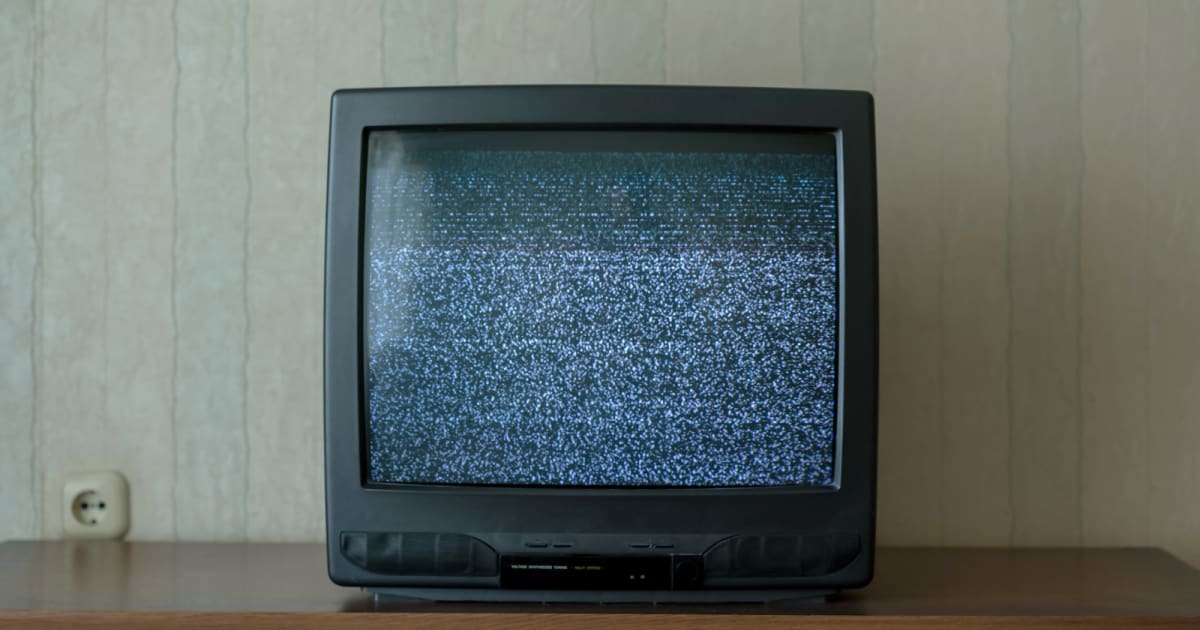
For decades, people watching TV snow were actually seeing ancient light from the universe's birth mixed into the static. Scientists discovered this cosmic afterglow in 1965, but it took over a year of careful work to separate it from ordinary noise.
Millions of people spent decades staring at light from the beginning of the universe without realizing it. When old analog TVs weren't tuned to a channel, part of that familiar snow and hiss was actually the cosmic microwave background, radiation left over from the hot, dense early universe just 380,000 years after the Big Bang.
The discovery happened almost by accident. In 1964, researchers Arno Penzias and Robert Wilson were trying to use a giant horn antenna in New Jersey as a radio telescope, but they kept picking up a mysterious signal they couldn't explain.
They ruled out interference from New York City, from the Milky Way, and even from pigeons nesting in the antenna. They cooled the receiver with liquid helium and taped over every joint, but the faint noise remained the same in every direction, every hour of the day.
After more than a year of eliminating every other possibility, they published their findings in May 1965. A team from Princeton provided the answer: the signal was the relic radiation predicted by Big Bang cosmology, and it earned Penzias and Wilson the 1978 Nobel Prize in Physics.
Here's the part that gets lost in retelling: the cosmic microwave background was only a tiny fraction of TV static, maybe around 1 percent. Most of the snow came from the television's own electronics, radio interference from other devices, and ordinary atmospheric noise.
The Bright Side
The real story isn't about what percentage of static came from space. It's about what the discovery revealed: we're surrounded by the universe's baby pictures, and they're everywhere.
The cosmic microwave background is often called the afterglow of the Big Bang, and it comes from a specific moment 380,000 years after the universe began. Before that moment, the universe was so hot that light couldn't travel freely because it kept bouncing off charged particles.
When things cooled enough for atoms to form, light could finally stream through space. That ancient light has been traveling ever since, cooling as the universe expanded, until it became the faint microwave radiation that reached every TV antenna on Earth.
The detail worth keeping is how much work it took to identify. Any TV could technically detect the same radiation, but it couldn't separate that signal from everything else. The cosmic message was always there, hiding in plain sight among the ordinary noise of daily life.
Every time someone adjusted rabbit ear antennas or flipped through channels, they were touching a device that could sense light older than stars, older than galaxies, older than anything else we can see. We just needed someone patient enough to listen carefully to find it.
More Images

Based on reporting by Google News - Science
This story was written by BrightWire based on verified news reports.
Spread the positivity!
Share this good news with someone who needs it