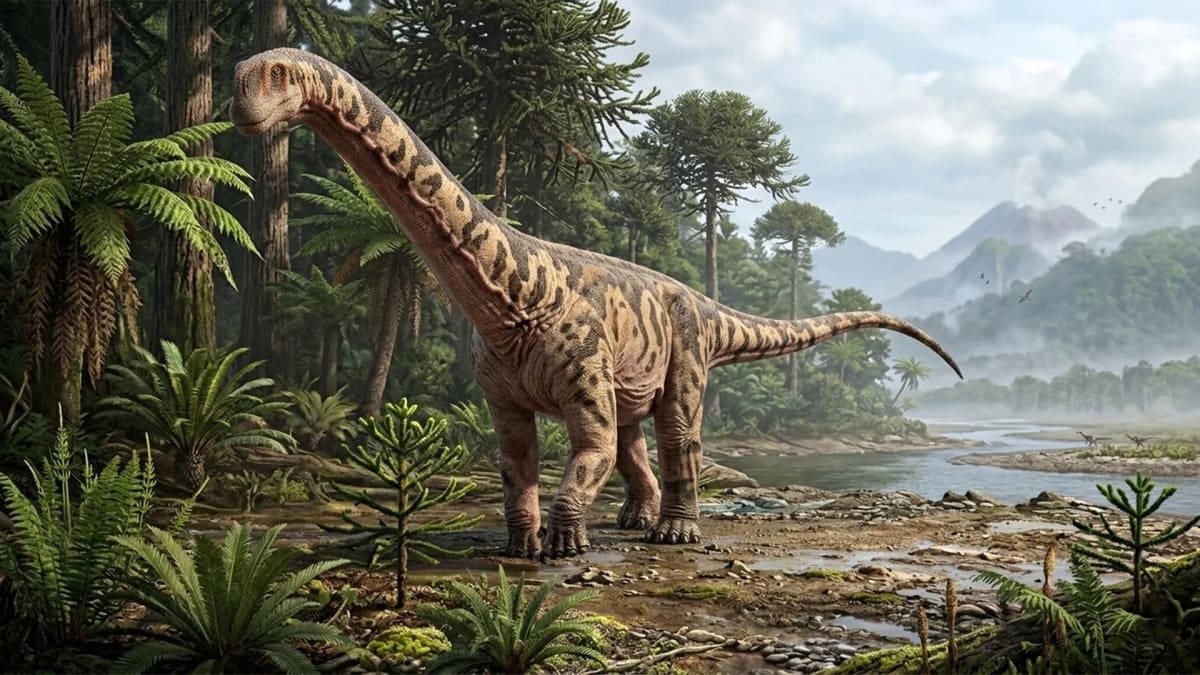
65-Foot Dinosaur Discovery Rewrites Jurassic History
A shepherd in Argentina stumbled upon a bizarre giant dinosaur that scientists say is filling crucial gaps in our understanding of how prehistoric titans evolved. The 155-million-year-old fossil is the first of its kind found in South America's Jurassic period.
A farmer's discovery in the windswept hills of Patagonia just changed what paleontologists thought they knew about the age of dinosaurs.
Shepherd Dionide Mesa found fossilized bones on his Argentine farm that turned out to be Bicharracosaurus dionidei, a 65-foot-long sauropod that roamed the ancient supercontinent of Gondwana 155 million years ago. Scientists named the species after Mesa to honor his discovery.
The dinosaur itself is a puzzle piece that researchers didn't know was missing. While most of our knowledge about Late Jurassic giants comes from North American fossils, this southern find tells a different story about how these massive creatures spread across the planet.
What makes Bicharracosaurus special is its strange blend of features. Some bones look like those of Giraffatitan from Tanzania, while others resemble the famous Diplodocus from North America. This mix suggests dinosaur evolution in the Southern Hemisphere followed a more complex path than scientists previously realized.
Doctoral student Alexandra Reutter examined over 30 vertebrae from the creature's neck, back, and tail, along with ribs and pelvis fragments. Her analysis revealed this was likely the first Brachiosauridae dinosaur from South America's Jurassic period, a group that includes some of the most recognizable long-necked giants.
The fossil came from the Cañadón Calcáreo rock formation in Chubut province, one of the few significant Late Jurassic sites in the Southern Hemisphere. For decades, Tanzania held the only major southern fossil site from this period, leaving a massive gap in our understanding of how these animals evolved below the equator.
Why This Inspires
This discovery shows how much we still have to learn about our planet's ancient past. Every new fossil reframes the story of life on Earth, turning assumptions into questions and reminding us that the next big breakthrough might be waiting beneath an ordinary hillside.
The name "Bicharracosaurus" comes from a Spanish slang term meaning "big animal," a fitting tribute to a creature that's helping scientists piece together the grand puzzle of prehistoric life. The fossils now rest at the Museo Paleontológico Egidio Feruglio in Trelew, where they'll help researchers continue unraveling the mysteries of the Jurassic world.
Professor Oliver Rauhut of Bavaria's State Collections of Natural History says the find provides crucial comparative material for understanding sauropod evolution. Each new southern discovery helps balance the northern-heavy fossil record and paints a fuller picture of how these titans dominated Earth for millions of years.
Sometimes the biggest scientific breakthroughs start with someone simply paying attention to what's beneath their feet.
Based on reporting by Science Daily
This story was written by BrightWire based on verified news reports.
Spread the positivity!
Share this good news with someone who needs it