Four Planets Challenge How We Think Worlds Form
Astronomers discovered a puzzling solar system 116 light-years away where a rocky planet orbits farthest from its star, defying expectations and offering fresh clues about how planets come to be. This rare finding could rewrite what we know about planetary birth.
Scientists just found a planetary system that breaks the rules of how we thought worlds formed.
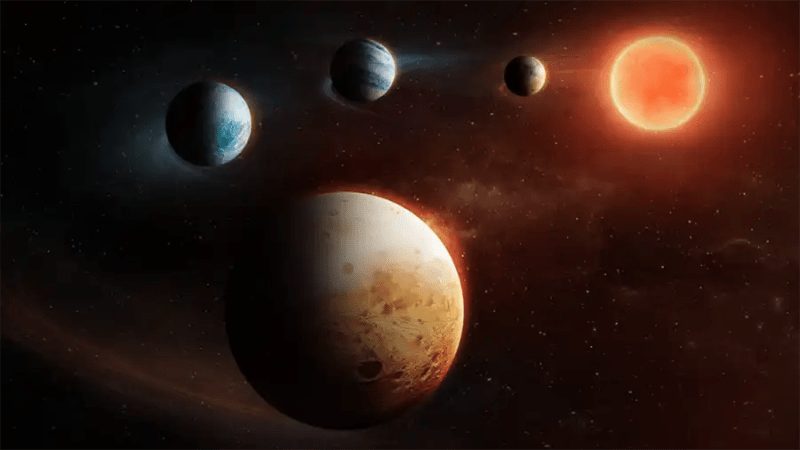
Around a small red dwarf star called LHS 1903, four planets orbit in an arrangement that has astronomers scratching their heads. The outermost planet is rocky and dense like Earth, while two planets closer to the star have thick, gassy atmospheres. That's the opposite of what we normally see.
In most solar systems, rocky planets huddle close to their stars while gas-wrapped worlds circle farther out. Our own solar system follows this pattern, with Mercury, Venus, Earth, and Mars close in, and gas giants like Jupiter and Saturn farther away.
Thomas Wilson from the University of St. Andrews led a team that studied this oddball system using NASA and European Space Agency satellites. They measured each planet's size and weight, confirming that the farthest planet is indeed rocky despite being 1.7 times Earth's radius and nearly six times as massive.
The team ran simulations to figure out how this happened. Could the outer planet have moved from somewhere else? Could a massive collision have stripped away its atmosphere? Neither scenario made sense without destabilizing the whole system.
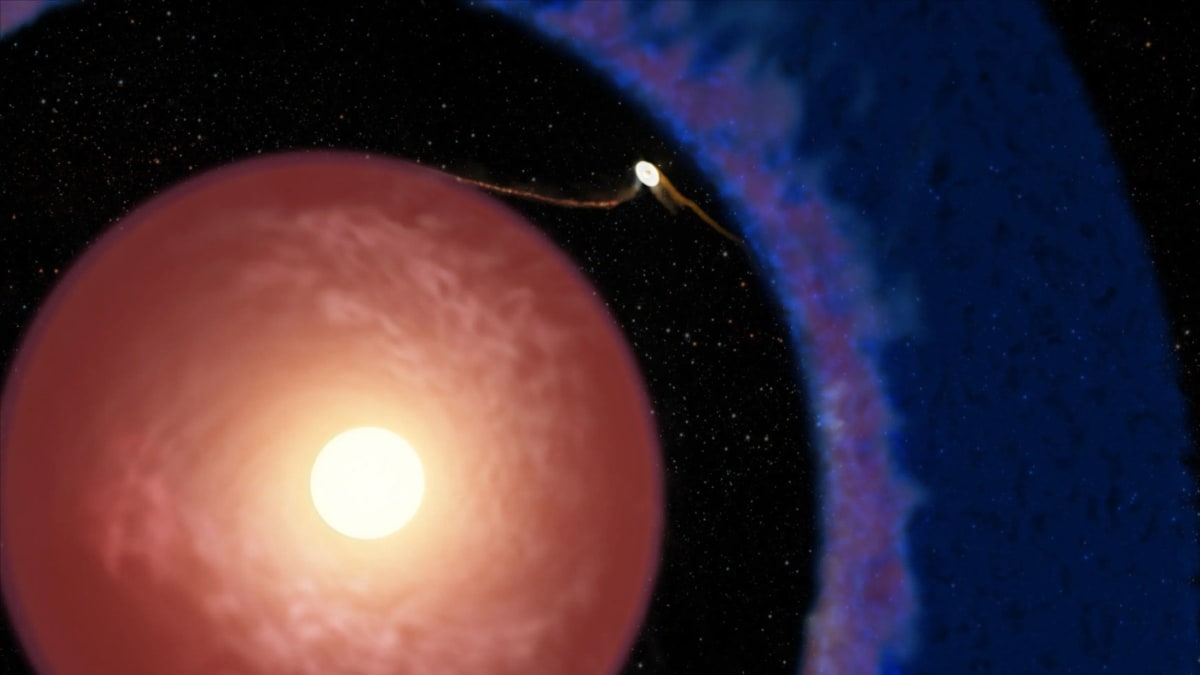
The most likely answer surprised everyone. The outer planet probably formed late, after the star's radiation had already blown away most of the gas in that region. Earlier planets grabbed thick atmospheres while gas was abundant, but the latecomer assembled from mostly rock and metal.
Why This Inspires
This discovery shows how much we still have to learn about the universe. Scientists once thought they had planet formation mostly figured out, but nature keeps revealing new twists.
The finding also demonstrates the power of international collaboration. NASA's Transiting Exoplanet Survey Satellite spotted the first three planets, then Europe's CHEOPS satellite and ground telescopes found the fourth and refined the measurements. Teams across continents worked together to solve the puzzle.
Sara Seager from MIT notes that when astronomers find one unusual planet, more usually follow. Europe's PLATO mission launching in 2027 should discover more long-distance rocky worlds and help confirm whether this system represents a whole new category.
James Owen from Imperial College London says the discovery suggests our current models work well for Sun-like stars but might need adjusting for smaller red dwarfs. Different types of stars might sculpt their planetary families in different ways.
The universe just showed us it has more tricks up its sleeve than we imagined, and that's genuinely exciting news for understanding our place in the cosmos.
More Images
Based on reporting by Sky & Telescope
This story was written by BrightWire based on verified news reports.
Spread the positivity!
Share this good news with someone who needs it