Mars Rover Finds 7 New Molecules That Could Signal Life
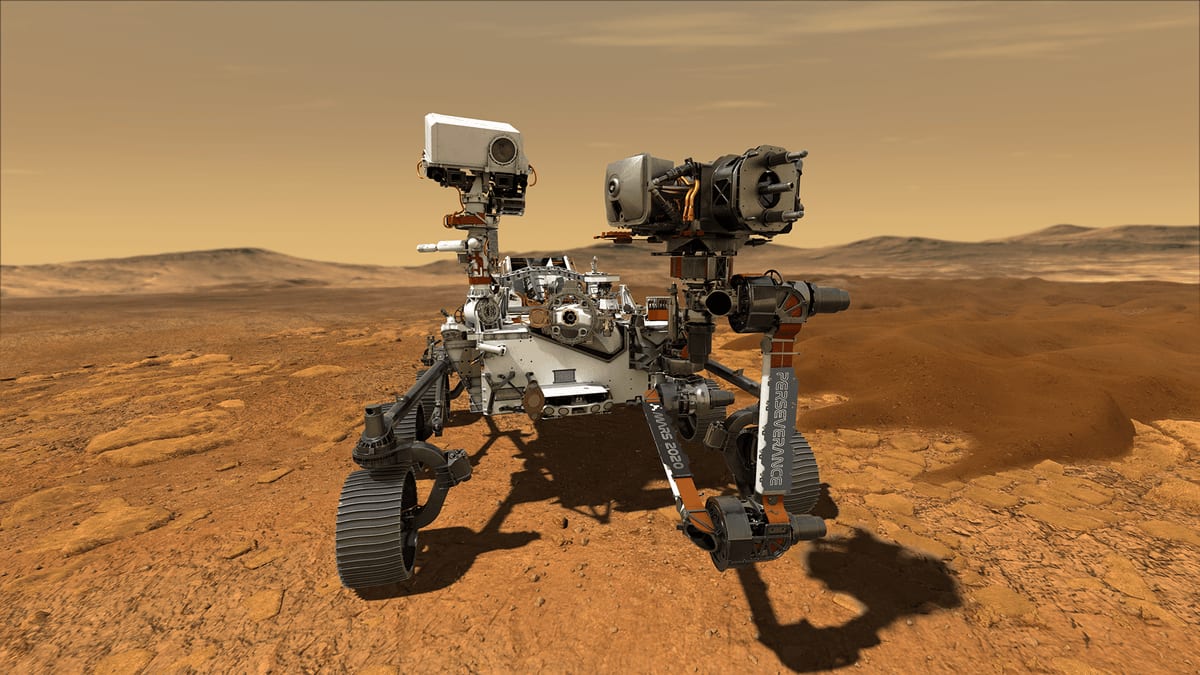
NASA's Curiosity rover just discovered the most diverse collection of organic molecules ever found on Mars, including seven never seen before on the Red Planet. Among them are chemical building blocks that could be precursors to DNA and RNA.
Scientists have uncovered the strongest evidence yet that ancient Mars had the right chemistry to support life.
NASA's Curiosity rover drilled into a rock nicknamed "Mary Anning 3" in 2020 and found 21 different carbon-containing molecules. Seven of these organic compounds have never been detected on Mars before, giving researchers exciting new clues about the planet's past.
The discovery happened in a region of Mount Sharp that was covered by lakes and streams billions of years ago. Clay minerals in this ancient lakebed preserved the organic molecules like a time capsule, keeping them intact for eons.
One of the most exciting finds is a nitrogen heterocycle, a ring-shaped molecule containing carbon and nitrogen atoms. This type of structure is considered a chemical ancestor to RNA and DNA, the building blocks of life as we know it.
"That detection is pretty profound because these structures can be chemical precursors to more complex nitrogen-bearing molecules," said Amy Williams, the study's lead author from the University of Florida. No one has ever confirmed finding these molecules on the Martian surface before.
The rover also identified benzothiophene, a carbon and sulfur molecule found in many meteorites. Some scientists believe meteorites carrying these organic molecules may have helped spark the chemistry needed for life across the early solar system.
Curiosity made these discoveries using a miniature lab in its belly called Sample Analysis at Mars. The rover ground the rock into powder, then heated it in a tiny oven to release gases that revealed the rock's secrets.
The team also used a special technique called wet chemistry, dropping the sample into a powerful solvent that breaks apart large molecules into smaller, easier-to-identify pieces. This was the first time Curiosity used this method on Mars.
Why This Inspires
This discovery doesn't prove that life existed on Mars, but it shows that ancient Mars had the right ingredients. The same chemical building blocks that led to life on Earth were present in Martian lakes billions of years ago.
Future missions will continue this search with even better tools. Europe's Rosalind Franklin rover and NASA's Dragonfly mission to Saturn's moon Titan will both carry upgraded versions of Curiosity's chemistry lab, allowing them to detect even more complex organic molecules.
Every rock Curiosity examines brings us closer to answering one of humanity's biggest questions: are we alone in the universe?
Based on reporting by Google: Mars rover discovery
This story was written by BrightWire based on verified news reports.
Spread the positivity!
Share this good news with someone who needs it