NASA Rover Finds Complex Organic Molecules on Mars
NASA's Curiosity rover discovered the richest collection of organic molecules ever detected on Mars, including chemicals similar to those that build DNA on Earth. The 3.5-billion-year-old compounds prove the red planet can preserve delicate chemistry for billions of years.
A dusty drill hole on Mars just revealed something scientists never expected to find: complex organic molecules that have survived for 3.5 billion years, including chemicals similar to the building blocks of DNA.
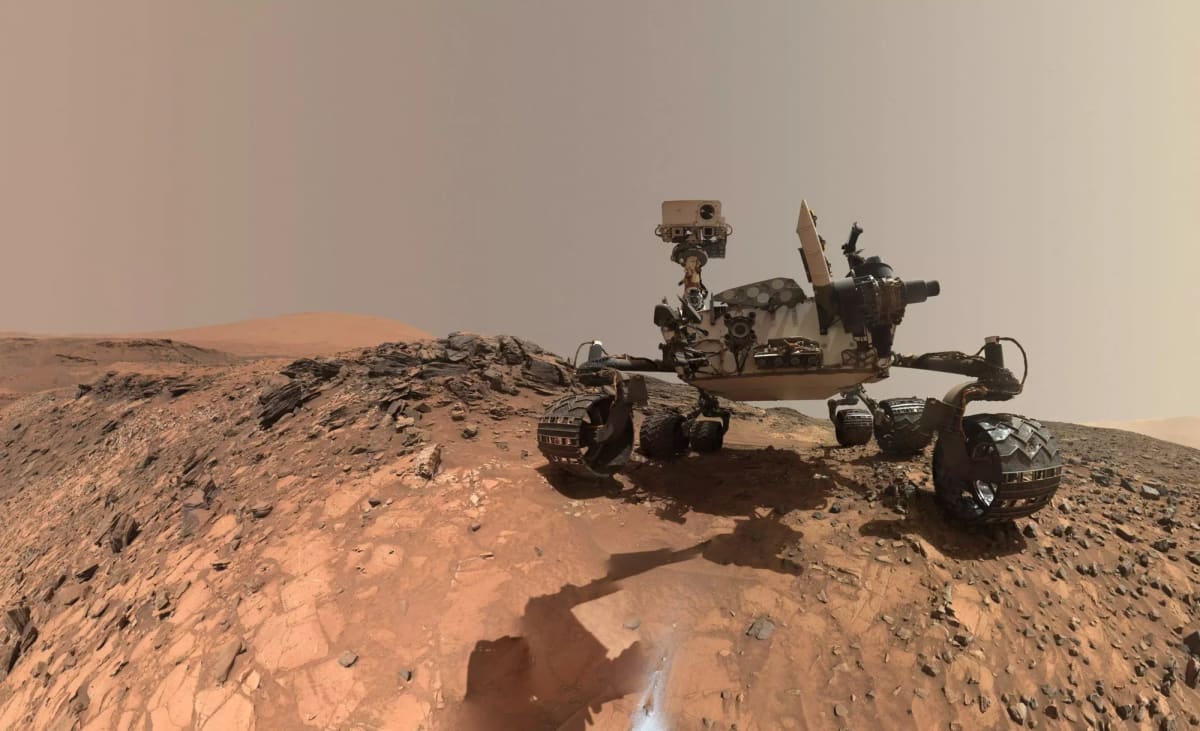
NASA's Curiosity rover made the discovery after drilling into a rock nicknamed "Mary Anning" in 2020. Years of analysis have now confirmed what's inside: the most diverse mix of organic compounds ever detected on another planet.
The discovery doesn't mean Mars once hosted life. But it does prove something equally important: Mars can preserve fragile chemistry across unimaginable stretches of time.
"We think we're looking at organic matter that's been preserved on Mars for 3.5 billion years," said Amy Williams, a University of Florida geological sciences professor who led the study. "It's really useful to have evidence that ancient organic matter is preserved, because that is a way to assess the habitability of an environment."
Curiosity performed a chemical test never before attempted on another planet. The rover used a special chemical reagent to break apart larger organic structures into smaller, identifiable pieces. Think of it like cracking open a locked safe to see what's hidden inside.
The results surprised researchers. Among the confirmed molecules were benzothiophene, a sulfur-containing compound common in carbon-rich meteorites but never firmly identified on Mars before. Another signal matched a nitrogen-bearing molecule with a structure similar to compounds used to build DNA on Earth.
The rover found these treasures in Glen Torridon, a clay-rich region of Gale Crater. Scientists chose this spot carefully because clay minerals excel at trapping and protecting organic material. Billions of years ago, water likely flowed through this area, creating ideal conditions for preserving ancient chemistry.
The nitrogen discovery matters most for anyone wondering about life beyond Earth. Nitrogen-containing ring structures sit at the heart of molecules like nucleic acids. While this isn't proof of life, it shows that chemical ingredients relevant to biology can survive on Mars.
Why This Inspires
This discovery opens a door that many thought might stay closed forever. For decades, scientists wondered whether Mars could preserve the delicate chemical signatures necessary to answer questions about ancient life. Now they know it can.
The Curiosity and Perseverance rovers continue searching Martian rocks for more clues. Each sample brings us closer to understanding whether Earth's neighbor once supported life, and whether the building blocks of biology exist beyond our blue planet.
The same meteorites that delivered these organic compounds to Mars billions of years ago also fell on early Earth, carrying the ingredients for something remarkable.
More Images


Based on reporting by Google News - Science
This story was written by BrightWire based on verified news reports.
Spread the positivity!
Share this good news with someone who needs it