Milky Way Sits on Giant Dark Matter Sheet, Study Finds
Scientists discovered our galaxy rests on a massive, flat sheet of dark matter stretching 30 million light-years across. The finding solves a decades-old puzzle about why nearby galaxies move differently than expected.
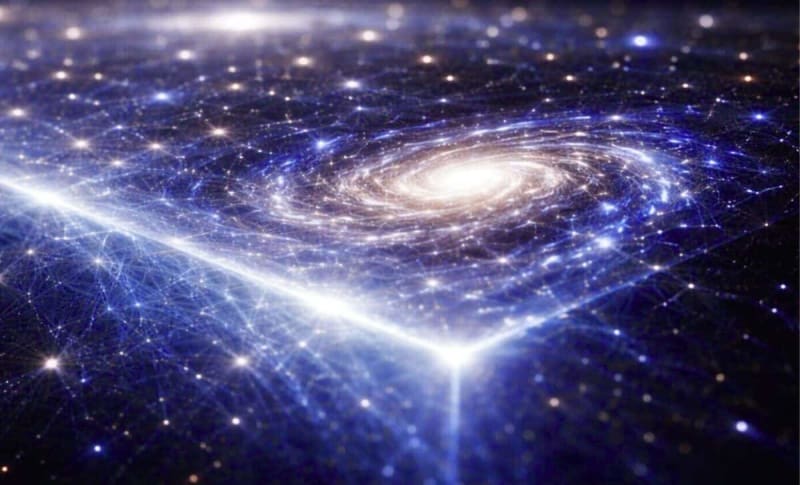
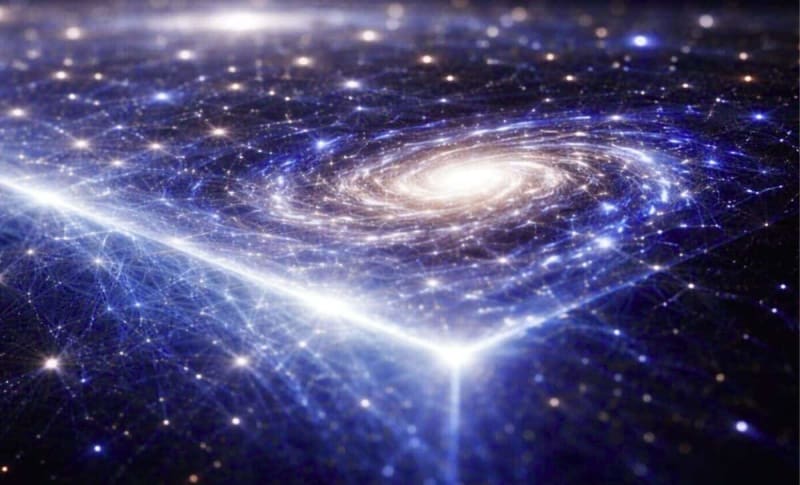
Our galaxy isn't floating in space the way astronomers thought for the past 60 years. New simulations reveal the Milky Way sits embedded in a vast, pancake-flat sheet of dark matter that stretches tens of millions of light-years in every direction.
The discovery, published in Nature Astronomy in January 2026, finally explains why nearby galaxies have been moving strangely. For decades, scientists couldn't understand why galaxies near us were drifting away more slowly than the mass of our Local Group should allow.
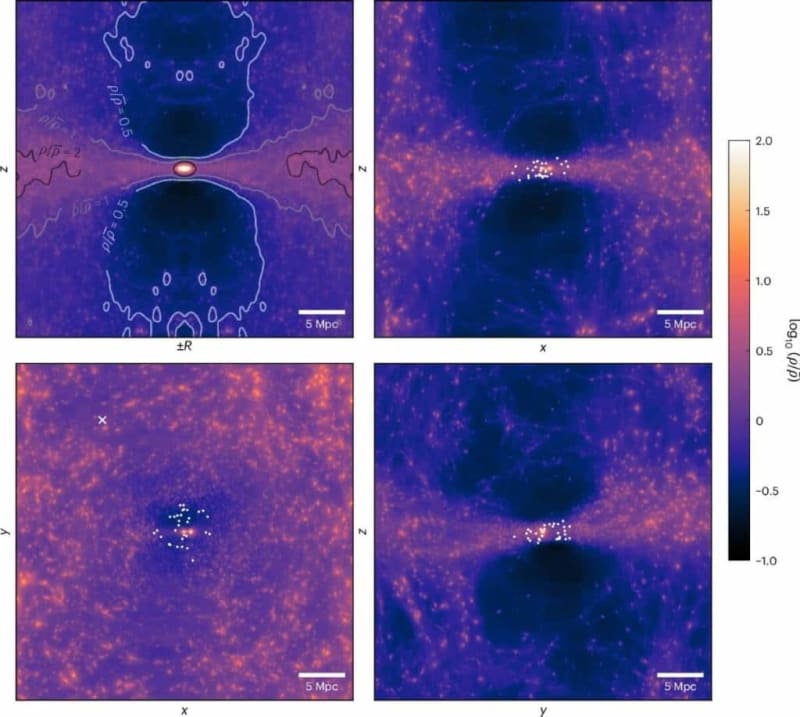
Ewoud Wempe and his team at the Kapteyn Astronomical Institute created 169 detailed simulations of our cosmic neighborhood. They tracked 31 nearby galaxies and discovered something unexpected: instead of a sphere of dark matter surrounding us, there's a giant flat sheet.
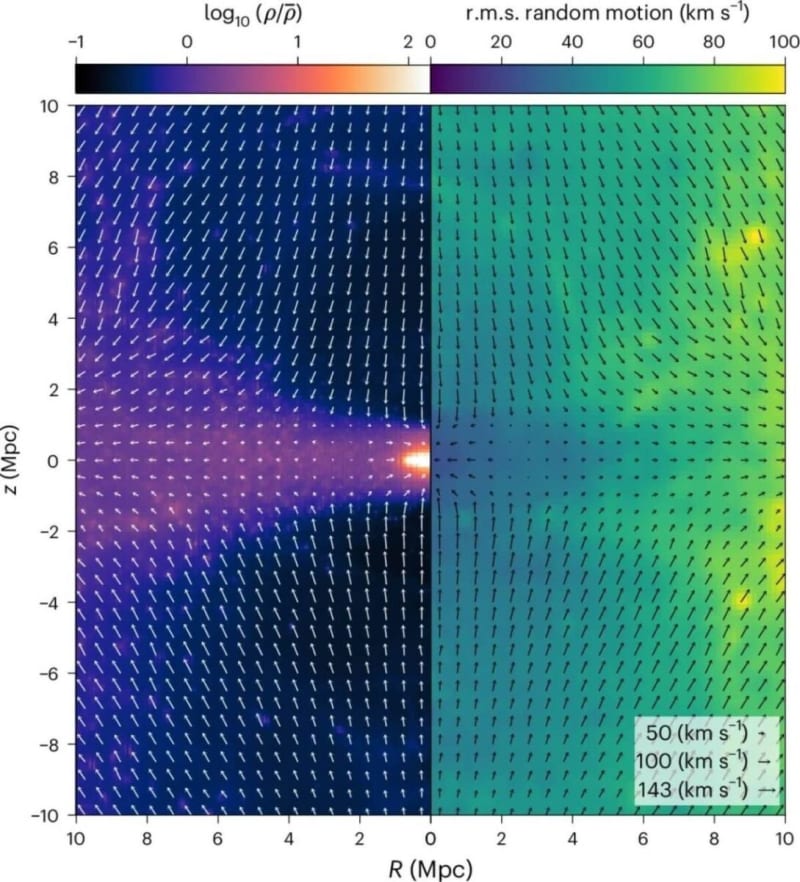
This sheet is roughly twice as dense as average space in its center plane, with nearly empty voids above and below. It changes how gravity works around us, creating outward forces that slow down how fast nearby galaxies fall toward our region.
The structure aligns perfectly with the Supergalactic Plane, a real pattern formed by visible galaxies. This match suggests the bright galaxies we can see are simply tracing the invisible dark matter framework underneath.
Why This Inspires
The new model shows the Local Group actually weighs 3.3 trillion solar masses, heavier than previous estimates. But the full sheet contains over four times more mass within the surrounding region, solving the motion mystery without breaking any physics.
This isn't just about our neighborhood. Observations from the ALMA telescope found similar dark matter sheets in the early universe, dating back to when the cosmos was only 780 million years old. These flat structures might be a universal feature of how galaxies form and organize throughout cosmic history.
The pattern appears in galaxy motions too. Within the plane, velocities stay low and smooth, often below 30 kilometers per second. Above and below, galaxies rush toward the denser middle layer, creating a highly directional flow that matches what telescopes actually see.
The team used data from the cosmic microwave background and real galaxy movements to build their simulations. The results matched observations so closely that the sheet model now offers the most accurate picture yet of our place in the universe.
Understanding this structure helps scientists predict how galaxies will move in the future and reveals how dark matter shapes cosmic architecture on the largest scales. The invisible scaffolding of the universe turns out to be far more organized than anyone imagined.
More Images

Based on reporting by Google News - Scientists Discover
This story was written by BrightWire based on verified news reports.
Spread the positivity!
Share this good news with someone who needs it