NASA: Earth Microbes Could Survive on the Moon
NASA scientists discovered that some microbes carried by astronauts can survive in shadowed areas near the Moon's South Pole, turning a contamination challenge into a unique opportunity to study life's limits in space. The finding will help future Mars missions distinguish between alien life and hitchhiking Earth organisms.
Humans exploring the Moon will inevitably bring along tiny travelers: the millions of bacteria living on our skin and in our gear. Now NASA scientists have discovered that some of these microbes could actually survive in the Moon's coldest, darkest corners.
The findings, published in August 2026, reveal that sheltered spots near the lunar South Pole could host Earth organisms for at least a day. Some refuges might be no larger than a footprint, while one hardy bathroom fungus could even withstand brief sunlight exposure.
"Humans are natural explorers, and with them come their voices, their memories, and their microbes," said Prabal Saxena, the planetary scientist who led the study at NASA's Goddard Space Flight Center. The reality might sound unsettling, but he sees it differently: "It also creates an opportunity to turn an imperfect situation into a useful experiment."
The research team tested five resilient microbes commonly found in spaceflight settings, including Aspergillus niger, a fungus that grows in bathrooms and has survived outside the International Space Station. Scientists were surprised these organisms could endure space conditions, since they're not typically classified as extremophiles.
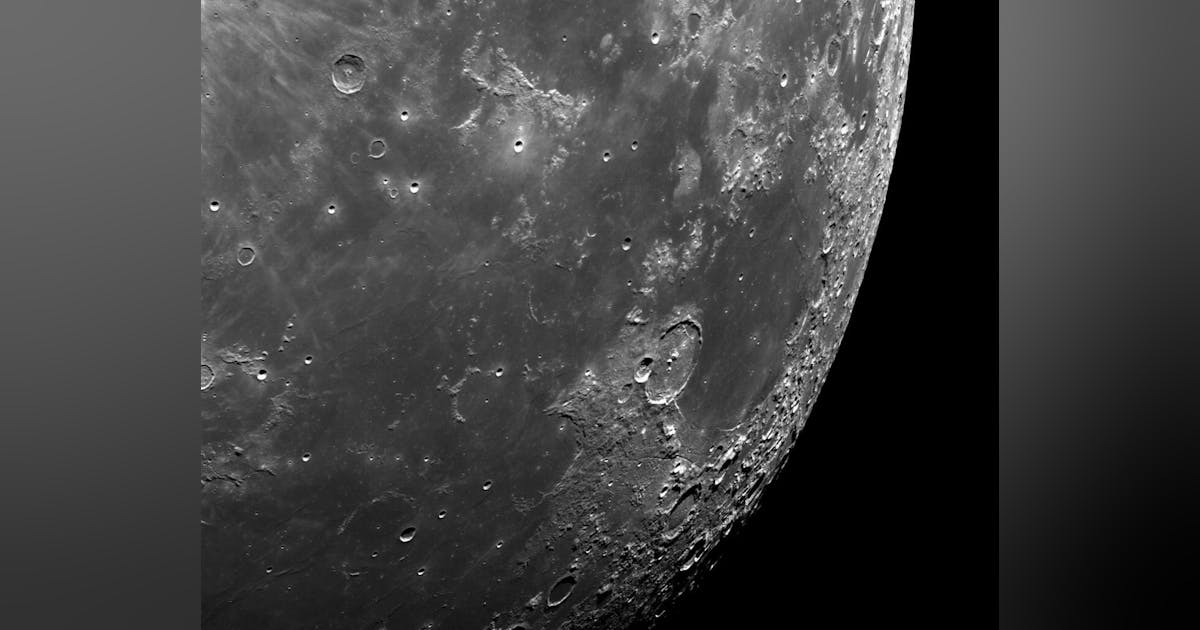
The Moon's South Pole creates unusual survival pockets because of how sunlight arrives there. The Moon's slight tilt means the Sun stays close to the horizon at the poles, sweeping across the surface like a flashlight lying flat on a table.
Crater rims, mountains, and even small bumps block this low-angle light, creating shadowed areas that stay extremely cold. These shadows can preserve water, protect delicate molecules, and shield microorganisms from damaging radiation.
Why This Inspires
This discovery transforms a contamination problem into scientific opportunity. The Moon could become a natural laboratory for testing the real limits of microbial survival under conditions nearly impossible to reproduce on Earth.
The research matters even more for future Mars missions. "When we go to Mars to search for signs of life beyond our planet, we will want to make sure it's not stuff we brought," said Andrew Needham, a NASA contamination control scientist.
Understanding which Earth microbes can survive where helps scientists establish a baseline. Future researchers can then distinguish between ancient lunar chemistry and material humans introduced, making the search for extraterrestrial life more reliable.
NASA can heat robotic spacecraft to over 400 degrees Fahrenheit to eliminate microbes, but that's impossible for crewed missions. The new research helps mission planners identify which areas need extra protection and where carefully monitored experiments could yield breakthrough insights about life's resilience.
The team used data from NASA's Lunar Reconnaissance Orbiter to map elevation, temperature, and radiation at three South Pole locations. Their simulations revealed exactly where Earth's tiniest explorers might gain a temporary foothold on another world, and where scientists should look first when searching for signs of something truly alien.
Based on reporting by Science Daily
This story was written by BrightWire based on verified news reports.
Spread the positivity!
Share this good news with someone who needs it