NASA Finds Slushy Ocean on Saturn's Moon Titan
Scientists discovered a partially frozen ocean beneath the ice of Saturn's largest moon, creating conditions that could support life. The slushy mix of ice and liquid water makes this distant world one of the most promising places to search for alien life.
Saturn's largest moon just went from frozen wasteland to one of the most exciting places in our solar system.
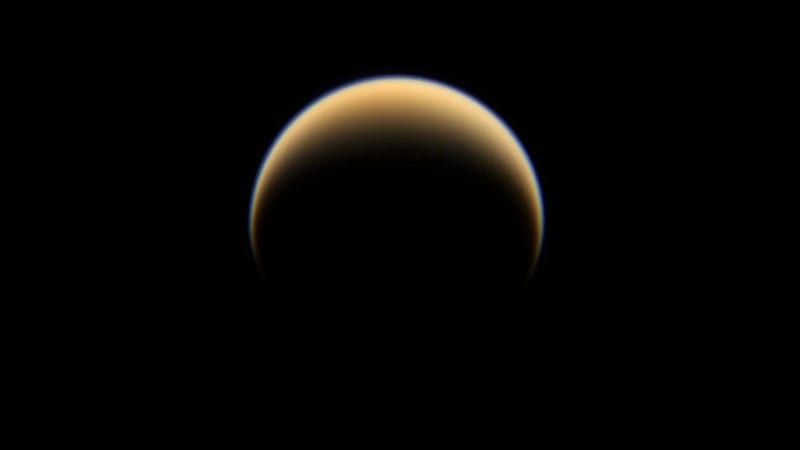
NASA scientists have discovered what they're calling a "slushy" ocean hidden deep beneath the icy surface of Titan, Saturn's biggest moon. It's not solid ice and it's not liquid water but something in between, constantly shifting and moving beneath the frozen crust.
For years, Titan looked like the last place you'd expect to find anything interesting. The surface is incredibly cold, buried under thick ice, and sits nearly a billion miles from the Sun's warmth.
But this new discovery changes everything. The ocean isn't frozen solid like scientists once thought. Instead, it's a dynamic mix of ice and liquid that allows materials to move, mix, and generate internal heat.
That movement is what makes scientists excited. A completely frozen ocean would be still and lifeless. But a slushy ocean is geologically active, which means it could create the right conditions for something remarkable.
NASA isn't claiming they found life. But they are saying this is exactly the kind of environment where life could exist.
Here on Earth, tiny organisms thrive in extreme places that seem impossible. They live under Antarctic ice, in pitch-black ocean depths, and in spots that never see sunlight. A semi-liquid ocean protected beneath ice fits that pattern perfectly.
The Bright Side
Hidden oceans like Titan's are now considered prime targets in the search for life beyond Earth. They're shielded from harsh space radiation and could stay stable for billions of years, giving life plenty of time to develop.
Future missions will probe deeper into what's happening beneath that ice. Scientists want to know how deep the ocean goes, how active it is, and whether its chemistry includes the building blocks of life.
This discovery also reminds us that the universe loves to hide its most interesting secrets. Worlds that look barren and frozen on the outside might be teeming with activity below.
Titan has officially graduated from overlooked moon to must-study destination. What once seemed like a lifeless ball of ice now represents one of our best hopes for finding life beyond our planet.
The search for cosmic neighbors just got a whole lot more interesting.
Based on reporting by Google: NASA discovery
This story was written by BrightWire based on verified news reports.
Spread the positivity!
Share this good news with someone who needs it