NASA Telescope Solves Mystery of Universe's Brightest Blasts
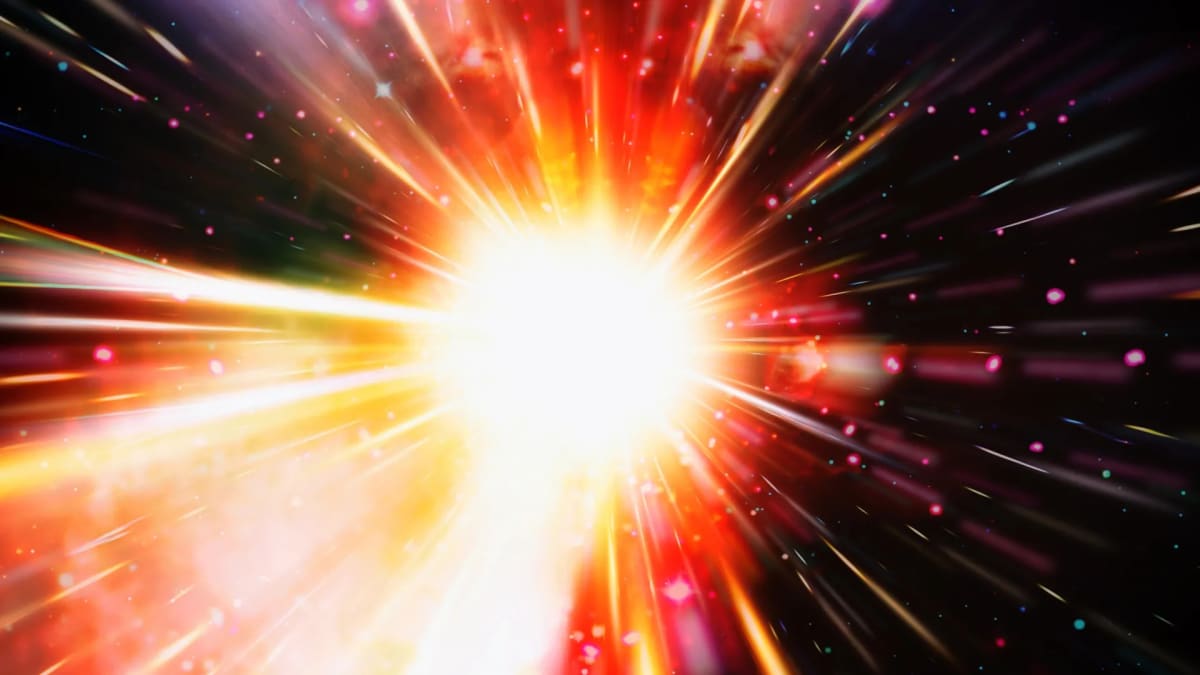
Scientists finally discovered what powers the brightest stellar explosions ever seen: ultra-magnetic newborn stars spinning hundreds of times per second. The breakthrough came after NASA's Fermi telescope detected gamma rays from a supernova 440 million light-years away.
For nearly 20 years, astronomers have wondered what makes some dying stars explode with such extraordinary brilliance that they outshine entire galaxies. NASA's Fermi Gamma-ray Space Telescope just gave them the answer.
An international research team studied years of telescope data and found the first confirmed gamma-ray signal from a superluminous supernova, one of the most extreme explosions in the universe. The culprit behind all that power? A rapidly spinning magnetar, an exotic neutron star with magnetic fields 10 trillion times stronger than a refrigerator magnet.
The event, called SN 2017egm, erupted in a galaxy 440 million light-years away in the constellation Ursa Major. Even from that enormous distance, it remains one of the closest superluminous supernovae ever observed from Earth, making it perfect for detailed study.
"For nearly 20 years, astronomers have searched Fermi data for gamma-ray signals from thousands of supernovae, and while a few intriguing hints have been reported, none were definitive until now," said study lead Fabio Acero at the French National Centre for Scientific Research. The findings appeared in the journal Astronomy & Astrophysics.
These rare superluminous supernovae shine at least 10 times brighter in visible light than ordinary stellar explosions. Scientists have identified nearly 400 of them over the past two decades, but their power source remained a mystery.
The breakthrough came when researchers compared both visible light and gamma-ray signals from SN 2017egm with different theoretical models. The magnetar explanation fit perfectly.
Here's how it works: When a massive star collapses, it can leave behind a magnetar spinning several hundred times every second. That incredible rotation generates a powerful flow of electrons and their antimatter twins, positrons, creating a huge cloud of high-energy material.
Inside this cloud, particles collide and transform into gamma-ray photons. Much of this gamma-ray energy gets trapped inside the expanding supernova debris and converts into lower-energy visible light, making the explosion extraordinarily bright.
"About three months after the collapse, as the supernova debris expands and cools, the gamma rays can begin to leak out," Acero explained. That's when Fermi could finally detect them.
The Bright Side: This discovery opens up an entirely new way to study the universe's most powerful explosions. Researcher Guillem Martí-Devesa noted that the finding "opens up a new window for studying these fascinating events," confirming that some supernovae can be as luminous in gamma rays as they are in visible light.
The team even calculated that future observatories like the upcoming Cerenkov Telescope Array should be able to spot similar events from distances up to 500 million light-years away. That means scientists will soon have even more opportunities to witness these cosmic powerhouses in action and understand how the universe's most extreme objects are born.
After two decades of searching, astronomers finally have confirmation that nature's strongest magnets are lighting up the cosmos in spectacular fashion.
Based on reporting by Science Daily
This story was written by BrightWire based on verified news reports.
Spread the positivity!
Share this good news with someone who needs it