NASA's Roman Space Telescope Launches August 30
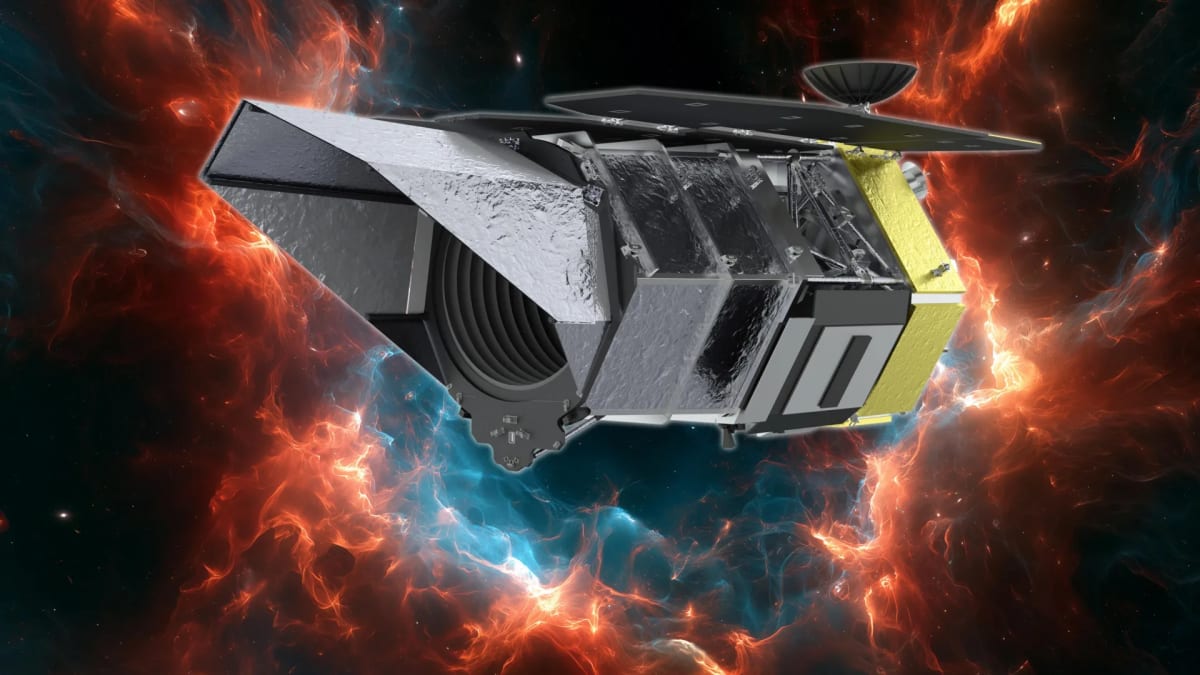
NASA's newest space telescope just cleared its final review and is set to launch this Sunday, opening a new era of cosmic discovery. The Roman Space Telescope will help scientists solve some of astronomy's biggest mysteries, from how the universe expands to finding distant worlds.
A powerful new telescope is about to give humanity its best view yet of the universe's biggest secrets.
NASA's Nancy Grace Roman Space Telescope passed its final Flight Readiness Review on Friday at Kennedy Space Center in Florida. Mission leaders from NASA, the telescope team, and SpaceX gave the green light for launch preparations to enter their final phase.
The telescope is scheduled to lift off no earlier than 7:26 a.m. EDT this Sunday, August 30, aboard a SpaceX Falcon Heavy rocket. Falcon Heavy is one of SpaceX's most powerful launch vehicles, using three connected rocket boosters to carry large spacecraft into space.
Right now, teams are preparing to move the Roman observatory to SpaceX's hangar at Launch Complex 39A. The telescope is already safely enclosed inside Falcon Heavy's protective fairing, a shell that shields spacecraft from wind and atmospheric forces during launch.
Once technicians connect the telescope to the rocket, both will be transported to the launch pad for final countdown preparations. Everything is on track for Sunday's historic liftoff.
The Ripple Effect
Roman's mission reaches far beyond just taking pretty pictures of space. The telescope is designed to survey large regions of the sky, giving scientists a much broader view of the cosmos than ever before.
Researchers will use Roman to investigate some of astronomy's most puzzling questions. The telescope will study how the universe has evolved over billions of years and examine the mysterious force causing it to expand faster and faster.
Roman will also search for and study exoplanets, worlds that orbit stars beyond our solar system. By capturing data across vast swaths of space, the telescope will help scientists understand both the structure of our universe and the nature of distant planetary systems.
The mission represents years of work by thousands of engineers, scientists, and technicians. Their efforts are about to pay off with discoveries that could reshape our understanding of everything from dark energy to potentially habitable worlds.
Sunday's launch marks the beginning of a new chapter in space exploration, one that promises to answer old questions and raise fascinating new ones.
Based on reporting by Science Daily
This story was written by BrightWire based on verified news reports.
Spread the positivity!
Share this good news with someone who needs it