New Telescopes Will Reveal 40,000 Hidden Objects in Space
Scientists are about to unlock secrets from a frozen time capsule 3 billion miles away that's been waiting since our solar system was born. Powerful new telescopes will discover thousands of ancient objects that could rewrite what we know about how planets form.
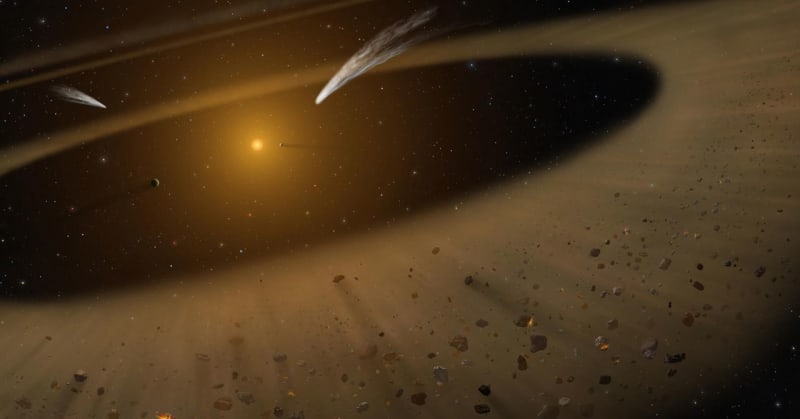
A frozen ring of ancient debris floating billions of miles beyond Neptune is about to reveal secrets from the birth of our solar system.
The Kuiper Belt, a mysterious region filled with leftover planet parts and icy relics, has puzzled astronomers since they discovered it in the 1990s. Scientists have found about 4,000 objects out there so far, including dwarf planets like Pluto and thousands of smaller frozen chunks from 4.6 billion years ago.
That number is about to explode. New telescopes like the Vera C. Rubin Observatory in Chile will spot ten times as many objects in the coming years, filling gaps in our knowledge of what's actually floating around in our cosmic neighborhood.
"We have a census of what's out there in the solar system, but it's a patchwork of surveys, and it leaves a lot of room for things that might be there that have been missed," says Renu Malhotra, a planetary scientist at the University of Arizona. The Rubin Observatory will change that completely.
What makes scientists so excited is what these discoveries might reveal. The Kuiper Belt is like a pristine time capsule that hasn't changed much since the solar system formed, so each new object tells a story about our cosmic origins.
Researchers have already found weird clusters of objects that might show evidence of Neptune's dramatic journey through space billions of years ago. One cluster, called a "kernel," sits frozen in a pattern that suggests Neptune pulled these objects along as it migrated outward, then released them like a snowplow dropping a clump of snow.
Last year, Princeton graduate student Amir Siraj used a new algorithm to analyze ten times more objects than previous studies. His team confirmed the original kernel and possibly found a second one, adding new clues about Neptune's bumpy migration through the early solar system.
The Bright Side
These discoveries aren't just about understanding the past. Finding thousands more Kuiper Belt objects could answer whether hidden planets lurk beyond Neptune, how far our solar system actually extends, and whether encounters with rogue objects from other star systems left traces in this ancient collection.
The flood of data coming from these advanced telescopes represents a golden age for understanding our place in space. "I think this will become a very hot field very soon," Siraj says, and that excitement is already building among astronomers preparing for the discoveries ahead.
Billions of miles away, frozen messengers from our solar system's birth are waiting to tell their stories.
More Images




Based on reporting by Wired
This story was written by BrightWire based on verified news reports.
Spread the positivity!
Share this good news with someone who needs it