NY Cemetery Hides 5.5 Million Bees for Over 100 Years
A Cornell researcher taking a shortcut through an Ithaca cemetery stumbled upon one of the world's largest documented bee colonies. More than 5.5 million wild bees have been thriving in the undisturbed sandy soil for over a century.
Rachel Fordyce was just trying to save a few dollars on parking when she walked through East Lawn Cemetery on her way to work at Cornell University in spring 2022. That budget-friendly shortcut led to an astonishing discovery: a century-old underground city of 5.5 million bees.
Fordyce noticed bees everywhere during her walk through the Ithaca cemetery. She collected some in a jar and brought them to her supervisor, entomology professor Bryan Danforth, with a simple observation: "These are all over the cemetery."
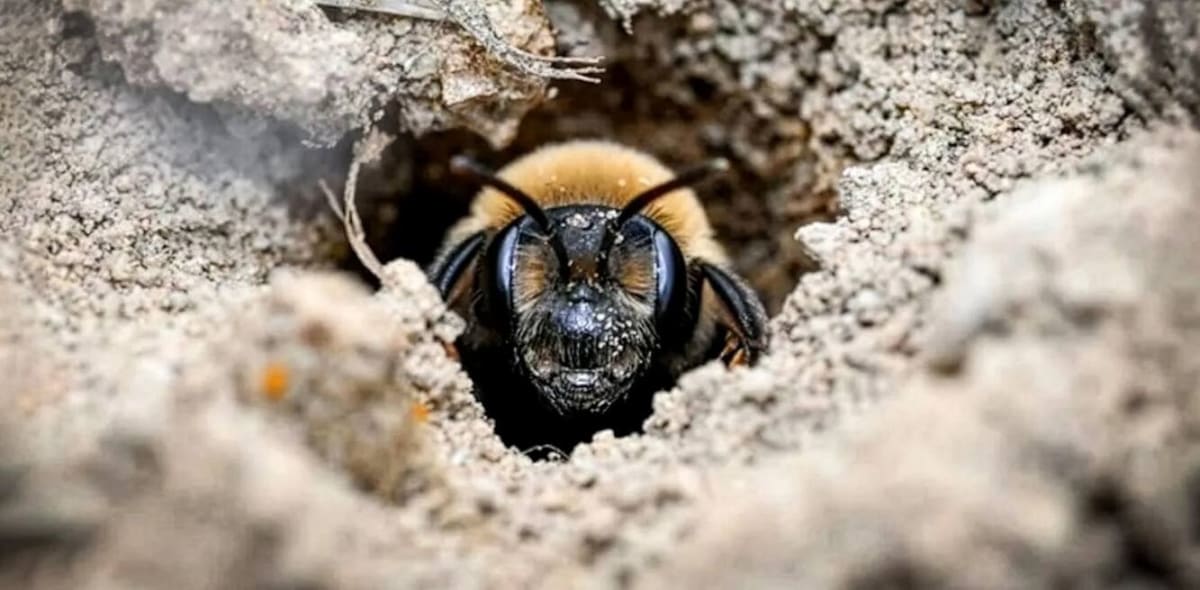
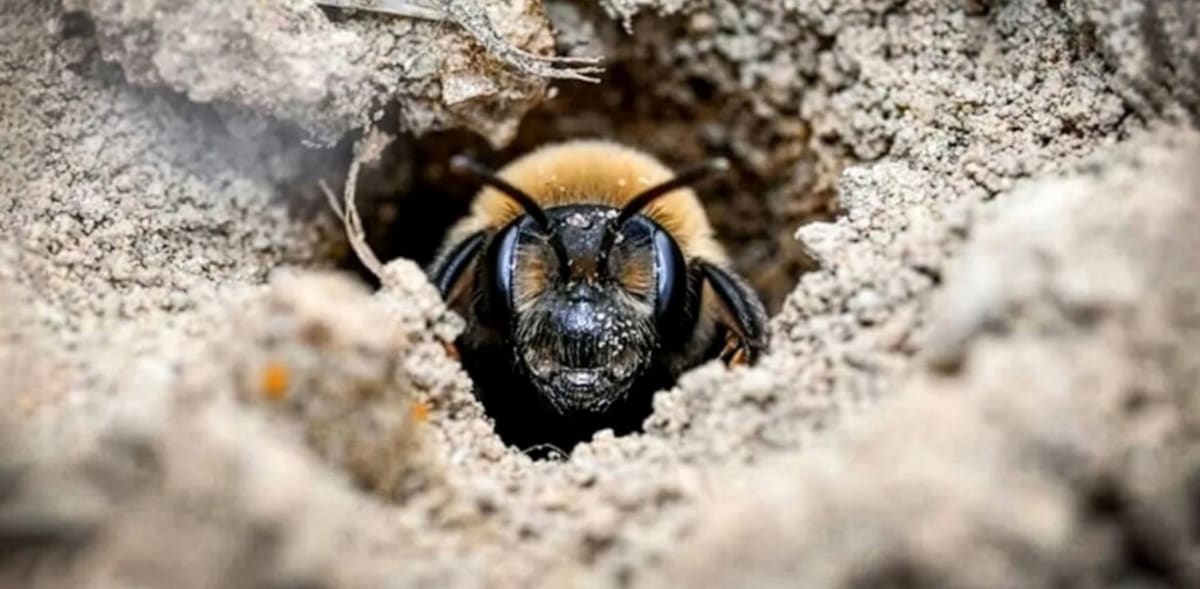
The insects turned out to be Andrena regularis, commonly called regular mining bees. These solitary wild bees nest underground and help pollinate crops and wild plants across New York.
What started as a casual observation became a scientific sensation. The research team discovered roughly 5.5 million bees living across 1.5 acres of cemetery land, making it one of the largest bee aggregations ever documented in scientific literature.
To put that in perspective, the colony equals more than 200 honeybee hives and exceeds Manhattan's entire human population by more than three times. "I'm sure there are other large bee aggregations that exist around the world that we just haven't identified, but in terms of what is in the literature, this is one of the largest," said Steve Hoge, lead author of the study published in the journal Apidologie.
The researchers used mesh tents called emergence traps to monitor the bees between March and May 2023. The traps captured 3,251 insects representing 16 different species, with A. regularis dominating the samples.
Historical records revealed these bees have called East Lawn Cemetery home since at least the early 1900s. The cemetery itself dates back to 1878, providing generations of bees with peaceful, pesticide-free sandy soil perfect for nesting.
Why This Inspires
This discovery transforms how we think about ordinary spaces in our communities. A place dedicated to remembering the past turned out to be safeguarding the future of vital pollinators that help grow New York's signature apple crops.
Cemetery superintendent Keven Morse said his family has managed the nonprofit cemetery for 46 years, often spotting deer, hawks, foxes, and countless bees. "I just felt bad having to mow in certain areas," Morse said, noting three or four sections where bees migrate heavily.
The bees likely thrive thanks to nearby Cornell Orchards, located about a third of a mile away, which provides abundant spring flowers for foraging. Combined with the cemetery's undisturbed sandy soil, it creates an ideal habitat.
Danforth emphasized the urgent need to protect these nest sites. "If we don't preserve nest sites, and someone paves over them, we could lose in an instant 5.5 million bees that are important pollinators," he said.
The research strengthens the growing understanding that cemeteries serve as crucial biodiversity refuges, especially in urban areas where natural habitats continue to shrink. Sometimes the most extraordinary discoveries are hiding in the places we walk past every day.
More Images
Based on reporting by Good News Network
This story was written by BrightWire based on verified news reports.
Spread the positivity!
Share this good news with someone who needs it