Quantum Memory Chips Could Build Earth-Sized Telescopes
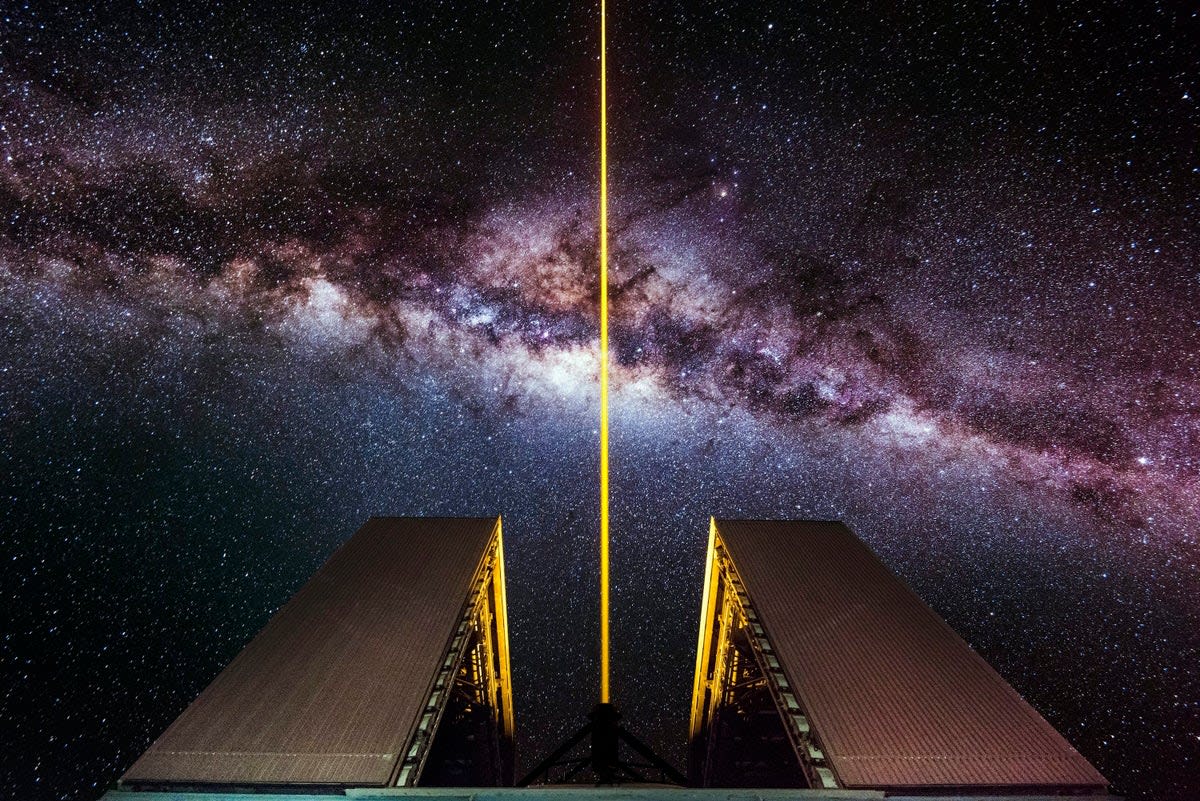
Harvard scientists used tiny quantum computers to solve a century-old problem blocking astronomers from building giant optical telescope networks. The breakthrough could one day help us photograph distant planets and stars with unprecedented clarity.
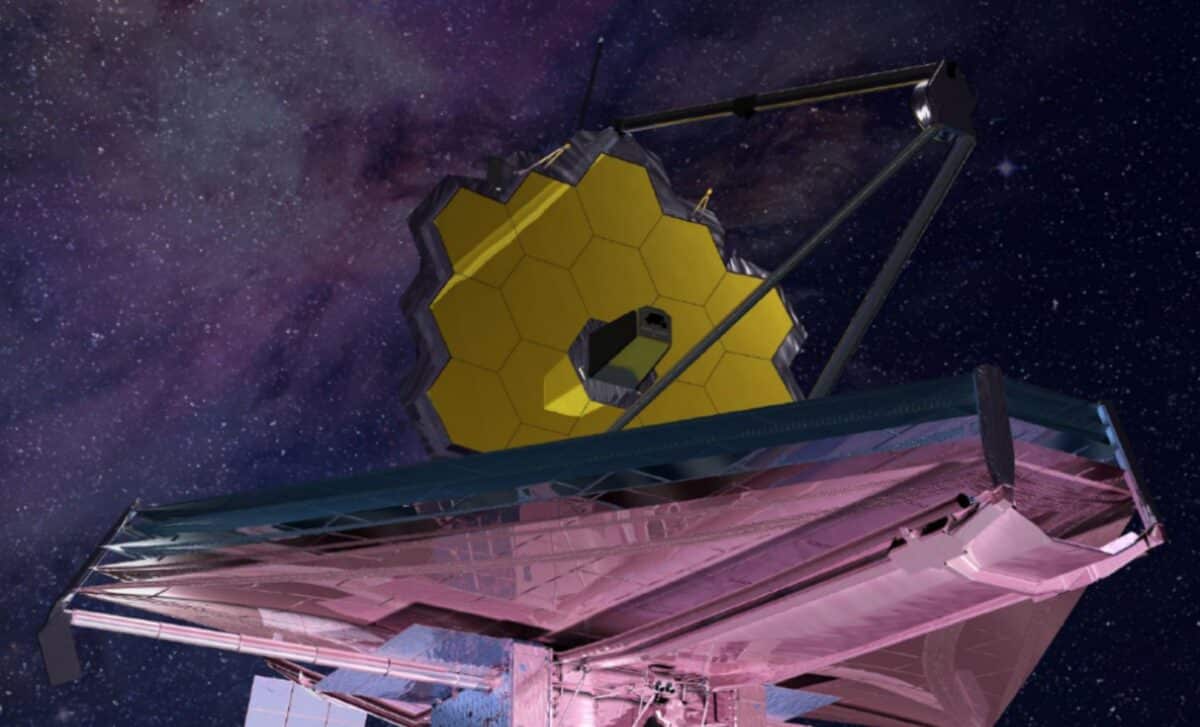
Scientists just cracked a puzzle that's stumped astronomers for over 100 years, and the solution involves storing starlight in diamonds smaller than a grain of sand.
Astronomers have long wanted to connect multiple optical telescopes across vast distances to work as one giant observatory. Radio astronomers already do this brilliantly, linking telescopes across entire continents or even the whole planet to capture incredibly detailed images like the famous black hole photo from 2019.
But visible light has been a different story. Too many precious photons get lost traveling between telescopes, making it nearly impossible to combine their signals. Since most photons from distant stars never reach Earth anyway, losing even more along the way makes the technique impractical.
Enter quantum memory. Researchers at Harvard University figured out how to store photons inside tiny defects in diamonds, each acting like a miniature quantum computer. In their proof-of-concept experiment, they connected two receivers with fiber optic cable and successfully captured an interference pattern, the key step in making multiple telescopes act as one.
Graduate student Maxim Sirotin and his team separated their receivers by just six meters but connected them with 1.5 kilometers of fiber. The quantum memory chips held onto the photons' information by encoding it in the spin of electrons and atoms. This allowed them to retrieve combined signals from both receivers, just like a single enormous telescope would.
The implications are thrilling. Two small telescopes 1.5 kilometers apart could produce images as sharp as one giant telescope with a mirror 1.5 kilometers wide. Building a single telescope that large is physically and economically impossible, but connecting smaller ones across that distance becomes achievable.
"I would say it's a breakthrough," says John Monnier, an astronomer at the University of Michigan who wasn't involved in the study. "This is really a completely new way to make interferometers work."
Why This Inspires
This discovery represents more than just a technical achievement. It shows how thinking differently about old problems can unlock entirely new possibilities.
For decades, astronomers assumed they'd hit a wall with optical telescope size. The physics seemed to say: this far and no further. But by borrowing ideas from quantum computing, a completely different field, researchers found a path forward that nobody expected.
The technology isn't ready for stargazing yet. Building a full-scale quantum optical interferometer might take decades of additional work. But physicist Mikhail Lukin, who oversees the Harvard research, sees that timeline as part of the excitement. "These are still the fun early days," he says, "of trying and testing multiple different technological approaches."
When this technology matures, astronomers could photograph exoplanets in detail, measure the exact sizes of distant stars, and observe cosmic phenomena currently beyond our reach. The universe is about to come into much sharper focus, one quantum memory at a time.
More Images


Based on reporting by Scientific American
This story was written by BrightWire based on verified news reports.
Spread the positivity!
Share this good news with someone who needs it