Scientists Discover Cotton Candy Planets 1,113 Light Years Away
Two newly discovered planets are each 1,000 times bigger than Earth but have the density of cotton candy, baffling scientists with their puffy existence. These rare "super-puffs" could rewrite everything we know about how planets form and evolve.
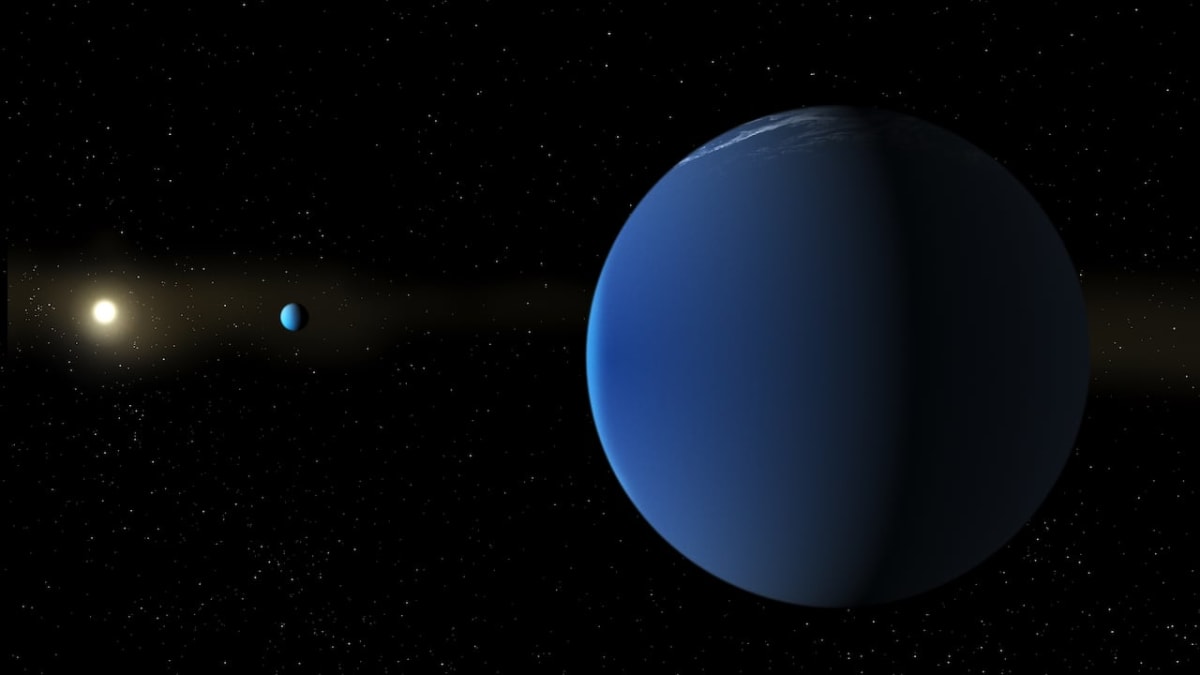
Imagine a planet the size of Jupiter with the density of fresh shaving foam floating through space. Scientists just found two of them orbiting a single star, and they're rewriting the rulebook on what's possible in our universe.
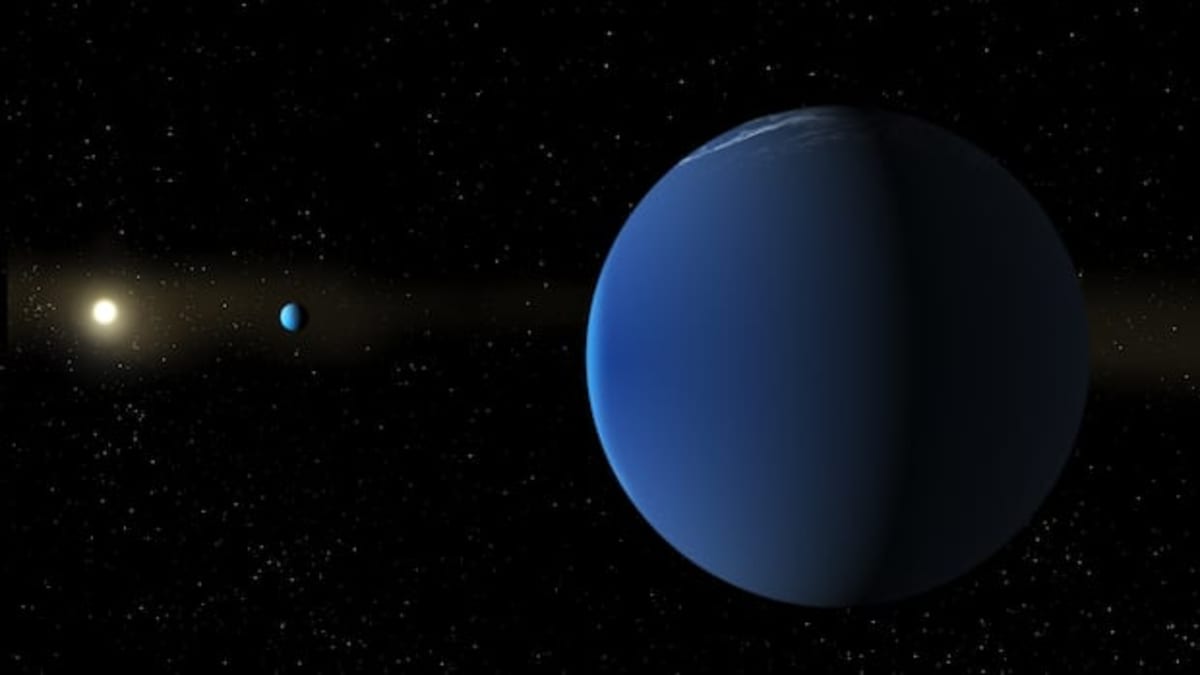
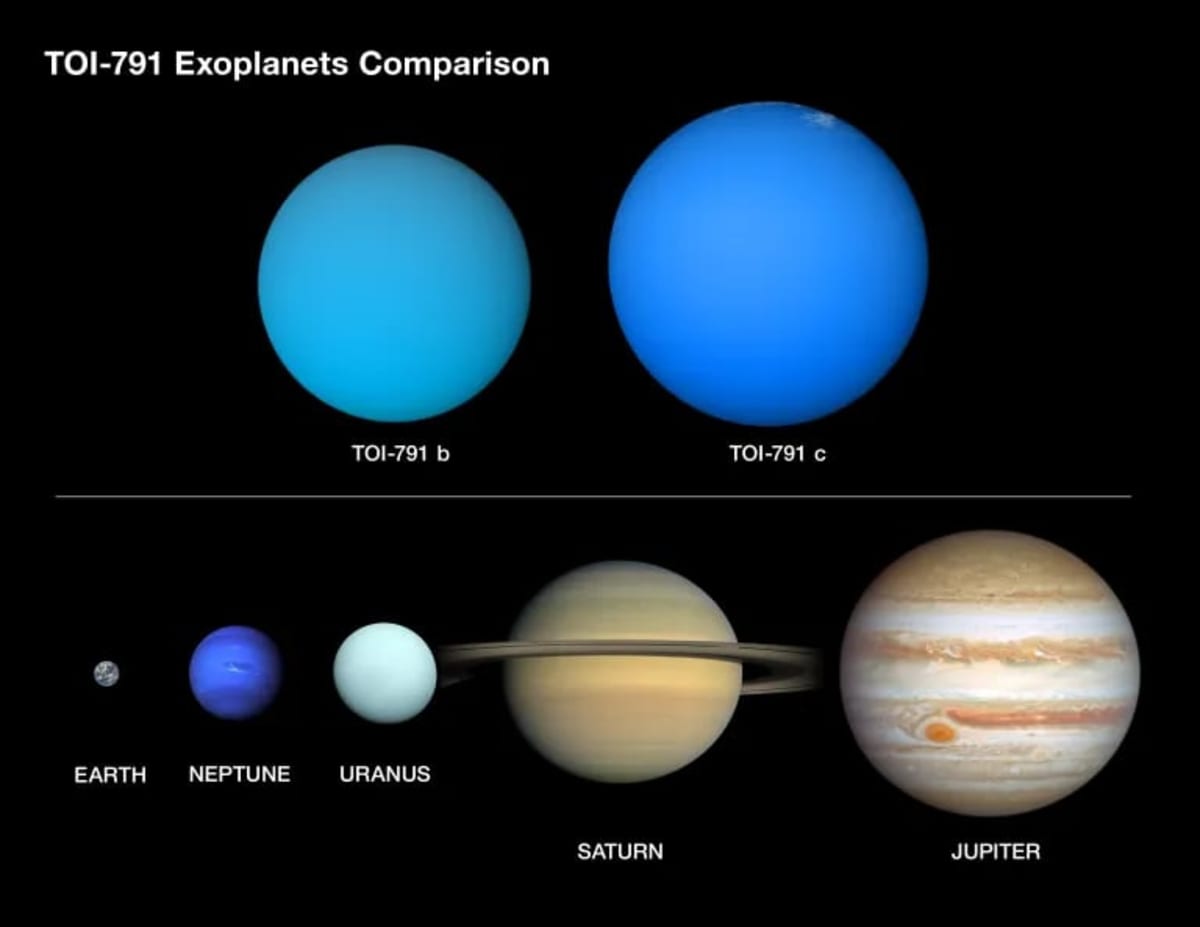
About 1,113 light years away in the constellation Volans, NASA's TESS satellite detected two extraordinary planets that shouldn't exist according to current theories. These "super-puffs" are each roughly 1,000 times bigger than Earth but weigh almost nothing, like cosmic cotton candy drifting through the darkness.
George Dransfield, an astrophysicist at the University of Oxford who led the study, describes them as having the density of "a nice blob of shaving foam, fresh from the can." One planet is nearly Jupiter's size but contains just three percent of Jupiter's mass, while its sibling is even larger with only 5.9 percent of Jupiter's weight.
Super-puffs are incredibly rare. Out of nearly 6,300 confirmed planets outside our solar system, fewer than 40 are super-puffs. Finding two around the same star makes this discovery particularly special.
"The fact that there's two around the same star makes it particularly compelling," says Lisa Dang, an astrophysicist at the University of Waterloo in Ontario. These sibling planets are locked in a gravitational dance, tugging on each other as they orbit their star together.
Scientists have no idea how planets this enormous stay so fluffy. Most planets with lots of mass compress under their own gravity, becoming denser and smaller. Something must be actively puffing these worlds up, whether it's extreme youth or a constant internal heat source.
"We don't have the answer yet," admits Antoine Petit, a mathematician at France's Centre National de la Recherche Scientifique who co-authored the study published in Monthly Notices of the Royal Astronomical Society. "There's a lot of theoretical work that needs to be done."
The most likely explanations involve temperature. Young planets haven't had time to cool down and compress yet. Older ones might generate constant heat through tidal friction, the same force that causes Earth's ocean tides but cranked up to planetary scales.
If these measurements hold up after NASA's Webb Space Telescope confirms their chemical makeup, they'll force scientists to completely rethink planet formation theories. "To be that puffy when you're that huge is hard," notes Nicolas Cowan, a planetary scientist at McGill University.
Why This Inspires
This discovery reminds us that the universe still holds countless mysteries waiting to surprise us. Just when scientists think they understand how planets work, nature reveals something wonderfully impossible floating through the cosmos. These cosmic cotton candy balls prove that reality can be stranger and more delightful than our best theories predict.
The Webb telescope will soon peer into these puffy worlds to reveal what they're actually made of, potentially unlocking secrets about how planets throughout the universe form and evolve.
More Images


Based on reporting by Google: NASA discovery
This story was written by BrightWire based on verified news reports.
Spread the positivity!
Share this good news with someone who needs it