Scientists Discover Stars May Birth Universes, Not Black Holes
Physicists just solved a 25-year mystery about what happens when massive stars die. Instead of collapsing into black holes, some stars might create tiny new universes inside themselves.
What if the biggest cosmic mystery has been hiding an even more amazing answer all along? Scientists at Goethe University Frankfurt just discovered that dying stars might not always become black holes. They could be creating entire miniature universes instead.
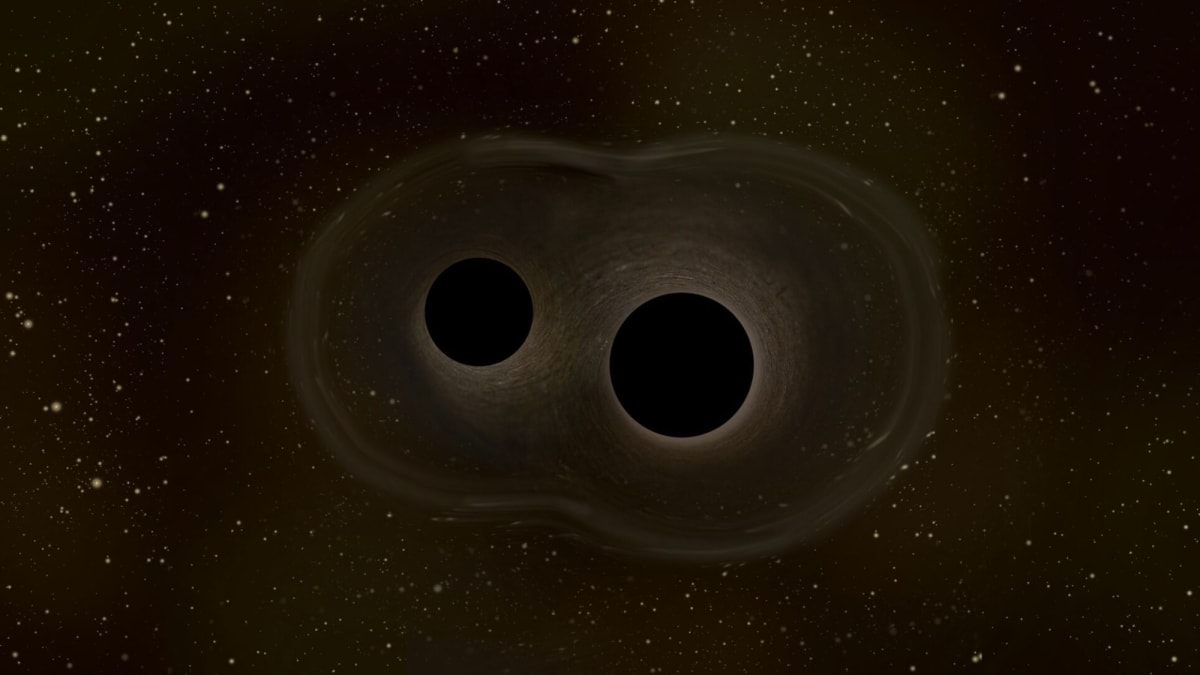
When massive stars run out of fuel, gravity pulls all their matter inward with crushing force. For decades, physicists believed this collapse created black holes, where everything gets squeezed into an infinitely small point called a singularity. But black holes have always troubled scientists because the laws of physics break down at these extremes.
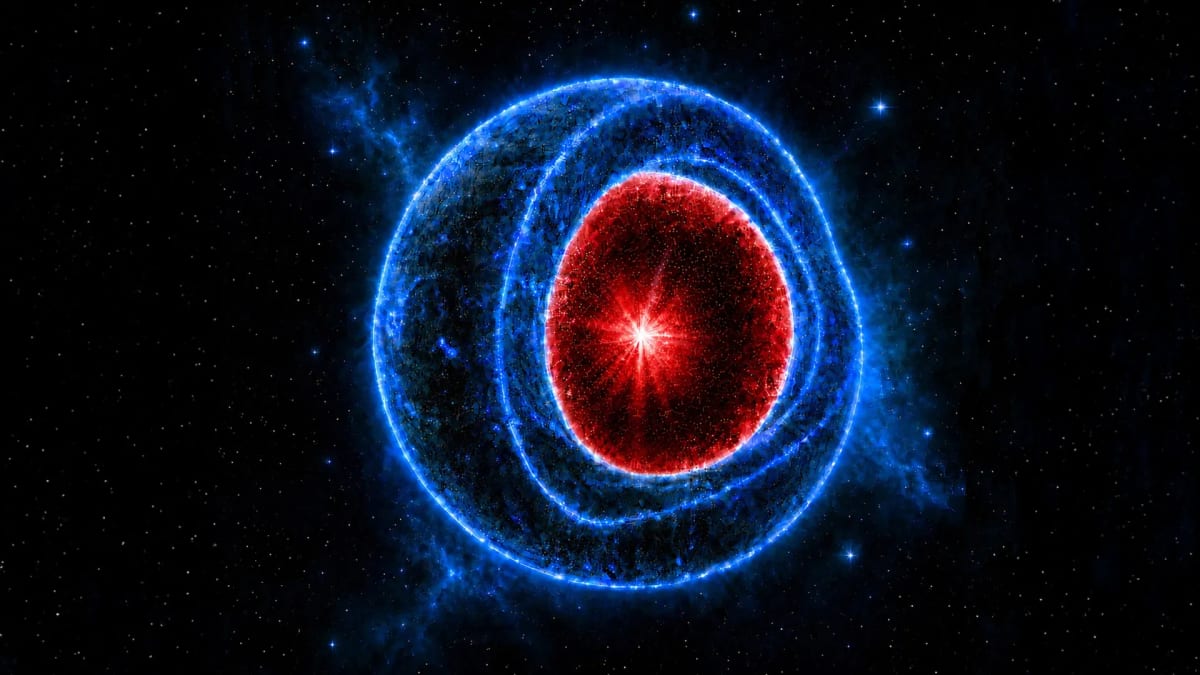
Now theoretical physicists Daniel Jampolski and Professor Luciano Rezzolla have found a different possibility. Their calculations show that a collapsing star could trigger a tiny Big Bang inside itself. This new mini universe would fill with dark energy, the mysterious force that makes our own universe expand.
As this pocket universe grows, it pushes outward against gravity's inward pull. The two forces balance each other perfectly, stopping the collapse before a black hole can form. The result is something called a gravastar, an exotic object that looks almost identical to a black hole from the outside but works completely differently on the inside.
Gravastars solve some of the biggest headaches that black holes create. They don't have singularities where physics stops making sense. They don't have event horizons that hide information forever. Instead, they represent a cosmic stalemate between collapse and expansion, death and birth happening at the same time.
Jampolski developed this solution during his master's thesis. He explains that the internal Big Bang happens at the last possible moment, when matter has compressed to extreme densities where new physics might emerge. It's like watching the birth of our universe, except contained within a dying star.
Why This Inspires
This discovery reminds us that even our most confident scientific beliefs deserve questioning. Professor Rezzolla emphasizes that exploring alternatives doesn't mean doubting black holes, which remain the most likely explanation for stellar collapse. But keeping an open mind about what we don't understand is how science moves forward.
The math suggests that some objects we've already catalogued as black holes might actually be gravastars hiding in plain sight. We can't tell them apart from Earth because they bend light and pull on nearby objects with nearly identical strength. The difference lies in what's happening deep inside, where expansion meets collapse in a cosmic dance.
This breakthrough came from young researchers willing to ask "what if?" about a problem that stumped scientists for 25 years. Their work opens doors to understanding extreme physics at densities we can barely imagine, where the rules might be completely different from anything we know.
History shows that today's exotic ideas often become tomorrow's accepted wisdom, and the universe keeps surprising us with solutions more elegant than we dared to dream.
Based on reporting by Science Daily
This story was written by BrightWire based on verified news reports.
Spread the positivity!
Share this good news with someone who needs it