Scientists Find 8x Faster Way to Discover Alien Planets
Astronomers discovered a breakthrough method that makes finding planets around other stars up to 10 times more efficient. The team has already uncovered seven new worlds using this shortcut technique.
Scientists just found a way to stop searching blindly for planets orbiting distant stars, and it's already working.
A team of astronomers discovered that stars appearing magnetically quiet might actually be hiding planets so close they're literally falling apart. The debris from these crumbling worlds creates a signature in starlight that scientists can now use as a cosmic treasure map.
Matthew Standing, a research fellow at the European Space Agency, led the team testing this idea. They studied 24 stars with low magnetic activity signatures and found something remarkable: these carefully selected stars hosted planets at rates eight to 10 times higher than random searches.
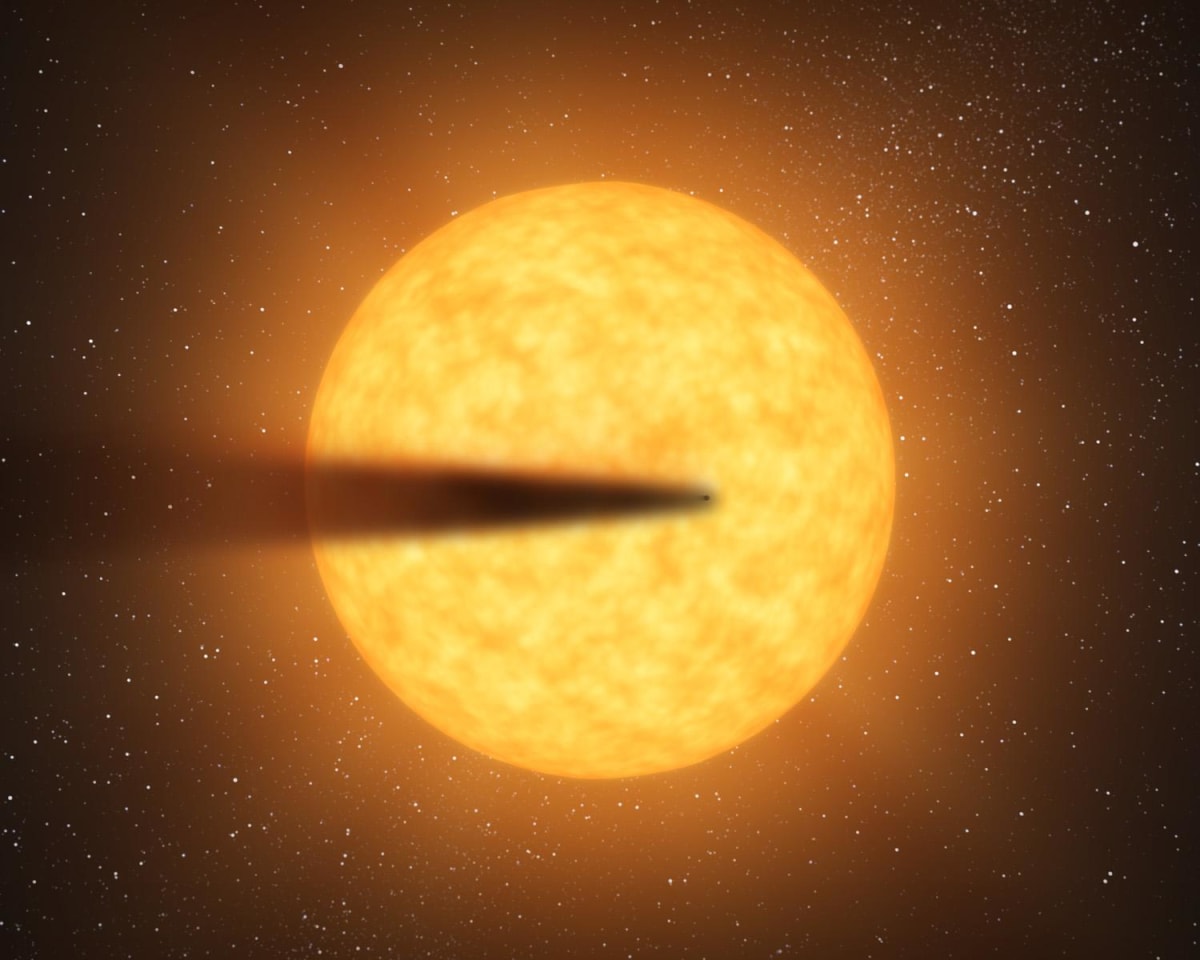
The method works because planets orbiting extremely close to their stars get blasted by intense radiation. This radiation strips away the planets' surfaces, creating clouds of gas and debris that absorb specific wavelengths of the star's light. When astronomers see these missing wavelengths from Earth, they've found a prime candidate for planet hunting.
Out of the 24 stars they examined, 14 hosted a total of 24 planets. Seven of these worlds had never been discovered before, spanning five different star systems.
The survey proved incredibly thorough, catching nearly 95% of large planets orbiting close to their stars. That efficiency could transform how astronomers plan their searches instead of pointing telescopes randomly at thousands of stars.
The Ripple Effect
The researchers didn't stop with their initial discovery. They compiled a list of roughly 16,000 stars within 1,600 light years of Earth and identified 241 stars showing the same telltale signatures of low magnetic activity.
That means hundreds of new planets could be waiting to be confirmed using this faster method. While these particular worlds are too close to their stars to support life as we know it, the technique could help scientists understand how common planetary systems are throughout our galaxy.
The discovery represents more than just finding new dots on a cosmic map. Each planet discovered helps astronomers piece together how solar systems form and evolve. Some of these doomed worlds might have started their lives much farther from their stars before migrating inward over millions of years.
The team's findings appeared in the Monthly Notices of the Royal Astronomical Society in late February. With over 6,000 known exoplanets already cataloged, this new shortcut could dramatically accelerate the pace of discovery in the coming years.
The universe just got a little less mysterious, one cleverly chosen star at a time.
More Images


Based on reporting by Google News - Science
This story was written by BrightWire based on verified news reports.
Spread the positivity!
Share this good news with someone who needs it