Scientists Search for First Signs of Life Beyond Earth
The James Webb Space Telescope detected a promising chemical signal on a distant planet that could point to life, though researchers urge caution. The hunt for life beyond Earth is advancing with better tools and new possibilities.
Scientists using the most powerful telescope ever built may have spotted something extraordinary on a planet 124 light years away.
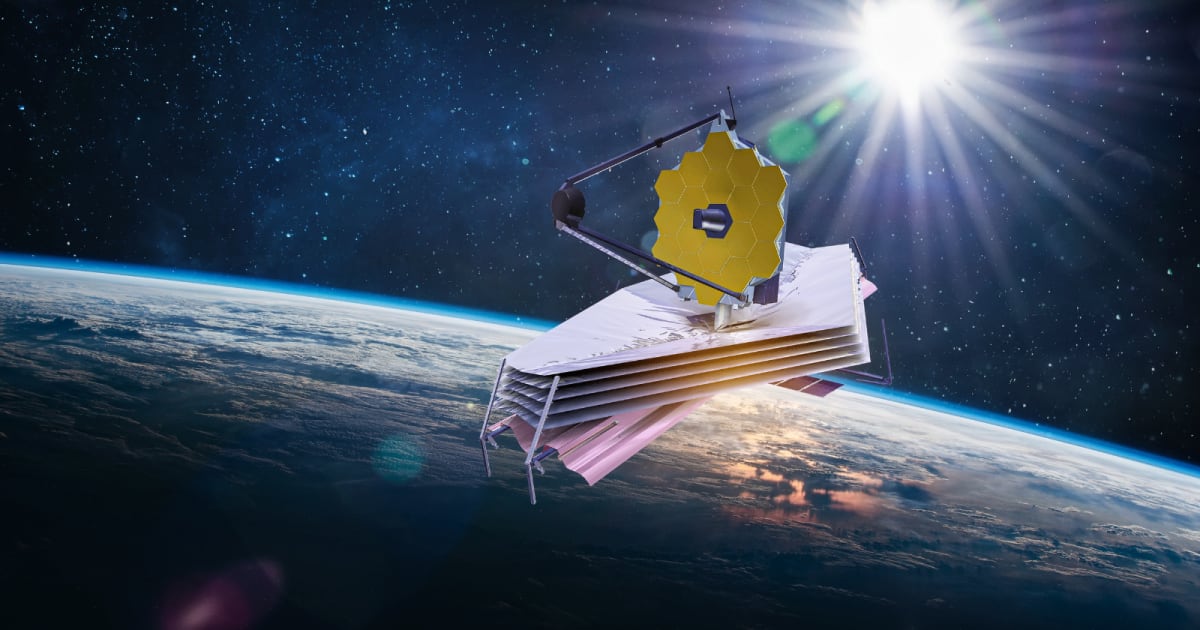
The James Webb Space Telescope detected traces of dimethyl sulfide in the atmosphere of K2-18b, a planet orbiting a small red dwarf star in the constellation Leo. On Earth, this molecule is made almost entirely by ocean-dwelling creatures like plankton.
K2-18b sits in the zone where liquid water could exist, making it a prime target in the search for life beyond our solar system. The planet is about eight and a half times more massive than Earth, a size common throughout the galaxy but absent from our own solar system.
The team at the University of Cambridge, led by Nikku Madhusudhan, presented their findings in April 2025 with careful language. They called the detection tentative rather than definitive, noting it would take more observation time to confirm.
The signal reached what scientists call three-sigma confidence, meaning roughly a one in several hundred chance it's random noise. That sounds strong, but astronomy requires five-sigma certainty for official discoveries.
Several independent teams reanalyzed the same data and reached different conclusions. Some found the signal could equally be explained by ordinary molecules like ethylene or methane. Others saw the signal weaken or disappear entirely depending on how they processed the raw telescope data.
Even if the molecule is truly there, recent research has shown dimethyl sulfide can form without life in some environments. The molecule has turned up in comets, suggesting non-biological processes can create it too.
Why This Inspires
This story captures something deeply hopeful about human curiosity. Scientists are asking one of humanity's oldest questions with revolutionary new tools, sharing their findings openly even when uncertain.
The Webb telescope confirmed methane and carbon dioxide in K2-18b's atmosphere with high confidence, detections nobody seriously disputes. Each measurement teaches us more about worlds we've never visited and chemistry we've never seen.
The scientific community's response shows how discovery actually works. Multiple teams examined the same evidence, ran their own calculations, and published honest results. When findings don't align, researchers don't hide it. They investigate further.
Whether or not K2-18b harbors life, we're living through the first moment in history when humanity can seriously search for biosignatures on distant worlds. A generation ago, we didn't even know planets existed around other stars.
The search continues with better instruments, refined methods, and growing knowledge about what's possible in our galaxy.
More Images


Based on reporting by Google: James Webb telescope
This story was written by BrightWire based on verified news reports.
Spread the positivity!
Share this good news with someone who needs it