World's First Private Space Telescope Begins Mission
A suitcase-sized satellite just captured its first star measurement, opening a new era where astronomers can rent time on commercial space telescopes. The breakthrough could help scientists find habitable planets around nearby stars.
The world's first commercial space telescope just took its first measurement of a distant star, proving that astronomy doesn't have to rely solely on government funding anymore.
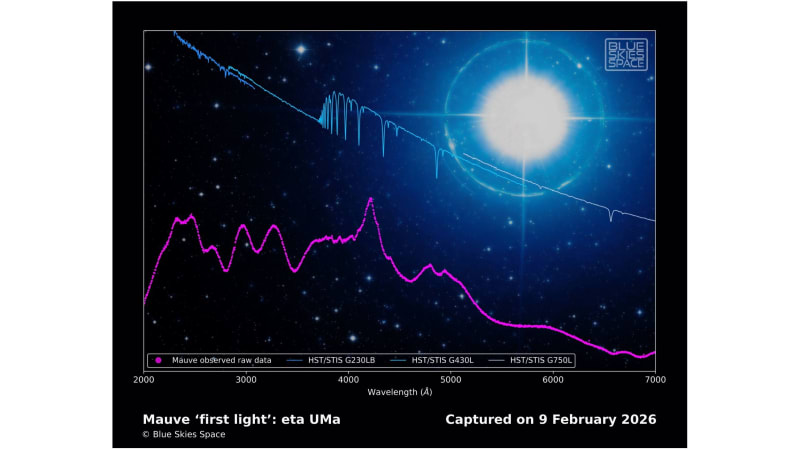
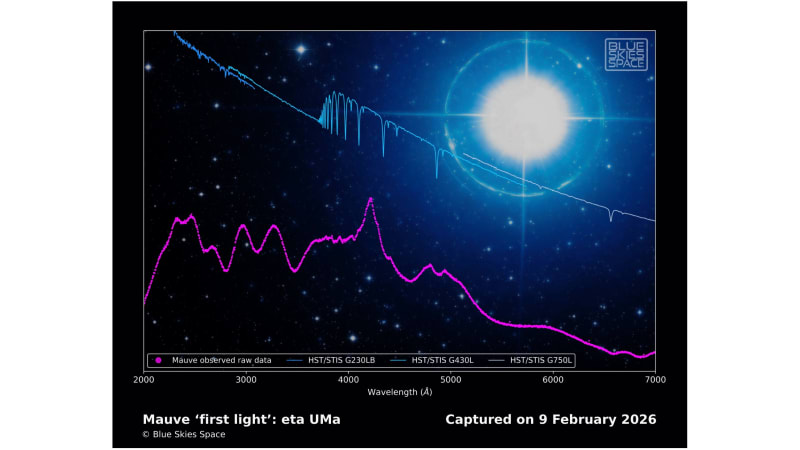
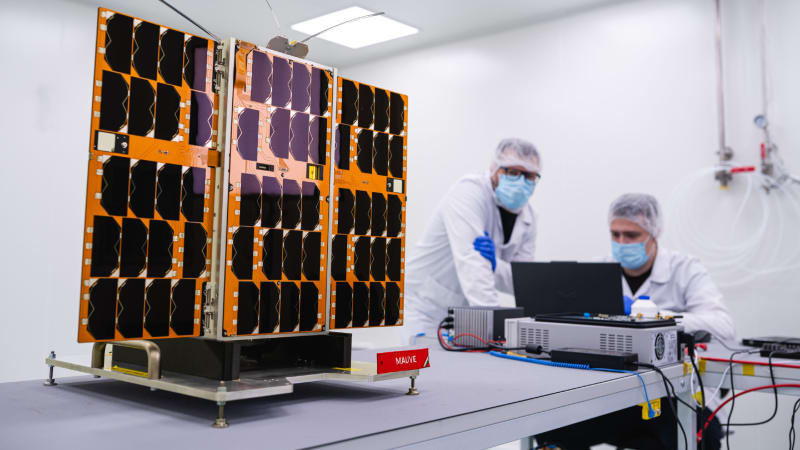
Mauve, a satellite about the size of a small suitcase, launched last November and captured ultraviolet light from a star called eta Ursa Majoris on February 9th. The star sits 104 light-years from Earth in the Great Bear constellation and shines especially bright in ultraviolet wavelengths.
London-based Blue Skies Space built Mauve to offer astronomers around the world a chance to rent observation time, just like companies already do with Earth observation satellites. Research teams from the U.S., Japan, and multiple European countries have already signed up.
The telescope fills a crucial gap in space science. Hubble can measure ultraviolet light, but it's in extremely high demand and covers many other tasks. The last dedicated ultraviolet mission ran out of fuel back in 1996, leaving scientists without a specialized tool for nearly three decades.
Why does ultraviolet light matter so much? It's the best way to spot stellar flares, powerful bursts of radiation from stars that could make nearby planets uninhabitable. By tracking which stars flare frequently and which stay calm, Mauve will help scientists identify the best candidates for hosting life-friendly planets.
The satellite spent months running instrument checks before pointing at eta Ursa Majoris, a stable star with well-documented measurements from other telescopes. The team needed a reliable reference point to make sure Mauve's readings were accurate.
The Ripple Effect
Mauve represents more than just one successful measurement. Its revenue will fund Blue Skies Space's next mission, Twinkle, a larger satellite designed to study exoplanet atmospheres directly. The company is also working with the Italian Space Agency to develop satellites that measure cosmic radio waves from lunar orbit.
CEO Marcell Tessenyi credits advances in satellite technology and affordable launch opportunities for making commercial astronomy possible. Small, specialized telescopes can now tackle specific scientific questions while massive government missions like James Webb push the boundaries of what's technologically possible.
The telescope begins delivering scientific data to its customers within the next two weeks. After a final round of calibration tests across different types of stars, Mauve will officially start full science operations.
Commercial astronomy won't replace government space agencies, but it offers scientists faster access to observing time and fills niches that large missions can't prioritize. What took decades between dedicated missions now takes months from concept to launch.
A suitcase-sized satellite just opened the door for scientists everywhere to explore the universe on their own terms.
More Images
Based on reporting by Space.com
This story was written by BrightWire based on verified news reports.
Spread the positivity!
Share this good news with someone who needs it