Scientists Survey Finds Caution on Alien Life Claims
When NASA and researchers announced possible alien life discoveries in 2025, headlines exploded with excitement. But a groundbreaking survey revealed what hundreds of astrobiologists actually think, and the results might surprise you.
Two major announcements in 2025 had the world wondering if we'd finally found extraterrestrial life, but the scientific community told a very different story than the headlines suggested.
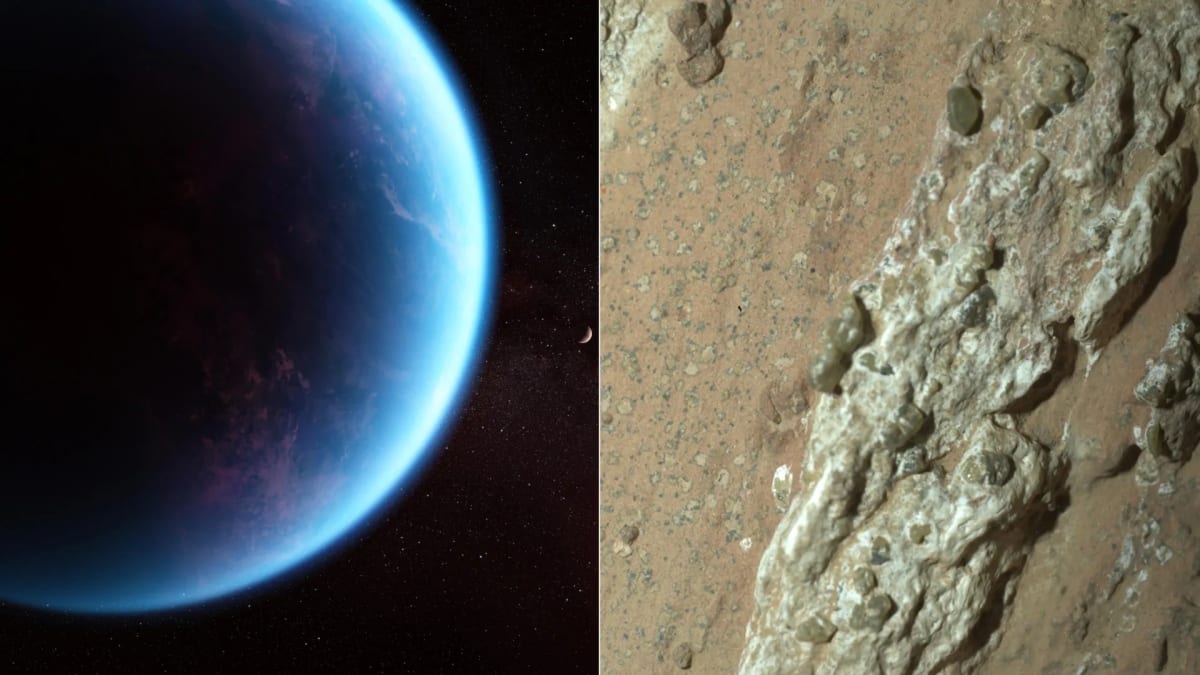
In April 2025, researchers detected possible biological molecules on exoplanet K2-18b, triggering reports of the "strongest hints yet" of alien life. Five months later, NASA's Perseverance rover found intriguing mineral patterns in a Martian rock called Cheyava Falls. Administrator Sean Duffy called it the "closest we have ever come" to discovering life on Mars.
The announcements dominated news cycles worldwide. But here's what makes this story different: for the first time, researchers actually asked hundreds of astrobiologists what they thought.
The results revealed something fascinating. Only 6.6% of surveyed experts believed the K2-18b molecules probably represented extraterrestrial life. For the Mars discovery, that number rose to 15.1%, but still remained far below what media coverage suggested.
This groundbreaking approach tackled a problem that's plagued science communication for years. When major discoveries make headlines, journalists typically quote a handful of experts. Those voices matter, but they rarely reflect what the broader scientific community actually thinks.
The survey revealed another interesting pattern beyond simple yes or no answers. While most scientists remained unconvinced about both discoveries, their level of skepticism shifted noticeably. Strong disagreement dropped from 35.1% for K2-18b to just 11.1% for the Mars case.
That movement tells an important story about how scientific thinking evolves. The community didn't suddenly embrace the possibility of alien life, but they became more open to it. Scientists moved from strong rejection toward cautious consideration.
The difference makes sense when you look at the evidence. The K2-18b claim relied on atmospheric signatures detected across vast interstellar distances. The Martian rock, however, sits in a lab where scientists can study it directly and thoroughly.
Why This Inspires
This research represents something bigger than alien life debates. It shows scientists developing new ways to measure what their communities actually think, especially when evidence remains uncertain or incomplete.
The approach could transform how we understand scientific consensus on everything from climate science to medical breakthroughs. Instead of relying on selective quotes or assumptions, we could systematically measure expert opinion across entire fields.
The researchers proved that scientific opinion exists in shades of gray, not black and white. Strong agreement, cautious optimism, genuine uncertainty, and varying levels of skepticism all provide valuable information about how communities respond to new claims.
This matters because public discussions constantly invoke phrases like "the science says" or "scientists believe," treating scientific consensus as obvious and measurable. Now we have tools to actually find out what scientists think, creating more honest and nuanced conversations about groundbreaking discoveries.
The hunt for alien life continues with both excitement and scientific rigor working hand in hand.
More Images

Based on reporting by Science Daily
This story was written by BrightWire based on verified news reports.
Spread the positivity!
Share this good news with someone who needs it